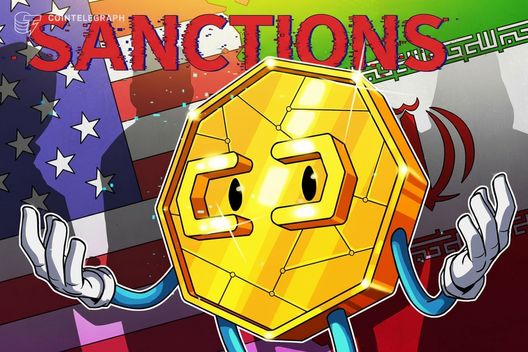
The digital asset landscape is no stranger to dramatic shifts, but the recent announcement from the US Treasury marks a watershed moment, signaling an aggressive new front in the global battle against illicit finance. For the first time, Washington has directly targeted and sanctioned two UK-registered crypto exchanges, facilitating transactions tied to Iran’s financial system. This unprecedented move is not merely a punitive action against specific entities; it’s a profound declaration of intent, setting a crucial precedent for how nation-states, particularly the US, plan to police the increasingly complex and borderless world of digital currencies.
As a Senior Crypto Analyst, the immediate implications of this action are multi-faceted and far-reaching. Historically, sanctions have focused on traditional financial institutions, individuals, or physical assets. The shift to digital asset platforms underscores a growing recognition by authorities that cryptocurrencies, while offering immense potential for innovation and financial inclusion, also present significant vectors for sanctions evasion, money laundering, and terrorist financing. The targeted exchanges were identified as being integral to Iran’s ability to circumvent traditional financial restrictions, enabling the flow of funds for activities deemed inimical to US national security interests.
This development will send ripples across the entire crypto ecosystem. For centralized exchanges (CEXs) globally, the message is unequivocally clear: enhanced due diligence, robust Know Your Customer (KYC) and Anti-Money Laundering (AML) protocols, and stringent sanctions screening are no longer mere best practices – they are existential necessities. Platforms operating internationally, regardless of their primary registration jurisdiction, must now contend with the long arm of US sanctions law, particularly if their services touch US persons or the US financial system. This will inevitably lead to increased investment in compliance infrastructure, blockchain analytics tools, and dedicated legal and compliance teams.
Blockchain analytics firms, which specialize in tracing illicit funds on public ledgers, will see a surge in demand. Their capabilities, once considered niche, are now front and center in the regulatory enforcement toolkit. The ability to de-anonymize transactions, identify clusters of activity, and link digital wallets to real-world entities is crucial for government agencies seeking to enforce these sanctions. This further dismantles the myth that cryptocurrency transactions are inherently untraceable, a narrative often propagated by those seeking to exploit the system.
Beyond centralized entities, the move also raises critical questions for the decentralized finance (DeFi) space. While direct sanctions on truly decentralized protocols or self-custody wallets present unique enforcement challenges, the pressure on entry and exit points (like CEXs and fiat on/off-ramps) will intensify. Regulators will increasingly focus on identifying and sanctioning entities or individuals that interact with sanctioned addresses or facilitate such interactions, regardless of the underlying technology. This could lead to a ‘de-risking’ phenomenon, where legitimate users in certain jurisdictions or those interacting with privacy-enhancing tools face heightened scrutiny or even exclusion from mainstream crypto services.
The broader geopolitical context is also crucial. This action reinforces the US Treasury’s commitment to maintaining the integrity of the global financial system and underscores its willingness to adapt its enforcement mechanisms to new technological realities. It serves as a stern warning to other state-sponsored actors, terrorist groups, and criminal organizations that might view cryptocurrencies as a safe haven from traditional surveillance. We can anticipate other nations, especially allies, to follow suit, either by implementing similar direct sanctions or by tightening their domestic regulatory frameworks to align with this emerging standard.
Looking ahead, this initial foray into crypto-specific sanctions is likely just the beginning. We can expect a proliferation of such actions, targeting not only entities linked to rogue states but also those involved in ransomware, cybercrime, and other forms of illicit finance. The ongoing dance between technological innovation and regulatory oversight will only intensify. The crypto industry must mature rapidly, embracing comprehensive compliance and proactive risk management, or risk being relegated to the fringes by legitimate institutional and retail adoption. The era of ‘move fast and break things’ without a serious consideration for regulatory implications is definitively over.
In conclusion, the US Treasury’s sanctioning of Iran-linked crypto exchanges marks a tectonic shift. It’s a powerful testament to the growing convergence of traditional financial regulation and the nascent digital asset economy. For all stakeholders – from individual investors to multinational exchanges and blockchain developers – understanding and adapting to this new regulatory paradigm is no longer optional; it is fundamental to their continued operation and success in the evolving financial landscape.