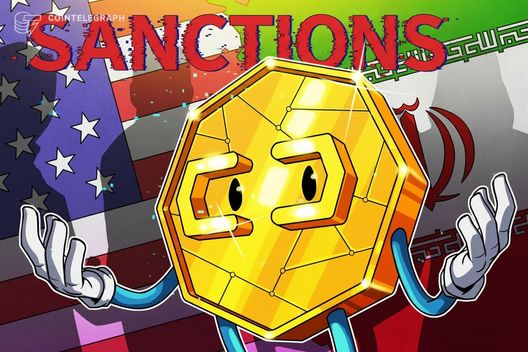
The landscape of global finance and digital assets just underwent a seismic shift. In an unprecedented move, the US Treasury Department has levied sanctions against two UK-registered crypto exchanges, formally linking them to Iran’s financial apparatus. This action marks a pivotal moment, as it represents Washington’s inaugural direct targeting of digital asset platforms, signaling a dramatic escalation in its efforts to combat illicit finance within the burgeoning cryptocurrency ecosystem.
From a senior crypto analyst’s perspective, this isn’t merely a headline; it’s a profound statement of intent. For years, the anonymity and borderless nature of cryptocurrencies have presented a formidable challenge to traditional financial enforcement mechanisms. While the Treasury has previously sanctioned individual crypto wallets, mixers, and specific actors involved in ransomware or state-sponsored cyber-attacks, directly sanctioning entire *platforms* is a game-changer. It demonstrates an evolving understanding and capability within government agencies to track, identify, and act against entities facilitating illicit activities, regardless of their perceived digital opacity or geographic dispersion.
The specific targeting of UK-registered exchanges tied to Iran underscores several critical aspects. Firstly, it highlights the ongoing geopolitical tensions and the persistent efforts by sanctioned nations to circumvent traditional financial strictures using novel technologies. Iran, under intense US sanctions, has been a known explorer of crypto as a potential bypass for international trade and financial transactions. This move effectively closes what the Treasury perceives as a significant loophole, reinforcing the efficacy of its sanctions regime in the digital age.
Secondly, the involvement of UK-registered entities will undoubtedly spur closer international cooperation on crypto enforcement. While the specifics of the UK government’s involvement in this particular action are not fully public, the designation of platforms operating under its jurisdiction will necessitate heightened scrutiny and collaborative efforts between US and UK financial regulators. This sets a powerful precedent for how nations might work together, or independently, to police crypto platforms crossing international boundaries.
For the broader cryptocurrency industry, the implications are vast and multifaceted. The immediate fallout will be a palpable increase in regulatory scrutiny and compliance burdens for all centralized digital asset service providers (VASPs). Exchanges, custodians, and payment processors will be forced to re-evaluate and significantly enhance their Know Your Customer (KYC), Anti-Money Laundering (AML), and sanctions screening protocols. The ‘travel rule’ – requiring VASPs to share originator and beneficiary information for transactions above a certain threshold – will likely gain renewed urgency in its global implementation. Those platforms that have been lax or permissive in their onboarding and monitoring procedures will now face an existential threat from regulators.
This action also intensifies the ongoing debate between privacy, decentralization, and regulatory oversight within the crypto space. While these sanctions target centralized exchanges – which inherently have points of control amenable to traditional enforcement – it poses questions about the long-term viability of truly decentralized finance (DeFi) platforms as potential avenues for illicit finance. However, it’s crucial to remember that the vast majority of fiat on- and off-ramps still flow through centralized entities, making them the primary choke points for regulatory intervention.
From a market perspective, this move could introduce a fresh wave of de-risking within the legitimate crypto industry. Exchanges might become even more cautious about listing certain assets, supporting specific jurisdictions, or onboarding customers perceived to carry higher regulatory risks. While this might be seen as stifling innovation by some, it’s an inevitable maturation process for an industry transitioning from a nascent, unregulated frontier to a globally recognized financial sector. Robust compliance is no longer an option; it’s a foundational requirement for survival and growth.
Looking ahead, we can anticipate a continued, perhaps even accelerated, push by global regulators to bring digital assets under a comprehensive regulatory framework. This Treasury action is unlikely to be an isolated incident. Instead, it serves as a stark warning and a template for future enforcement actions against platforms aiding and abetting illicit financial activities, whether they involve sanctions evasion, ransomware payments, or drug trafficking. The focus will remain on intermediaries, particularly those facilitating the conversion between fiat and crypto, as these remain the most effective leverage points for state authority.
The challenge for policymakers and the industry alike will be to strike a delicate balance: robustly combatting illicit finance without stifling legitimate innovation, economic inclusion, and the foundational principles of blockchain technology. This pioneering sanctioning of crypto exchanges by the US Treasury is not just a regulatory event; it’s a geopolitical statement that digital assets are now firmly within the crosshairs of national security and economic policy, irrevocably changing the trajectory of the crypto world as we know it.