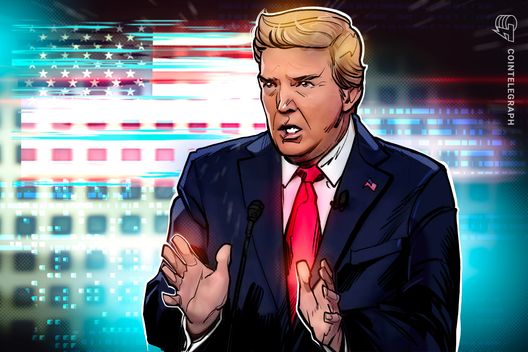
The political landscape of the United States, perpetually a dynamic and often turbulent arena, rarely feels more consequential than during the run-up to midterm elections. This sentiment is amplified by former President Donald Trump’s recent assertion that a Republican loss in the upcoming midterms would inevitably lead to his impeachment by the Democrats. While the immediate focus of such a statement naturally gravitates towards traditional political repercussions, for those deeply entrenched in the digital asset space, Trump’s warning carries an entirely different, yet equally profound, implication: a potential galvanizing of resistance to his crypto policy agenda.
Indeed, the intersection of high-stakes political drama and the nascent, still-evolving world of cryptocurrency regulation presents a critical juncture. The outcome of these midterms could either solidify the existing cautious, often ambiguous, approach to digital assets or usher in a new era of proactive, potentially more aggressive, regulatory frameworks. As senior crypto analysts, understanding these potential shifts is paramount for predicting market trajectories and advising stakeholders.
**The ‘Trump Crypto Policy’ – A Landscape of Caution and Fragmentation**
To understand the potential ‘resistance,’ one must first define the ‘Trump crypto policy.’ While the administration never articulated a cohesive, forward-looking crypto strategy, its stance was characterized by a distinct caution, largely influenced by figures like former Treasury Secretary Steven Mnuchin. The primary concerns revolved around Anti-Money Laundering (AML), Combating the Financing of Terrorism (CFT), and national security risks. Trump himself publicly expressed skepticism about Bitcoin and Libra (now Diem), emphasizing their potential for illicit use and questioning their reliability as money.
This executive skepticism filtered down to regulatory agencies, albeit with varying degrees of enthusiasm. The Securities and Exchange Commission (SEC), under different leaderships, has largely maintained a ‘regulation by enforcement’ approach, leaving many crypto projects in a state of uncertainty regarding their security classification. While the Commodity Futures Trading Commission (CFTC) often appeared more amenable to innovation, particularly in the derivatives space, the overall federal posture was one of risk mitigation rather than proactive innovation fostering. A notable exception was the Office of the Comptroller of the Currency (OCC) under Brian Brooks, who championed initiatives like national crypto bank charters, briefly injecting a pro-innovation impetus into an otherwise conservative environment. Yet, this period was an anomaly, reflecting more the individual’s vision than a broader administration directive.
**Scenario 1: Republican Continuity – The Known Devil**
If Republicans successfully navigate the midterms, maintaining or even expanding their congressional presence, the crypto industry could largely expect a continuation of the current, fragmented, and cautious regulatory environment. This scenario suggests that while there might be increasing pressure from pro-crypto Republicans in Congress to push for clearer guidelines and innovation-friendly legislation (e.g., specific definitions for digital assets, safe harbors for token projects), these efforts would likely face an uphill battle against the ingrained skepticism of executive agencies.
The ‘resistance’ that Trump fears would not materialize, and thus, his crypto policy — or lack thereof — would largely persist. For many in the industry, this represents a ‘known devil’ scenario: slow progress, continued regulatory ambiguity in some areas, but also a relatively stable environment where no radical, industry-altering legislation is immediately imminent. The focus would remain heavily on AML/CFT compliance, stablecoin stability (without necessarily creating new, robust frameworks), and navigating the existing enforcement landscape.
**Scenario 2: Democratic Ascendancy – A Galvanized Resistance**
Should the Democrats achieve significant victories, particularly gaining control of both chambers of Congress, the implications for crypto policy could be far more transformative. Trump’s fear of ‘resistance’ would manifest not just in political challenges to his past actions, but in a wholesale re-evaluation and potential redirection of US crypto policy.
A Democratic-led Congress would likely bring new priorities to the forefront. Expect heightened scrutiny on:
* **Consumer Protection:** A more assertive SEC and CFTC, potentially pushing for stricter suitability rules for retail investors in crypto and increasing oversight on decentralized finance (DeFi) platforms, which they might view as ripe for manipulation or exploitation.
* **Environmental Impact:** With a strong focus on climate change, Democrats could push for legislation or regulatory guidance addressing the energy consumption of Proof-of-Work (PoW) cryptocurrencies, potentially leading to disincentives or calls for industry-wide shifts to more energy-efficient consensus mechanisms.
* **Taxation:** Expect rigorous enforcement of existing crypto tax laws and potentially new legislative proposals aimed at closing perceived loopholes or increasing capital gains taxes on digital asset profits, aligning with broader wealth redistribution goals.
* **Stablecoin Regulation:** This is perhaps the most immediate and critical area. A Democratic Congress would likely prioritize robust stablecoin legislation, potentially requiring issuers to operate under strict banking charters, maintain 1:1 fiat reserves, and undergo stringent audits. This could fundamentally alter the stablecoin market, making it safer but potentially less innovative or accessible.
* **Central Bank Digital Currencies (CBDCs):** A Democratic administration, with an increased focus on financial inclusion and sovereign control over currency, might accelerate the exploration and development of a US CBDC, potentially viewing it as a superior alternative to privately issued stablecoins.
This ‘galvanized resistance’ wouldn’t just be about overturning Trump’s directives; it would be about implementing a new vision for digital assets, one that prioritizes systemic stability, consumer safety, environmental responsibility, and financial equity, potentially at the expense of unfettered innovation or market autonomy. The pace of regulatory clarity might accelerate, but the terms of that clarity could be significantly less favorable to certain segments of the industry.
**Beyond Impeachment: The Shift in Influence**
Regardless of whether a formal impeachment process would ensue, a significant Republican loss would undoubtedly diminish Trump’s residual influence over policy, shifting power decisively towards Congress and the various federal agencies. This means the battle for crypto’s future would largely move from executive guidance to legislative debates, committee hearings, and the appointment of agency heads who align with the new congressional majority’s vision.
Committees like the House Financial Services Committee and Senate Banking Committee would gain immense leverage, setting legislative agendas that directly impact everything from stablecoins and CBDCs to token classifications and taxation. The crypto industry, therefore, needs to be prepared to engage with a potentially very different set of policymakers and regulatory philosophies.
**Conclusion: A Critical Juncture for Digital Assets**
Donald Trump’s anxieties about impeachment following a midterm loss, while rooted in his personal political fate, serve as a potent reminder of the profound interconnectedness between politics and policy. For the US crypto ecosystem, these midterms represent a critical juncture. The industry stands at a crossroads, facing two distinctly different potential paths: one of cautious continuity, and another of potentially dramatic, regulation-driven transformation.
As the political tides prepare to turn, or remain steadfast, the digital asset community must remain vigilant, actively engaging with policymakers across the aisle to advocate for responsible innovation, clarity, and a regulatory framework that fosters growth without stifling the transformative potential of blockchain technology. The future of crypto in the US hangs squarely in the balance of this upcoming political showdown.