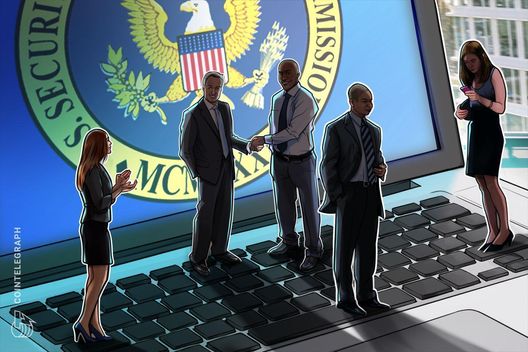
The promise of tokenized equities — fractional ownership, instant settlement, and enhanced transparency powered by blockchain — has long captivated the imagination of both traditional finance and the crypto world. Yet, as with any truly disruptive technology, its integration into existing frameworks faces a formidable gatekeeper: the US Securities and Exchange Commission (SEC). Recent outlines from the SEC regarding how tokenized equities can operate within US market safeguards have made one thing abundantly clear: while innovation is tolerated, control remains paramount, and the keys to this new financial frontier, in the SEC’s view, belong firmly in the hands of regulated intermediaries.
At the heart of the SEC’s outlined approach is a pronounced preference for broker-led custody over the crypto-native ideal of self-custody. This isn’t merely a technical preference; it’s a foundational philosophical divide. For the crypto community, the power of a tokenized asset lies in the user’s direct, immutable control via private keys – true self-custody, eliminating intermediaries. For the SEC, this very freedom represents a significant regulatory blind spot, a potential vector for fraud, market manipulation, and a host of investor protection concerns. Their stance underscores a commitment to existing regulatory frameworks, which mandate that securities be held by qualified, regulated custodians, typically broker-dealers or clearing agencies, subject to rigorous oversight and capital requirements.
The implications of this stance are profound. The SEC envisions tokenized equities existing within a ‘walled garden’ of sorts, where blockchain technology acts as an efficient ledger and transfer mechanism, but the ultimate legal and physical (or rather, digital) control remains with regulated entities. This means a tokenized stock, though residing on a blockchain, would likely be held in an omnibus account by a broker-dealer or a specialized digital asset custodian, subject to Rule 15c3-3 (the Customer Protection Rule) and other existing securities laws. The ‘token’ in this scenario functions more as a digital representation of a beneficial interest in a security held by the broker, rather than the security itself being directly and solely controlled by the end-user.
For traditional financial institutions (TradFi), this SEC clarity, while restrictive from a pure decentralization perspective, offers a clearer, compliant path forward for engaging with tokenization. Brokerages and established custodians can now explore leveraging blockchain technology to enhance efficiency, reduce settlement times, and enable fractional ownership without navigating an entirely new, unchartered regulatory landscape. It reinforces their existing role as trusted intermediaries and gatekeepers, potentially unlocking new revenue streams and operational efficiencies within their familiar regulatory perimeter. It’s an invitation for TradFi to adopt blockchain, but on their terms, integrating it into the existing system rather than allowing it to fundamentally dismantle it.
Conversely, for the crypto-native ecosystem and advocates of Web3’s decentralization ethos, this approach feels like a significant compromise, if not a direct rejection of core tenets. The very idea of an intermediary holding the ‘keys’ to an on-chain asset runs counter to the vision of permissionless, trustless finance. It raises questions about the true transformative potential of tokenization if it merely digitizes existing structures without fundamentally reimagining ownership and control. Decentralized exchanges (DEXs) and truly self-custodial protocols, which thrive on direct peer-to-peer interactions without centralized control, will find it exceedingly difficult, if not impossible, to operate within this framework for regulated securities. This risks creating a bifurcated market: compliant, broker-custodied tokenized assets for institutional and mainstream adoption, and a more speculative, permissionless, and potentially offshore market for truly decentralized crypto assets.
The SEC’s insistence on existing market safeguards is rooted in legitimate concerns: investor protection, market integrity, anti-money laundering (AML), and know-your-customer (KYC) requirements. These are critical functions that traditional finance has spent decades building. From their vantage point, allowing unbridled self-custody for regulated securities opens up a Pandora’s Box of risks, from lost private keys leading to permanent loss of assets, to facilitating illicit activities through anonymous transactions. The SEC isn’t anti-technology; it’s anti-unregulated risk, and from their perspective, the risks associated with fully decentralized custody of regulated securities currently outweigh the perceived benefits of disintermediation.
Ultimately, the SEC’s outline for tokenized equities is a pragmatic, albeit conservative, step towards integrating blockchain into the US financial system. It signals that while tokenization can exist on-chain, its operation must conform to existing market safeguards and intermediaries. The battle for the true spirit of tokenization — decentralized and permissionless — will continue, likely in parallel markets or through continued dialogue and innovation that addresses regulatory concerns without sacrificing core blockchain principles. For now, the message is clear: the SEC demands the keys, ensuring that even as finance moves on-chain, its traditional guardians will remain firmly in control.