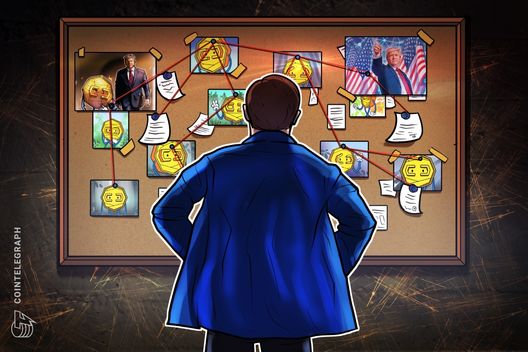
The U.S. Securities and Exchange Commission (SEC), often perceived as the frontline guardian of investor protection, finds itself in an increasingly uncomfortable spotlight. A recent flurry of congressional inquiries, specifically targeting the abrupt departure of a key enforcement official and the high-profile case against crypto magnate Justin Sun, underscores a growing skepticism within Washington regarding the agency’s operational integrity and impartiality, particularly concerning its contentious approach to digital asset regulation.
At the heart of the controversy is the revelation, reported by Reuters, that the SEC’s former enforcement chief resigned following internal clashes with agency leadership over investigations involving individuals within former President Trump’s orbit. This report paints a troubling picture of potential political interference or at least the perception thereof, within a body whose mandate demands unyielding independence. For a regulatory agency, internal dissent at such a senior level, particularly when tied to politically sensitive cases, erodes public trust and raises fundamental questions about the fairness and consistency of its enforcement decisions. When an enforcement chief — the very individual tasked with leading investigations and bringing charges — steps down over disagreements on case selection or prosecution, it suggests a significant fracture in the agency’s strategic direction or priorities. This isn’t merely an administrative shuffle; it’s a crack in the foundation of regulatory confidence.
Compounding this internal turmoil is the specific inclusion of the Justin Sun case in the senators’ crosshairs. Justin Sun, the founder of Tron (TRX) and Huobi Global, along with his associated entities, faces a litany of charges from the SEC, including the unregistered offer and sale of crypto asset securities, fraud, and market manipulation through extensive wash trading. The agency also alleged unlawful touting by various celebrities without disclosing compensation. The Sun case is not an isolated incident; it’s a prime example of the SEC’s ‘enforcement-first’ strategy in the crypto space, which has drawn considerable criticism from industry participants and lawmakers alike for its perceived lack of regulatory clarity prior to initiating legal action.
The senators’ decision to link the former enforcement chief’s exit with the Justin Sun case is highly significant. It suggests a suspicion that the internal discord at the SEC might extend beyond politically charged investigations to influence the agency’s broader enforcement strategy, including its stance on cryptocurrencies. Is it possible that the disagreements centered on the aggressiveness or particular approach to high-profile crypto cases, like Sun’s, or perhaps even the agency’s overarching legal theory that many digital assets are unregistered securities? Without direct insight into the specifics of the internal debates, speculation abounds, but the congressional questioning demands transparency and answers that could shed light on these critical points.
The broader context here is the ongoing tug-of-war between the SEC and the crypto industry. The industry, often backed by a growing cohort of bipartisan lawmakers, has repeatedly called for clear, tailored regulatory frameworks for digital assets, arguing that applying decades-old securities laws designed for traditional finance to nascent blockchain technology is ill-suited and stifles innovation. The SEC, under Chairman Gary Gensler, has largely maintained that existing securities laws are sufficient and that most cryptocurrencies are, in fact, unregistered securities, necessitating an enforcement-driven approach. This philosophical divide has led to a climate of uncertainty, with market participants struggling to navigate a regulatory landscape defined more by litigation than by explicit rules.
Congressional intervention, therefore, is not just about internal SEC politics or a specific crypto case; it’s about holding a powerful regulator accountable and potentially steering the future direction of digital asset policy. Lawmakers are increasingly sensitive to the impact of regulatory ambiguity on American innovation and competitiveness in the global crypto arena. The questions from senators likely pertain to the consistency of the SEC’s legal interpretations, the fairness of its enforcement actions, and whether internal pressures or political considerations are compromising its mission.
The implications of this escalating scrutiny are manifold. For the SEC, it means intensified oversight, potentially forcing greater transparency in its decision-making processes and an internal review of its enforcement philosophies. A perception of political bias or internal discord can severely undermine the agency’s authority and effectiveness, both in court and in the public sphere. For the crypto industry, while the immediate uncertainty remains high, sustained congressional pressure could eventually pave the way for more constructive regulatory dialogue and perhaps even lead to the much-demanded legislative clarity that has eluded the sector for years. It signals that Washington is paying close attention, and the status quo of “regulation by enforcement” is facing significant headwinds.
Ultimately, the confluence of a high-profile internal departure, allegations of political influence, and intense congressional focus on a major crypto case places the SEC at a critical juncture. The outcome of these inquiries will not only define the integrity of one of the nation’s most important financial regulators but will also profoundly shape the trajectory of digital asset regulation in the United States, determining whether innovation can flourish under a clear legal framework or continue to grapple with uncertainty and an enforcement apparatus perceived to be compromised. The quest for accountability and clarity has become paramount, and the crypto world watches with bated breath.