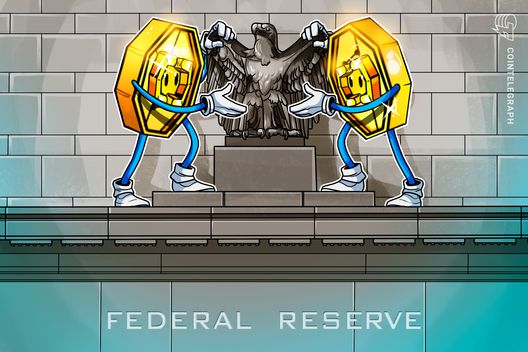
A recent Federal Reserve paper proposing initial margin weights for crypto-linked derivatives marks a watershed moment, signaling a pragmatic and somewhat overdue acknowledgment of digital assets within the traditional financial framework. From the perspective of a Senior Crypto Analyst, this isn’t just a technical adjustment; it’s a profound statement on the maturation of the crypto ecosystem and the imperative for legacy financial institutions to adapt their risk management paradigms.
The core premise of the Fed’s paper is clear: traditional risk-weighting methodologies and capital models, refined over decades for conventional assets, simply cannot adequately account for crypto’s idiosyncratic characteristics. High volatility, unprecedented market behavior, and a relatively short historical data set render standard Value-at-Risk (VaR) or Expected Shortfall models insufficient. This isn’t a critique of crypto itself, but rather a recognition that its unique DNA demands a bespoke regulatory approach, particularly concerning highly leveraged products like derivatives.
**Why Traditional Models Fall Short in the Crypto Sphere**
The fundamental challenge lies in crypto’s distinct market dynamics. Equity markets rarely experience 20-30% swings in a single day, let alone across a weekend. Crypto markets, operating 24/7 globally, are prone to ‘flash crashes’ and rapid cascading liquidations, often exacerbated by high leverage and fragmented liquidity. The ‘fat-tail’ risk – the probability of extreme, rare events – is significantly higher in crypto than in traditional asset classes. Basel III, for instance, relies heavily on historical data and statistical assumptions of normality (or near-normality) that simply do not hold true for Bitcoin, Ethereum, or the myriad of altcoins.
Furthermore, the interconnectedness within the crypto ecosystem, where a significant move in Bitcoin can ripple across the entire market, presents systemic risks that are difficult to quantify. The lack of standardized, regulated central clearing for many crypto derivatives amplifies counterparty risk. Initial margin, which serves as collateral to cover potential future exposure in derivatives contracts, is a critical tool for mitigating these risks. Without appropriate initial margin requirements, regulated financial institutions engaging with crypto derivatives could inadvertently expose themselves and, by extension, the broader financial system, to unquantifiable shocks.
**The Fed’s Proposed Solution: A Pathway to Legitimization with Guardrails**
The Fed’s proposal to introduce specific initial margin weights for crypto-linked derivatives is a direct response to these challenges. While the specifics of the weighting methodology are yet to be fully detailed, it’s safe to assume they will be significantly higher than those for traditional assets. This isn’t punitive, but rather a realistic reflection of the higher risk profile. It implies that financial institutions will need to set aside more capital for every dollar of crypto derivatives exposure, effectively increasing the cost of engaging with these products.
For major banks, investment firms, and other regulated entities, this means several things. Firstly, it necessitates a significant upgrade in their internal risk management systems, requiring them to develop or adopt sophisticated models capable of stress-testing crypto-specific scenarios. Secondly, it will likely lead to a more conservative, measured entry into the crypto derivatives space, as the higher capital costs will influence balance sheet allocation and profitability metrics. Lastly, and perhaps most importantly, it provides a regulatory ‘rulebook’ – however nascent – that offers a framework for safe engagement, thereby de-risking the process for cautious TradFi players.
**Broader Implications and the Future Landscape**
This paper’s release is far more than just a technical adjustment; it’s a seismic shift in how regulators are perceiving digital assets. It unequivocally signals that crypto is no longer an fringe phenomenon but a legitimate, albeit uniquely risky, component of the global financial landscape that needs to be integrated responsibly. The Fed isn’t proposing to ban crypto derivatives; it’s proposing how to safely incorporate them into the existing regulatory perimeter.
From an institutional adoption perspective, this move, while potentially increasing the initial cost of participation, ultimately paves a clearer path for deeper engagement. By providing defined risk parameters, the Fed is reducing regulatory uncertainty, which has long been a major impediment for institutional players. This clarity could encourage more regulated entities to develop crypto desks, offer derivative products, and invest in the underlying technology, leading to greater market maturity and liquidity over time.
Furthermore, this development will likely influence global regulatory dialogues. The Bank for International Settlements (BIS) and other international standard-setting bodies have been grappling with crypto risk capital. The Fed’s proactive stance could catalyze a more harmonized global approach, preventing regulatory arbitrage and ensuring a level playing field across jurisdictions.
However, challenges remain. The crypto market is incredibly dynamic, with new assets, protocols, and financial instruments emerging constantly. Regulators will face an ongoing battle to keep their frameworks current and adaptable. There’s also the perennial tension between fostering innovation and ensuring stability. While imposing stricter risk weights, the Fed must also avoid stifling the very innovation that makes the digital asset space so transformative.
**Conclusion:**
The Federal Reserve’s proposal for initial margin weights on crypto-linked derivatives represents a pivotal step in the ongoing convergence of traditional finance and the digital asset economy. It’s a pragmatic response to the unique risks posed by crypto, offering a pathway for regulated institutions to engage while safeguarding systemic stability. While it demands increased capital buffers and sophisticated risk management, it simultaneously bestows a significant degree of legitimacy upon crypto derivatives. For the senior crypto analyst, this signals a future where digital assets are undeniably integrated into the financial mainstream, albeit under a carefully crafted and continuously evolving set of rules designed to manage their inherent volatility and complexity.