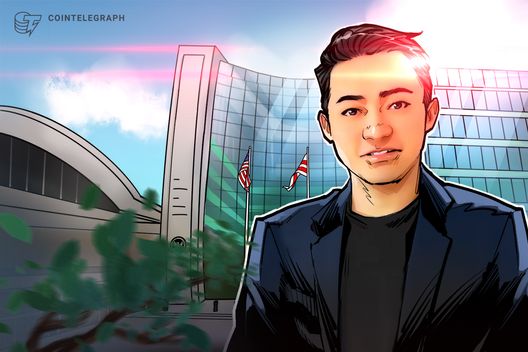
The crypto world received a significant, albeit nuanced, update this week as the U.S. Securities and Exchange Commission (SEC) announced the conclusion of its protracted fraud and securities violation lawsuit against Tron founder Justin Sun. The resolution comes in the form of a $10 million settlement, marking an end to a high-profile legal battle that has loomed over Sun and his associated projects, including Tron (TRX) and BitTorrent (BTT), since the initial charges were filed in March 2023.
From the perspective of a Senior Crypto Analyst, this settlement is less a definitive roar of regulatory triumph and more a pragmatic whimper – a strategic resolution that offers a partial win for both sides, yet leaves the broader landscape of crypto regulation as ambiguous as ever.
**A Recap of the Charges: Fraud, Unregistered Securities, and Market Manipulation**
The original SEC complaint against Justin Sun was comprehensive and severe, accusing him and three of his wholly-owned companies – Tron Foundation Limited, BitTorrent Foundation Ltd., and Rainberry Inc. (formerly BitTorrent) – of illegally offering and selling unregistered crypto asset securities, TRX and BTT. Furthermore, the SEC alleged that Sun orchestrated a sophisticated market manipulation scheme through extensive wash trading of TRX, using multiple controlled accounts to artificially inflate its trading volume and price.
The charges extended beyond just the initial token offerings. The SEC also claimed Sun fraudulently induced investors to purchase TRX and BTT by orchestrating unregistered “secondary market” sales, distributions through various ‘airdrop’ and ‘bounty’ programs, and even paying celebrities to promote the tokens without disclosing their compensation. These were not minor accusations; they struck at the heart of market integrity and investor protection, key tenets of the SEC’s mandate.
**The $10 Million Question: Is it a Victory?**
The $10 million settlement, which includes disgorgement, prejudgment interest, and civil penalties, brings a legal closure to these serious allegations. On the surface, the SEC can declare a victory: another high-profile crypto figure has settled, paying a substantial sum for alleged securities violations. This reinforces the Commission’s persistent ‘enforcement-first’ strategy under Chairman Gary Gensler, signaling that they will continue to pursue projects and individuals deemed non-compliant with U.S. securities laws.
However, the magnitude of the settlement invites critical analysis. While $10 million is a considerable sum, it pales in comparison to the multi-billion dollar penalties levied against other major crypto entities like Binance ($4.3 billion) or the $1.3 billion disgorgement sought from Ripple. Considering the alleged scale of unregistered offerings and market manipulation activities associated with TRX and BTT – which generated hundreds of millions in illicit proceeds according to the SEC’s initial filing – the $10 million figure might be perceived as a relatively modest penalty. This disparity raises questions: Was the SEC’s case against Sun weaker than initially perceived, especially given his non-U.S. residency, which significantly complicates jurisdictional enforcement? Or was it a strategic calculation by both parties to avoid the protracted, expensive, and uncertain outcome of a full trial?
Crucially, the settlement, like many others involving the SEC, likely includes a clause where Sun and his entities ‘neither admit nor deny’ the allegations. This standard settlement language is critical. It means that while Sun’s entities are paying a penalty, there is no judicial precedent set, no formal court finding that TRX or BTT were indeed unregistered securities under U.S. law. This allows both parties to save face: the SEC can claim a victory in enforcement, while Sun avoids a definitive legal ruling that could have broader implications for his projects and the wider crypto industry.
**Broader Regulatory Implications: Clarity Remains Elusive**
For the broader crypto industry, this settlement underscores the SEC’s unwavering stance on applying existing securities laws, particularly the Howey Test, to digital assets. However, it does little to provide the clear, prescriptive regulatory framework that industry participants have consistently called for. Instead, it reinforces the perception that regulatory guidance in the U.S. is largely delivered through enforcement actions, leaving market participants in a perpetual state of uncertainty regarding what constitutes compliance.
The case against Justin Sun was particularly complex due to the global nature of his operations and his non-U.S. residency. The SEC’s ability to effectively pursue a full-blown trial against an individual residing outside U.S. jurisdiction, who had taken measures to restrict U.S. access to his projects, was always going to be challenging. The settlement could therefore be seen as a pragmatic outcome for the SEC, allowing them to extract a penalty and send a message without getting entangled in complex international legal battles.
**Impact on Justin Sun and the Tron Ecosystem**
For Justin Sun, the settlement brings an end to a significant legal overhang. The cloud of an active SEC lawsuit has undoubtedly been a distraction and a potential deterrent for further growth and partnerships within the Tron ecosystem. Clearing this hurdle allows him and his teams to focus on development, innovation, and expansion without the immediate threat of this specific litigation.
However, the reputational cost is undeniable. While not an admission of guilt, the settlement still permanently links Sun’s name and projects with SEC charges of fraud and unregistered securities offerings. This might impact investor confidence, particularly among institutional players, and could influence future partnerships or listings on regulated platforms. Moreover, while the SEC case is closed, other regulatory bodies, both domestic and international, could still pursue their own investigations.
**Conclusion: A Pragmatic Truce, Not a Definitive Verdict**
The SEC’s $10 million settlement with Justin Sun is a resolution born of pragmatism rather than a landmark ruling. It represents a tactical success for the SEC in its ongoing campaign to assert jurisdiction over the crypto market, securing a financial penalty and sending a stern message. For Justin Sun, it’s a costly but perhaps necessary step to shed a significant legal burden, allowing him to navigate the future with a clearer, albeit more expensive, slate.
Yet, for the crypto industry as a whole, the fundamental questions persist. What truly constitutes a security in the digital age? How should innovation be fostered without compromising investor protection? Until comprehensive legislative frameworks emerge, each enforcement action, like this one, will merely be another skirmish in an ongoing, undefined war, leaving market participants craving the true clarity that remains perpetually out of reach.