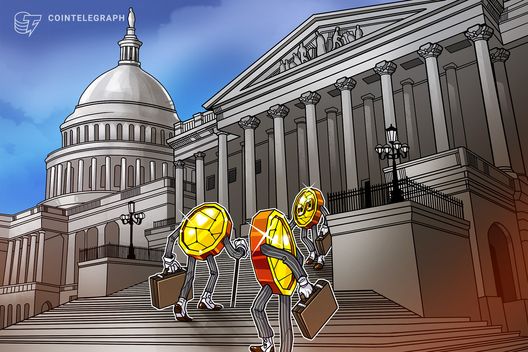
The pursuit of regulatory clarity for digital assets in the United States has hit another speed bump, as a recent report citing Senate leader John Thune suggests that comprehensive crypto market structure legislation is unlikely to see a vote before April. This news, indicating a prioritization of the “SAVE America Act” over bipartisan efforts like crypto bills, sends a clear signal to the industry: while the need for a coherent framework is widely acknowledged, legislative progress remains a protracted and challenging endeavor. As a Senior Crypto Analyst, I view this development as a critical moment for re-evaluating the near-term landscape for digital asset innovation and investment in the US.
The Core Delay and its Context:
Senator Thune’s statement, while not unexpected given the packed legislative calendar and the complexities surrounding crypto, officially pushes back hopes for immediate action. For months, various bipartisan proposals aimed at defining the roles of regulatory agencies (primarily the SEC and CFTC), establishing clear guidelines for stablecoins, and outlining operational standards for exchanges have been gestating in Congress. The “market structure” legislation is crucial because it seeks to resolve the fundamental ambiguity that currently plagues the industry: what constitutes a security versus a commodity in the digital asset space, and which regulator has primary jurisdiction over various activities. The prioritization of the “SAVE America Act” – likely referring to legislation focused on fiscal responsibility or government spending, which often carries significant political weight – underscores the difficulty of propelling complex, novel legislation like crypto bills through the congressional gauntlet, especially when competing with more traditionally urgent or politically charged matters.
Implications for Regulatory Clarity and Innovation:
The continued absence of a comprehensive market structure framework prolongs an era of “regulation by enforcement.” This approach, primarily led by the SEC, has created significant uncertainty, forcing crypto companies to operate under a cloud of potential legal action rather than clear, proactive guidelines. Businesses are hesitant to innovate, invest heavily, or even launch new products within the US when the regulatory goalposts are constantly shifting or, worse, entirely undefined. This environment stifles job creation, pushes talent and capital overseas, and compromises America’s leadership in the burgeoning digital economy. For institutional investors, regulatory uncertainty remains one of the primary barriers to deeper engagement, despite growing interest in Bitcoin ETFs and other regulated products. Without clear rules on custody, trading, and asset classification, larger financial players often defer, opting for markets with more predictable regulatory environments.
Impact on Investor Confidence and Market Sentiment:
While the crypto market often operates on its own unique drivers, legislative developments (or the lack thereof) can significantly influence investor confidence, particularly among more traditional or risk-averse participants. A delay in establishing a clear market structure can be perceived as a negative signal, suggesting that the US is lagging in embracing and integrating digital assets into its financial system. This might temper enthusiasm for US-centric crypto projects and investments. Conversely, the market might view this as “business as usual,” given the history of legislative stagnation. However, for those hoping for a clear roadmap that would legitimize and institutionalize the crypto space further, this delay can lead to frustration and a sense of stasis, potentially directing investment toward regions with more progressive regulatory stances.
Political Dynamics and Legislative Hurdles:
The political landscape further complicates matters. With a presidential election year underway, legislative priorities often become highly politicized and geared towards issues with broader electoral appeal. Bipartisan efforts, even when well-intentioned, can struggle to gain traction against a backdrop of partisan gridlock. Crypto legislation, while having pockets of bipartisan support, still faces skepticism from some lawmakers who either don’t fully understand the technology, view it with suspicion, or are wary of potential consumer protection issues. The sheer technical complexity of digital assets also makes crafting effective and durable legislation a formidable task, requiring extensive education and consensus-building among a diverse group of policymakers. These inherent challenges mean that even when a bill is “on the docket,” its path to becoming law is far from certain.
What Happens Next? Looking Ahead:
The “before April” timeline implies that, at best, discussions could resume in late spring or early summer. However, the legislative calendar quickly fills up, and the closer we get to the November elections, the harder it becomes to pass any significant, non-essential legislation. We might see continued efforts to advance specific, less contentious aspects of crypto regulation, such as stablecoin legislation, which has shown some bipartisan movement. Alternatively, if comprehensive market structure bills remain stalled, regulatory agencies might step up their own guidance or enforcement actions, potentially leading to a patchwork of rules rather than a unified federal approach. The industry must closely monitor committee hearings, informal discussions, and any new drafts that emerge, as even incremental progress could signal a shift in momentum.
Strategic Considerations for the Industry:
In this period of continued uncertainty, the crypto industry must remain proactive. Advocacy efforts for clear, sensible legislation should intensify, educating lawmakers on the benefits of digital assets and the urgent need for a regulatory framework. Companies should continue to prioritize robust internal compliance frameworks, adapting to existing regulations and anticipating future ones. For investors, a diversified approach, understanding both the US regulatory environment and global trends, becomes even more critical. Innovation, while challenged in the US, can still flourish by focusing on use cases that align with existing frameworks or by engaging with states that have adopted more progressive stances. The goal should be to demonstrate responsibility and value, thereby building the credibility necessary to overcome legislative inertia.
Conclusion:
Senator Thune’s comments serve as a pragmatic reminder of the arduous journey towards comprehensive crypto regulation in the US. While the delay is disappointing for many, it reinforces the need for sustained engagement and strategic adaptation from all stakeholders. The fundamental necessity for regulatory clarity remains unchanged, and the US risks falling behind other jurisdictions if it cannot provide a predictable environment for digital asset innovation. While April might signify a temporary pause, the imperative to legislate thoughtfully and effectively for the digital age only grows stronger. The industry must continue to advocate for a future where innovation and consumer protection can thrive hand-in-hand, under a clear, well-defined market structure.