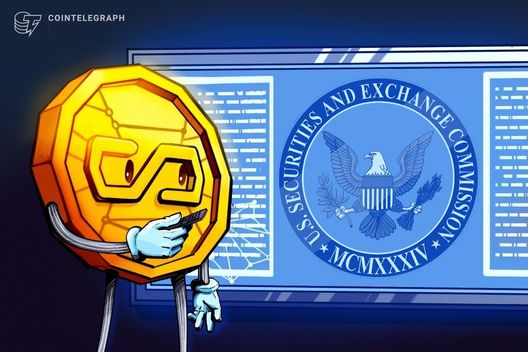
In a move that could significantly lubricate the gears of institutional cryptocurrency adoption, the U.S. Securities and Exchange Commission (SEC) staff has indicated a “no objection” stance to broker-dealers counting stablecoin holdings toward their net capital requirements, albeit with a 2% ‘haircut’. This development, while seemingly minor, represents a pragmatic acknowledgment from a traditionally cautious regulator and marks an incremental, yet crucial, step in bridging the chasm between traditional finance (TradFi) and the burgeoning digital asset ecosystem.
As a Senior Crypto Analyst, I view this as more than just a regulatory nuance; it’s a foundational shift. Broker-dealers (BDs), integral intermediaries in capital markets, have long faced ambiguity regarding the treatment of digital assets on their balance sheets. Existing net capital rules, designed for traditional securities, posed significant challenges, often leading to punitive capital charges that made stablecoin custody or transactions prohibitively expensive or complex. This “no-action” letter or staff statement from the SEC effectively provides a pathway, allowing BDs to integrate stablecoins into their operations with a clear, albeit conservative, risk framework.
**Understanding the ‘Haircut’ and its Implications**
The 2% ‘haircut’ is central to this allowance. In financial regulation, a haircut refers to a percentage deduction from the market value of an asset for regulatory capital purposes. It’s a buffer designed to account for potential price volatility, liquidity risk, or credit risk. For instance, if a broker-dealer holds $100 million in stablecoins, they would effectively value it at $98 million for net capital calculations, requiring them to hold additional capital against the imputed $2 million risk. The relatively small 2% haircut signals that the SEC staff, at this juncture, perceives well-reserved and liquid stablecoins as relatively low-risk assets, a notable departure from the agency’s often hawkish rhetoric on other crypto assets.
For broker-dealers, this clarity is invaluable. It simplifies balance sheet management and reduces the operational and regulatory overhead associated with holding stablecoins. Prior to this, many BDs would have had to apply much higher, often prohibitive, capital charges or avoid stablecoins altogether. Now, they can more confidently custody, clear, and potentially facilitate client transactions involving stablecoins, enhancing their service offerings and catering to a growing institutional demand for digital asset exposure.
**Validation and the Stablecoin Ecosystem**
Beyond operational ease, this development carries significant symbolic weight for the stablecoin ecosystem. The SEC, under Chair Gary Gensler, has been steadfast in its position that most cryptocurrencies are unregistered securities. However, by providing this guidance on stablecoins, the agency implicitly acknowledges their distinct nature and potential utility within financial markets. While it stops short of a definitive regulatory classification, it’s a de facto validation that stablecoins, particularly those with robust reserve attestations and transparent operations, can be integrated into regulated financial workflows.
This could catalyze increased institutional demand for high-quality stablecoins like USDC or USDT (assuming they meet the implicit criteria of stability and transparency), potentially differentiating them further from less robust alternatives. Broker-dealers seeking to offer tokenized securities, facilitate cross-border payments, or engage in digital asset lending could now use stablecoins as a more capital-efficient settlement layer or collateral instrument.
**Broader Market Implications and Regulatory Trajectory**
This move by the SEC staff also offers insights into the broader U.S. regulatory trajectory for digital assets. In the absence of comprehensive federal legislation, particularly regarding stablecoins, agencies are employing more granular, pragmatic approaches. This staff statement serves as a tactical bridge, allowing regulated entities to engage with certain crypto assets while policymakers continue to grapple with a holistic framework. It underscores a ‘slow but steady’ approach to institutional crypto integration, prioritizing risk mitigation while acknowledging market realities.
We might see this as a precursor to similar specific guidances for other tokenized assets or even certain highly liquid cryptocurrencies, albeit with potentially higher haircuts reflecting greater volatility. It also puts pressure on stablecoin issuers to maintain impeccable reserve transparency and audit standards, as regulatory comfort will undoubtedly gravitate towards the most robust and compliant offerings.
**Caveats and the Road Ahead**
It is crucial to emphasize that this is a ‘no-action’ letter or staff statement, not formal rulemaking or legislation. It is specific to broker-dealers and their net capital requirements for holding stablecoins. It does not provide a universal regulatory classification for stablecoins, nor does it absolve BDs from complying with other pertinent regulations, such as Anti-Money Laundering (AML) and Know Your Customer (KYC) rules.
The SEC can, and likely will, revisit this stance as the market evolves and as comprehensive stablecoin legislation potentially takes shape. Therefore, while a positive step, it is not a final destination but rather a significant milestone on a longer journey towards a fully integrated and regulated digital asset market within traditional finance.
In conclusion, the SEC staff’s decision to allow a 2% haircut for stablecoin holdings by broker-dealers is a quiet but powerful endorsement. It demystifies a critical regulatory hurdle, empowering regulated financial entities to engage more directly and efficiently with stablecoins. This signals a measured, pragmatic evolution in U.S. digital asset regulation, paving the way for greater institutional comfort and, ultimately, broader adoption of stablecoin utility across global financial markets. It’s a testament to the growing inevitability of digital assets intertwining with the fabric of TradFi, one regulatory clarification at a time.