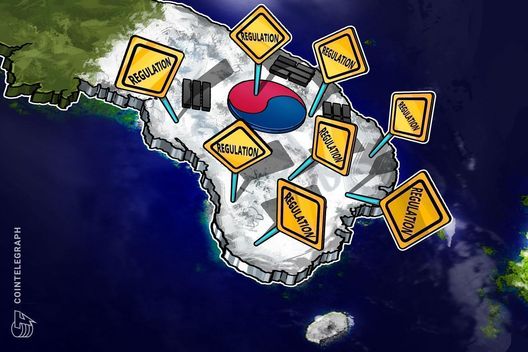
South Korea’s vibrant, yet tightly controlled, cryptocurrency market is on the cusp of a significant transformation. A recent policy update from Google Play, mandating proof of Financial Intelligence Unit (FIU) registration acceptance for all crypto-related applications, is set to erect formidable barriers for offshore exchanges. This move, analyzed from the perspective of a Senior Crypto Analyst, signifies a potent convergence of tech giant influence and national regulatory ambition, promising profound implications for market access, competition, and user behavior within one of Asia’s most dynamic crypto hubs.
The essence of Google’s new requirement lies in its direct alignment with South Korea’s existing regulatory framework. For years, the nation has sought to bring cryptocurrency operations under strict anti-money laundering (AML) and know-your-customer (KYC) protocols, culminating in the Special Financial Transactions Information Act (특정금융정보법). This law mandates that all virtual asset service providers (VASPs) operating within South Korea, or serving its citizens, must register with the FIU and partner with a local bank to issue real-name verified accounts. While domestic exchanges like Upbit, Bithumb, Coinone, and Korbit have navigated this complex terrain, offshore platforms have largely continued to serve South Korean users, often without direct local regulatory compliance, relying instead on their global licenses or simply not being physically located within Korea.
Google Play’s updated policy fundamentally alters this dynamic. By demanding ‘proof of FIU registration acceptance,’ Google effectively deputizes itself as a digital gatekeeper, enforcing national regulatory dictates on a global scale. This is not merely about having a license; it’s about formal acceptance by the Korean FIU, a process that typically requires a significant local operational presence, adherence to specific data localization rules, and robust AML/KYC infrastructure tailored to Korean standards. For most offshore exchanges, achieving this level of compliance without fully establishing a local subsidiary or re-engineering their global operations to meet Korean specifics is an insurmountable hurdle. The cost, complexity, and inherent conflict with their existing business models make full compliance highly improbable for many.
The immediate consequence will likely be a mass delisting of non-compliant offshore crypto apps from the Google Play Store in South Korea. This will disproportionately affect platforms that offer a wider array of altcoins, more sophisticated derivatives trading, or perceive themselves as providing greater anonymity—features often sought by Korean users looking beyond the more restricted offerings of domestic exchanges. Users seeking these options previously relied heavily on mobile applications for ease of access and trading on the go. The removal of these apps will create a significant vacuum, drastically narrowing the options available to the average Korean crypto investor.
From a user’s perspective, this tightening of the digital border presents a dilemma. While it theoretically enhances investor protection by ensuring all accessible platforms adhere to stringent AML/KYC standards, it simultaneously reduces market choice and potential diversification opportunities. Korean users, renowned for their active participation in crypto markets, might find themselves funnelled towards the ‘Big Four’ domestic exchanges, which, while compliant, may not offer the full spectrum of global crypto assets or advanced trading functionalities. This could lead to a two-tiered market: a heavily regulated, more expensive domestic market, and a fragmented, harder-to-access grey market pursued by persistent users through VPNs, web browsers, or peer-to-peer (P2P) channels, potentially increasing their exposure to unregulated risks.
For the established South Korean domestic exchanges, this move represents a significant consolidation of power and market share. With reduced competition from international players, they stand to capture a larger portion of the local trading volume. However, this increased dominance also comes with heightened scrutiny and responsibility. Regulators will expect these domestic platforms to maintain impeccable compliance records and robust investor protection measures, lest they invite further regulatory intervention or public backlash.
More broadly, this development sets a powerful precedent. It illustrates how major technology platforms can be leveraged by national governments to enforce domestic financial regulations, extending their reach beyond traditional jurisdictional boundaries. This ‘digital border control’ strategy could inspire similar actions in other countries, leading to further fragmentation of the global crypto market. It underscores the ongoing tension between the decentralized, borderless ethos of cryptocurrency and the centralized, sovereign demands of national financial systems. The role of tech giants as unwitting (or willing) enforcers adds a new layer to this complex global regulatory landscape.
In conclusion, Google Play’s policy update marks a watershed moment for the South Korean crypto market. It’s a clear signal that the era of loosely regulated offshore exchanges serving Korean citizens via mainstream app stores is drawing to a close. While this move is designed to bolster AML efforts and enhance investor protection, it comes at the cost of reduced market access and choice for users. As a Senior Crypto Analyst, I anticipate a period of significant market adjustment, potential shifts in user behavior towards alternative access methods, and a strengthening of the domestic crypto ecosystem, all while underscoring the growing influence of non-state actors in shaping the future of global crypto regulation.