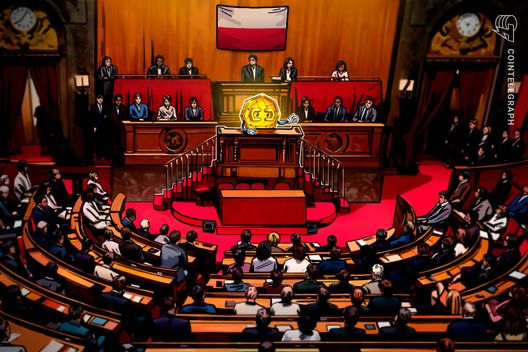
Poland’s digital asset landscape remains mired in uncertainty following the parliament’s second unsuccessful attempt to override President Karol Nawrocki’s veto of a comprehensive crypto regulation bill. This persistent legislative gridlock not only prolongs a period of regulatory ambiguity but also sends a concerning signal to the burgeoning global crypto industry, casting a shadow over Poland’s ambitions to foster innovation and participate fully in the digital economy. As a Senior Crypto Analyst, the implications of this impasse are profound, touching upon economic competitiveness, investor confidence, and the very future of digital asset adoption within one of the European Union’s largest economies.
The proposed legislation, details of which have been debated for months, aimed to establish a robust framework for digital assets, likely encompassing aspects such as licensing for crypto service providers, consumer protection mechanisms, and measures against money laundering. While specific provisions of the vetoed bill haven’t been fully disclosed in the provided context, such regulatory efforts typically seek to align domestic markets with international standards, including the EU’s landmark Markets in Crypto-Assets (MiCA) regulation, which is set to come into full effect by late 2024. President Nawrocki’s initial veto, and his steadfast refusal to budge, indicates deep-seated concerns. Common presidential objections in such cases often revolve around fears of stifling nascent innovation through overly burdensome compliance requirements, concerns about the administrative costs for new businesses, or perhaps even perceived deficiencies in the bill’s consumer protection measures, deeming it either too restrictive or not robust enough. The parliament’s repeated efforts underscore a clear belief in the necessity of such a framework, suggesting a desire for clarity and legitimacy for the crypto sector. Yet, the executive’s resistance highlights a fundamental disagreement on the best path forward for digital asset governance.
The most immediate and damaging consequence of this legislative stalemate is the prolonged regulatory uncertainty. For crypto businesses, both domestic and international, operating in Poland becomes a higher-risk proposition. Without clear guidelines on licensing, asset classification, and operational standards, companies face significant challenges in strategic planning, compliance, and securing institutional funding. This environment actively discourages new entrants and could prompt existing players to reconsider their presence, potentially leading to a “brain drain” or “capital flight” towards jurisdictions with more predictable and comprehensive regulatory regimes. Traditional financial institutions, which are increasingly exploring digital asset integration, will likely remain on the sidelines, hesitant to engage with a market lacking a clear legal foundation, thereby limiting the overall market’s maturity and growth.
Poland’s predicament is particularly noteworthy within the broader European Union. While MiCA provides a harmonized framework for crypto assets across member states, domestic legislation is often required to address specific local market nuances or to implement certain optional elements of MiCA. By failing to pass its own bill, Poland risks falling behind its EU counterparts who are actively adapting their legal frameworks to MiCA and beyond. This creates a potential for regulatory arbitrage, where businesses might prefer to establish themselves in countries like France or Germany, which are proactively building their digital asset ecosystems. Poland, a significant economic player in Central Europe, thus risks missing out on the substantial economic benefits – including job creation, foreign investment, and technological advancement – that a thriving and well-regulated crypto sector can bring. The perception of a politically unstable or unwilling regulatory environment can severely hinder the nation’s appeal as a FinTech hub.
While some might argue that a lack of regulation fosters innovation, the reality in the digital asset space is often the opposite. A well-crafted regulatory framework provides legitimacy, builds trust, and allows for the safe onboarding of mainstream investors and institutions. Without it, retail investors in Poland remain more vulnerable to scams, market manipulation, and the collapse of unregulated entities, eroding public trust in crypto assets. This paradox means that by attempting to protect innovation (if that was indeed the President’s primary concern), the current impasse may actually be stifling it by creating an environment perceived as too risky or uncertain for serious, compliant innovators.
Beyond the crypto market itself, this repeated veto highlights a concerning political gridlock within Poland’s governance. The inability of the executive and legislative branches to agree on such a critical piece of modern economic policy suggests deeper ideological differences or perhaps a lack of sufficient stakeholder engagement during the bill’s formulation. Effective policy-making requires consensus, especially in rapidly evolving sectors like digital assets. This ongoing struggle points to a need for more robust dialogue and compromise to navigate the complexities of regulating an innovative, global industry.
With the latest attempt to override the veto having failed, the immediate future of comprehensive crypto regulation in Poland appears bleak. It’s likely that the current bill is effectively dead. Moving forward, several scenarios could unfold:
1. **Revised Bill**: Parliament and the government could go back to the drawing board, incorporating the President’s concerns into a new, significantly revised bill. This would require substantial negotiation and compromise.
2. **Piecemeal Regulation**: Lacking a comprehensive framework, regulators might resort to addressing crypto issues through existing laws or fragmented amendments, leading to a patchwork approach that lacks coherence and could still leave gaps.
3. **EU Influence**: The full implementation of MiCA in 2024 might exert greater pressure on Poland to align its domestic laws, potentially bypassing the current impasse if MiCA’s provisions become directly applicable or strongly influence national approaches.
4. **Stagnation**: The worst-case scenario is prolonged stagnation, where Poland falls further behind in the global race for digital asset leadership, with little movement on a clear regulatory path.
Poland stands at a critical juncture. The presidential veto, while perhaps intended to prevent perceived over-regulation or flawed policy, has instead created a vacuum of uncertainty that actively hinders legitimate growth and exposes both innovators and consumers to unnecessary risks. For Poland to unlock its full potential in the digital economy, a collaborative and forward-thinking approach is paramount. All stakeholders – the President, Parliament, industry leaders, and consumer advocates – must engage in constructive dialogue to craft a balanced, clear, and comprehensive regulatory framework that fosters innovation, ensures market integrity, and protects participants. The global digital asset landscape moves rapidly; Poland cannot afford to be left behind by continued legislative inaction. The onus is now on political leadership to demonstrate the vision and unity required to steer Poland’s crypto future towards clarity and prosperity.