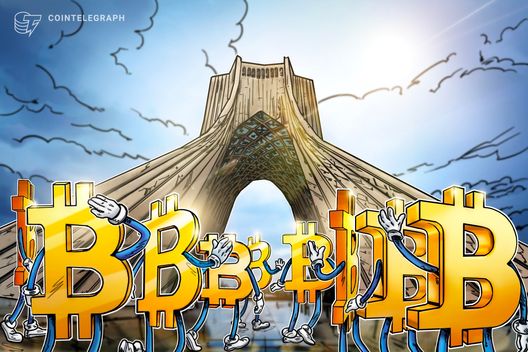
Reports suggesting Iran is demanding a ‘crypto toll’ for oil ships navigating its waters have sent ripples across the global financial and geopolitical landscapes. This development, currently under scrutiny by leading crypto investment firms like Galaxy, through its executive Alex Thorn monitoring on-chain activity for BTC transactions, marks a potentially unprecedented intersection of blockchain technology, international sanctions, and maritime trade. While the specifics remain under investigation, the mere proposition elevates Bitcoin from a speculative asset to a tool with significant geopolitical implications.
Iran, a nation long grappling with stringent international sanctions that have crippled its access to traditional financial systems, has openly explored cryptocurrencies as a means to circumvent these restrictions. The idea of a ‘crypto toll’ for oil ships, whether for safe passage, port services, or other maritime-related fees, aligns with this broader strategy. For Iran, Bitcoin offers a borderless, permissionless, and theoretically censorship-resistant medium of exchange, an attractive alternative to the SWIFT system from which it has largely been disconnected.
From a technical standpoint, the transparency of Bitcoin’s public ledger presents a fascinating paradox for such an endeavor. While transactions are pseudonymous, involving alphanumeric wallet addresses rather than personal identities, the blockchain’s immutable and open nature means that every transaction is publicly recorded. This inherent transparency is precisely what firms like Galaxy are leveraging, scanning for large, unusual BTC transfers that could correlate with reports of such ‘tolls’. Sophisticated on-chain analysis can often link clusters of addresses to entities, trace the flow of funds, and potentially unmask the real-world identities behind transactions, especially if funds eventually move to regulated exchanges that implement Know Your Customer (KYC) and Anti-Money Laundering (AML) policies.
The Bitcoin community’s reaction has been predictably diverse. Maximalists, proponents of Bitcoin’s original vision, might view this as a vindication of its core tenets: a truly decentralized, global money independent of state control. For them, Bitcoin fulfilling its role as a tool for financial sovereignty, even for sanctioned nations, underscores its fundamental value proposition. It showcases Bitcoin’s utility in circumstances where traditional finance falters due to political pressure. Conversely, critics and regulators are likely to view this as a dangerous escalation, highlighting cryptocurrency’s potential to undermine international law and sanctions regimes, thereby increasing calls for stricter regulation and enforcement.
This development raises critical questions about the future of international sanctions and the role of digital assets. If Bitcoin or other cryptocurrencies become a viable mechanism for nations to conduct commerce or levy fees outside the traditional financial system, it could fundamentally alter geopolitical power dynamics. Nations under sanctions might find new avenues for economic activity, potentially lessening the impact of such measures. However, this also poses significant challenges for global efforts to combat illicit finance, terrorism funding, and weapons proliferation, as tracking transactions becomes more complex and enforcement more arduous.
The implications for the broader crypto ecosystem are also profound. Increased utilization of Bitcoin by state actors, regardless of the context, lends a new layer of legitimacy to the asset class. It demonstrates a real-world use case beyond speculation, potentially attracting a new wave of institutional and governmental interest. However, it also carries the risk of regulatory backlash. Governments and international bodies, alarmed by the prospect of sanctions evasion, might intensify their efforts to control and monitor crypto transactions, potentially leading to more stringent regulations on exchanges, mixers, and other privacy-enhancing tools.
Furthermore, the volatility inherent in cryptocurrencies like Bitcoin presents practical challenges for nations attempting to use them for consistent revenue generation. A ‘toll’ collected in BTC could significantly fluctuate in value by the time it’s converted to fiat currency or used for purchases, adding an element of financial risk. This highlights the ongoing need for stablecoin alternatives or more sophisticated hedging strategies if crypto is to serve as a reliable medium of exchange for national coffers.
In conclusion, the reports of Iran’s crypto ‘toll’ for oil ships represent a pivotal moment. It forces a reckoning with Bitcoin’s dual nature: a revolutionary technology offering unparalleled financial freedom, yet simultaneously a powerful tool that can challenge established geopolitical order. As Alex Thorn and other analysts meticulously sift through on-chain data, the world watches to see if this marks the beginning of a new era where digital assets are not just traded on exchanges, but become integral to the complex tapestry of international diplomacy, trade, and conflict. The coming months will undoubtedly reveal whether this is an isolated incident or a harbinger of a more crypto-infused geopolitical future, challenging policymakers, regulators, and the crypto community alike to adapt to a rapidly evolving financial landscape.