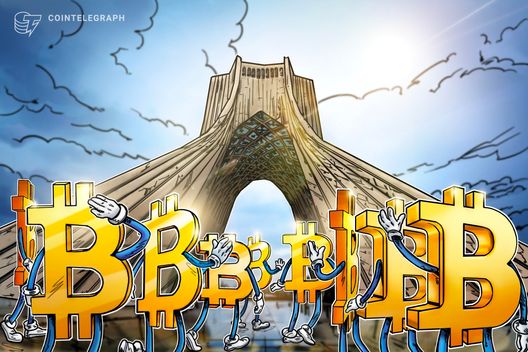
Reports suggesting Iran may be demanding cryptocurrency, specifically Bitcoin (BTC), for safe passage or services related to oil shipments through the strategically vital Strait of Hormuz have sent ripples across the global crypto and geopolitical landscapes. This development, currently under close scrutiny by leading crypto investment firms like Galaxy Digital, underscores Bitcoin’s evolving and increasingly complex role in international finance and power dynamics.
At its core, this situation represents a stark illustration of a sanctioned nation’s relentless pursuit of alternative financial arteries to circumvent traditional banking systems. Iran, long a target of stringent Western sanctions, has historically explored various methods to maintain its economic lifelines, particularly regarding its lucrative oil exports. From barter systems to intricate payment networks, Tehran has consistently sought innovative solutions. The potential pivot to cryptocurrency for what amounts to a ‘toll’ or ‘fee’ for transit through one of the world’s most critical maritime chokepoints is a logical, albeit audacious, extension of this strategy.
The Strait of Hormuz, linking the Persian Gulf with the open sea, is traversed by roughly one-fifth of the world’s oil supply. Control, or even influence, over this passage grants significant leverage. Historically, Iran has utilized its geographical advantage to assert its influence, often leading to heightened tensions. Demanding payment in a decentralized, censorship-resistant digital asset like Bitcoin could serve multiple purposes for Iran: generating revenue, further circumventing sanctions, and demonstrating a novel form of financial autonomy beyond the reach of traditional fiat mechanisms.
From Iran’s perspective, Bitcoin presents several compelling advantages. Its pseudonymous nature offers a degree of obfuscation, making it challenging for global financial watchdogs to trace the ultimate beneficiaries. Furthermore, transactions are irreversible and occur on a decentralized network, eliminating intermediaries that could be pressured by sanctioning bodies. Unlike traditional bank transfers, which can be frozen or blocked, a Bitcoin transaction, once confirmed, is final. This characteristic is precisely what makes Bitcoin an attractive, albeit high-risk, instrument for entities seeking to bypass conventional financial controls.
The crypto community, particularly firms engaged in on-chain analysis, is now watching closely. Alex Thorn, an executive at Galaxy, highlighted this vigilance, stating his firm is “monitoring on-chain activity for signs of an oil tanker fee paid in BTC.” Identifying such transactions, however, is a nuanced task. While Bitcoin transactions are publicly visible on the blockchain, the identities behind wallet addresses remain pseudonymous. Analysts would be looking for large, unusual BTC transfers that align with known shipping schedules or geopolitical events, potentially originating from entities linked to maritime trade or state-owned enterprises, and directed towards addresses with suspected Iranian affiliations. Advanced clustering techniques and behavioral analysis might offer clues, but definitive attribution without additional intelligence is notoriously difficult.
Should Iran successfully implement such a system, the implications for Bitcoin and the broader cryptocurrency ecosystem would be profound and multi-faceted. On one hand, it would serve as a powerful real-world demonstration of Bitcoin’s utility as a neutral, permissionless medium of exchange, capable of facilitating transactions outside traditional financial rails. Proponents of Bitcoin’s original cypherpunk ethos might view this as validation of its core design principles: censorship resistance and sovereign money.
On the other hand, the deployment of Bitcoin in this context would undoubtedly intensify regulatory scrutiny globally. Western governments, particularly the United States, would likely view such actions as a direct challenge to their sanction regimes and an exacerbation of illicit finance concerns. This could trigger a swift response, potentially leading to increased pressure on crypto exchanges to enhance their Anti-Money Laundering (AML) and Know Your Customer (KYC) compliance, further attempts to ‘blacklist’ specific Bitcoin addresses, or even broader regulatory crackdowns aimed at curbing crypto’s use in sanction evasion. The narrative linking crypto to illicit activities, despite its small percentage compared to traditional finance, would gain renewed traction, potentially impacting broader institutional adoption and market sentiment.
For global shipping and trade, a crypto-based toll introduces a layer of complexity and risk. Shipping companies would face difficult choices, balancing commercial expediency with compliance risks. Navigating sanctions is already a perilous endeavor for international businesses; adding a volatile, pseudonymous digital asset to the mix would only heighten the legal and operational challenges. It could also lead to increased insurance premiums, higher operational costs, and potential reputational damage for companies inadvertently participating in sanction-evading schemes.
Ultimately, Iran’s alleged exploration of a crypto toll for oil shipments highlights a pivotal moment in the convergence of geopolitics, technology, and finance. It tests the boundaries of financial sovereignty, challenges traditional state power, and forces a re-evaluation of cryptocurrency’s role on the global stage. While on-chain sleuths remain vigilant, the very existence of these reports signals a future where digital assets are not merely speculative instruments but active participants in the complex, high-stakes game of international relations and economic warfare.