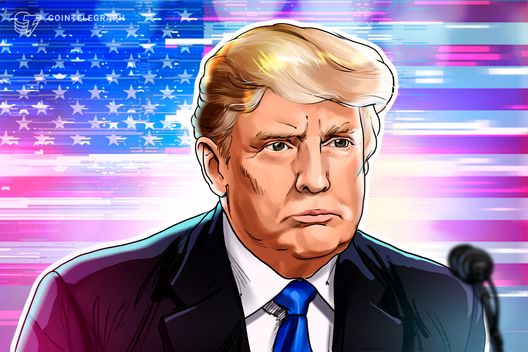
In a statement that sent ripples across global financial and political landscapes, former President Donald Trump recently indicated an imminent U.S. withdrawal from Iran, stating, “We’re finishing the job, and I think within maybe two weeks, maybe a couple of days longer to do the job.” While the primary implications of such a move are undeniably geopolitical, for a Senior Crypto Analyst, these pronouncements serve as critical signals, highlighting potential shifts in global stability, macroeconomic trends, and investor sentiment – all of which invariably influence the nascent yet increasingly interconnected cryptocurrency markets.
Historically, geopolitical tensions have often acted as catalysts for significant movements in traditional and alternative assets. The prospect of the United States completing its ‘job’ in Iran, particularly from a crypto perspective, presents a complex tapestry of potential outcomes. Is this a de-escalation that reduces the immediate demand for ‘safe-haven’ assets like Bitcoin, or does the very act of withdrawal create new uncertainties and power vacuums that reinforce the need for decentralized, censorship-resistant alternatives?
**The Bitcoin ‘Safe Haven’ Thesis Under Scrutiny**
Bitcoin’s narrative as ‘digital gold’ or a safe haven asset typically gains traction during periods of economic or geopolitical instability. When traditional financial systems face uncertainty, investors often seek refuge in assets perceived as uncorrelated or resilient. Trump’s declaration of an impending exit, if interpreted as a step towards regional de-escalation, could, in the short term, lead to a tempering of this specific demand driver. A calmer geopolitical climate might encourage a ‘risk-on’ sentiment, potentially seeing capital flow from perceived safe havens into more speculative assets or back into equities, temporarily diminishing Bitcoin’s immediate allure.
However, a deeper analysis suggests that the situation is far from straightforward. The *process* of withdrawal, and the subsequent realignment of regional powers, can introduce a new layer of uncertainty. A U.S. exit could be seen as creating a vacuum, potentially emboldening other actors or escalating proxy conflicts, thereby sustaining or even increasing the underlying geopolitical risk. In such a scenario, Bitcoin’s long-term appeal as a hedge against systemic risk – beyond just immediate crises – could be reinforced. Crypto investors must discern whether this is a genuine reduction of systemic risk or merely a reshuffling of deck chairs in a volatile region.
**Macroeconomic Ripples and Market Sentiment**
Geopolitical developments in the Middle East frequently impact global energy markets. Iran, a significant oil producer, plays a crucial role in OPEC dynamics. Any perceived change in its stability or production capacity could send oil prices fluctuating. Elevated oil prices can fuel inflation concerns globally, potentially leading central banks to maintain higher interest rates or even tighten monetary policy. For crypto, persistent inflation fears have historically provided tailwinds for Bitcoin as an inflation hedge, while tighter monetary conditions typically dampen overall risk appetite, affecting altcoins and the broader crypto market more severely.
Beyond inflation, the shift in geopolitical dynamics could influence overall market sentiment. A clear resolution or de-escalation could boost global investor confidence, leading to broader market rallies. Conversely, prolonged uncertainty surrounding the transition could keep capital cautious. For the crypto market, this translates into potential shifts in capital allocation, impacting everything from Bitcoin’s dominance to the performance of various altcoin sectors, particularly those sensitive to overall risk appetite.
**Stablecoins and the Sanctions Dilemma**
Iran’s economy has long operated under the shadow of international sanctions. In such environments, cryptocurrencies, particularly stablecoins pegged to major fiat currencies like the USD, have found adoption as tools for wealth preservation and circumventing traditional financial rails. Should a U.S. withdrawal lead to changes in the sanctions regime, or conversely, create new complexities for Iran’s economy, the utility of stablecoins and other crypto assets within the country could evolve. Increased demand for stablecoins in such scenarios could underscore their role as a global medium of exchange and a hedge against local currency devaluation, particularly in regions facing economic hardship or limited access to conventional banking services.
However, this utility also invites greater regulatory scrutiny. Governments worldwide are increasingly concerned about the use of cryptocurrencies for illicit finance, sanctions evasion, and money laundering. A heightened focus on Iran could lead to renewed calls for stricter global crypto regulations, increased know-your-customer (KYC) requirements, and potentially tighter controls on decentralized finance (DeFi) platforms, impacting the broader industry’s growth and innovation.
**Decentralization’s Enduring Appeal vs. Regulatory Pressure**
The core tenet of decentralization, inherent in many cryptocurrencies and DeFi protocols, offers an attractive alternative to centralized financial systems that are often susceptible to geopolitical pressures and state control. In a world where geopolitical shifts can lead to economic instability and capital controls, the ability to transact and store value outside traditional banking systems becomes increasingly appealing. However, the very characteristics that make crypto appealing in these contexts also make it a target for state actors seeking to maintain control over financial flows.
**Conclusion: Navigating an Interconnected Future**
Trump’s statement regarding Iran is more than just a political soundbite; it’s a potential tremor on the geopolitical fault lines that sends reverberations into every corner of the global economy, including the digital asset space. As Senior Crypto Analysts, our role is to look beyond the immediate headlines and understand how these complex interactions will influence capital flows, risk appetite, regulatory landscapes, and the evolving narratives around Bitcoin, altcoins, and the broader decentralized ecosystem.
While short-term reactions may vary, the long-term trend suggests that global events will continue to underscore the need for resilient, transparent, and accessible financial tools. Whether the ‘job’ in Iran ultimately leads to genuine de-escalation or precipitates new forms of instability, the cryptocurrency market will undoubtedly react, adapt, and continue its journey towards greater integration with, and influence on, the world stage. Vigilance, nuanced analysis, and an understanding of macro-geopolitical trends remain paramount for navigating these increasingly interconnected financial frontiers.