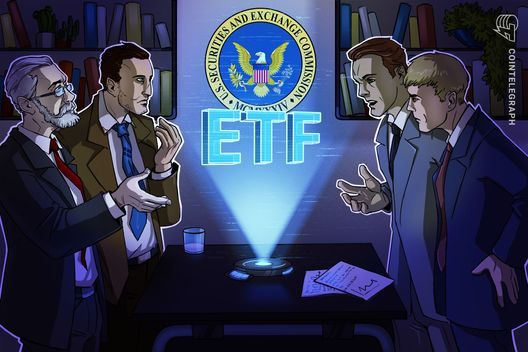
The financial world is abuzz with F/m Investments, an $18 billion asset manager, seeking pivotal SEC approval to tokenize its $6 billion Treasury Exchange Traded Fund (ETF). This isn’t merely a technical adjustment; it represents a profound strategic gambit that, if successful, could fundamentally reshape the architecture of traditional finance (TradFi). As a Senior Crypto Analyst, I view this development as a potential watershed moment, signaling a serious and sustained push for the integration of digital assets into the very core of global capital markets.
At its heart, F/m’s proposal involves recording ownership of its substantial Treasury ETF on a permissioned blockchain. US Treasuries are the bedrock of the global financial system, renowned for their liquidity and perceived safety. By choosing such a fundamental asset, F/m is making a powerful statement: that tokenization is not just for niche digital assets, but for the most stable and ubiquitous securities in the world. Permissioned blockchains, unlike public ones, restrict participation to known, authorized entities, addressing critical concerns around Know Your Customer (KYC) and Anti-Money Laundering (AML) regulations, which are paramount for institutional adoption. The immediate benefits F/m is likely targeting include enhanced operational efficiency, reduced settlement times from days to potentially seconds, lower transaction costs, improved transparency, and greater accessibility for investors globally.
This move by F/m is not an isolated event but rather the latest, and perhaps most impactful, in a growing trend of Wall Street incumbents exploring blockchain technology. Giants like JP Morgan, with its Onyx platform, and BlackRock, through its tokenized money market fund BUIDL, have already launched private or institutional-focused tokenization initiatives. However, F/m’s intent to tokenize an *existing, publicly traded ETF* represents a significant escalation. It aims to bring the benefits of tokenization directly to a broader investor base, transforming a widely held product into a programmable, digitally native asset. This push is fueled by a recognition of blockchain’s inherent advantages: fractionalization, 24/7 market access, enhanced liquidity, streamlined operations via smart contracts, and reduced counterparty risk.
The real battleground for this innovation lies with the SEC. F/m’s request for “relief” indicates that existing securities regulations, designed for a physical or dematerialized paper-based world, are not perfectly suited for digital, blockchain-native ownership. The SEC faces a complex balancing act: fostering innovation while upholding its core mandates of investor protection, market integrity, and capital formation. Key questions for the regulator will include:
* **Legal Definition of Ownership:** How does a token on a permissioned blockchain legally represent ownership of an underlying security?
* **Custody and Security:** Who holds the private keys? What are the implications for asset segregation and investor recovery in case of a breach or failure?
* **Interoperability:** How will a tokenized ETF interact with existing market infrastructure, clearinghouses, and payment systems?
* **Regulatory Parity:** Ensuring that tokenized products meet the same stringent standards as their traditional counterparts, without stifling the technological advantages.
* **Systemic Risk:** Understanding the potential implications of a widespread shift to tokenized securities for financial stability.
An approval would set a powerful precedent, effectively legitimizing tokenized securities as a viable and regulated asset class within the US financial landscape. A rejection, however, would signal continued regulatory caution, potentially slowing the pace of innovation for publicly available tokenized products.
Should F/m receive the green light, the ripple effects would be immense. We could see a “tokenization tsunami” across various asset classes, from real estate and private equity to commodities and other fixed-income products, paving the way for a more integrated and efficient financial ecosystem.
However, challenges remain. The current financial infrastructure is deeply entrenched; migrating to a blockchain-native system requires significant investment, technological expertise, and a fundamental shift in operational paradigms. Issues of scalability, data privacy on permissioned chains, and potential new cyber risks demand continuous attention. Furthermore, the fragmented global regulatory landscape means that while the US SEC’s decision is crucial, international cooperation on standards will be essential for true global interoperability. The “permissioned” nature also raises questions about true decentralization, a core tenet of the broader crypto ethos, though it’s a necessary bridge for current regulatory compliance.
F/m Investments’ audacious bid to tokenize a US Treasury ETF is far more than an administrative filing; it is a declaration of intent from TradFi that blockchain is here to stay and will fundamentally transform how assets are owned, traded, and managed. The SEC’s forthcoming decision will not just determine the fate of one ETF, but will likely serve as a crucial bellwether for the future direction of financial innovation in the United States and potentially worldwide. As we stand at the precipice of this potential revolution, the promise of enhanced efficiency, liquidity, and access presented by tokenization remains compelling. The institutional embrace of blockchain, exemplified by F/m’s initiative, suggests that the digital asset revolution is increasingly moving from the fringes to the very heart of the global financial system, poised to unlock trillions in value.