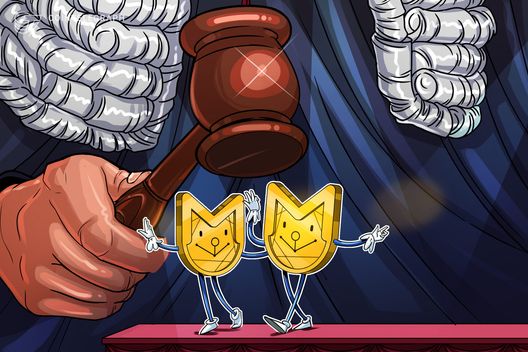
The crypto legal landscape just witnessed a significant development, as a federal judge dismissed a class-action lawsuit against Caitlyn Jenner regarding her eponymous memecoin, JENNER. The crux of the ruling: the token was not plausibly alleged to be an unregistered security. This decision, emerging amidst an already turbulent regulatory environment, sends ripples across the digital asset space, offering both a potential sigh of relief for memecoin creators and celebrity endorsers, while simultaneously underscoring the complexities of applying traditional securities laws to novel blockchain assets.
The lawsuit, filed by disgruntled investors, accused Jenner of orchestrating a ‘pump-and-dump’ scheme and promoting an unregistered security. Launched in May 2024, the JENNER token, like many memecoins, saw rapid price fluctuations, attracting significant attention due to its celebrity association. Plaintiffs alleged that Jenner, alongside figures like Kris Fade and Scott Disick, engaged in promotional activities that led investors to believe their profits would derive from the efforts of these individuals, fulfilling the criteria of an investment contract under the Howey Test.
However, the federal judge disagreed, concluding that the plaintiffs failed to plausibly demonstrate that the JENNER token met the definition of a security. At the heart of the matter lies the notorious Howey Test, established by the U.S. Supreme Court, which defines an investment contract as an “investment of money in a common enterprise with a reasonable expectation of profits to be derived from the entrepreneurial or managerial efforts of others.” The critical phrase here is “efforts of others.” For many decentralized or purely speculative crypto assets, this prong of the Howey Test often proves to be the most challenging for plaintiffs to satisfy.
In the case of JENNER, the judge likely found that the plaintiffs’ allegations did not sufficiently demonstrate an expectation of profit *solely or primarily* from Jenner’s ongoing managerial or entrepreneurial efforts. Instead, the token’s value may have been perceived as driven by broader market speculation, community sentiment, or the actions of individual traders, rather than a centralized entity or person actively managing the enterprise for investors. Unlike a traditional company selling shares with an expectation of dividends or capital appreciation based on business growth, memecoins often derive their value from viral trends, community participation, and sheer speculative demand, which often fall outside the conventional definition of an ‘investment contract’ managed by a promotor. This distinction is crucial: promoting a token is not inherently the same as managing an investment contract where profits are expected to be generated through ongoing efforts.
This ruling has profound implications for the burgeoning memecoin ecosystem. It suggests that merely being a volatile asset, even one heavily promoted by a celebrity, does not automatically classify a token as a security under current interpretations. For projects building meme-centric tokens, this could potentially de-risk certain types of liability, particularly the arduous and expensive legal battles associated with unregistered securities. However, it’s vital to note that this dismissal does not give memecoins a blanket ‘free pass.’ Other legal challenges, such as claims of fraud, market manipulation, or misleading advertising, could still be brought against creators and promoters. The ruling specifically targeted the *securities* claim, not the broader conduct.
For celebrity endorsements in crypto, the impact is equally significant. Celebrities have increasingly faced scrutiny and legal action for their involvement in promoting digital assets, often without proper disclosure of compensation. The SEC, for instance, has previously fined high-profile individuals like Kim Kardashian for failing to disclose payments received for promoting crypto assets. While the Jenner ruling concerns the security classification of the token itself, rather than disclosure violations, it may temper some of the broader fears among celebrities regarding direct liability for the *nature* of the asset they endorse. Nevertheless, the imperative for transparency and clear disclosures remains paramount, as regulatory bodies will continue to monitor celebrity involvement for consumer protection.
This decision also contributes to the broader narrative of regulatory uncertainty in the United States. While the SEC continues to assert broad jurisdiction over many crypto assets, federal courts are increasingly being asked to define the boundaries of that authority. The Jenner ruling, alongside others like the partial victory for Ripple Labs concerning programmatic sales of XRP, highlights the judiciary’s role in shaping how existing laws apply to a rapidly evolving technological landscape. Each ruling, whether it’s a dismissal or a conviction, chips away at the ambiguity, offering glimpses into how different types of digital assets might eventually be categorized.
In conclusion, the dismissal of the lawsuit against Caitlyn Jenner’s memecoin for not plausibly alleging it was an unregistered security marks a potentially watershed moment. It provides a degree of clarity for memecoin projects and celebrity endorsers by reinforcing the high bar for proving a token constitutes an investment contract under the Howey Test. However, this is far from an open invitation for reckless promotion. The crypto space remains a complex legal minefield, where fraud, market manipulation, and consumer protection remain critical concerns. While the JENNER ruling may offer a cautious victory for one segment of the crypto market, it ultimately reiterates the urgent need for comprehensive and tailored regulatory frameworks to ensure innovation can thrive alongside robust investor protection in the digital asset economy.