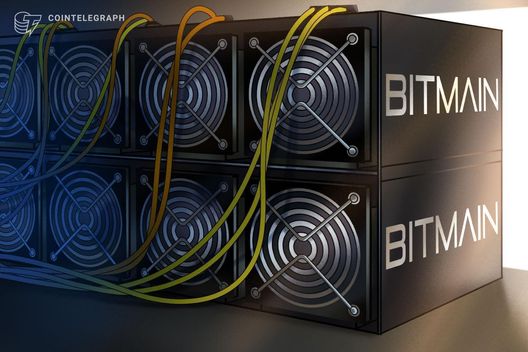
The crypto mining industry, often seen as the bedrock of decentralized networks, is flashing significant distress signals. A recent report highlighting Bitmain’s aggressive price cuts and bundle deals on its high-performance ASIC miners serves as a stark bellwether, underscoring a rapidly deteriorating landscape for operators as the industry braces for a challenging 2025.
Bitmain, a titan in the ASIC manufacturing sector and a formidable force in global Bitcoin mining, rarely resorts to significant discounts unless faced with substantial market headwinds. Their current strategy of slashing prices and offering attractive package deals to mining operators is not merely a promotional tactic; it’s a defensive maneuver against an oversupply of hardware coupled with a pronounced drop in demand. This move by the industry’s largest player indicates an acute overcapacity and a widespread lack of confidence among miners to invest in new equipment, even at reduced costs, suggesting that the profitability outlook is dimming considerably.
The ‘bad note’ on which 2025 is projected to end for the crypto market and, consequently, the mining industry, is a culmination of several intertwined factors. Primary among these is the anticipated squeeze on mining margins. With Bitcoin’s block reward halving events inherently reducing the issuance of new coins, miners rely heavily on transaction fees and the appreciation of Bitcoin’s price to maintain profitability. If the broader crypto market fails to sustain significant bullish momentum, or worse, enters a prolonged bear cycle, the economics for miners become increasingly challenging. Add to this the ever-increasing network difficulty, which necessitates more powerful and energy-efficient hardware to secure the same rewards, and the operational costs begin to mount disproportionately against potential revenue.
Furthermore, the macro-economic environment plays a crucial role. Rising global energy costs, driven by geopolitical instability, inflation, and shifting regulatory landscapes towards green energy initiatives, directly impact a miner’s largest operational expense. Regions that once offered cheap, abundant power are seeing price hikes or introducing new environmental regulations that make large-scale mining less attractive or even unsustainable. The interplay of these forces creates a scenario where even cutting-edge ASIC hardware, designed for maximum efficiency, struggles to generate sufficient returns, leading to a deferral of capital expenditure by mining firms.
Bitmain’s discounting strategy, therefore, is an attempt to offload inventory and stimulate sales in a saturated market where potential buyers are hesitant. For smaller, less capitalized mining operations, these discounts might offer a temporary lifeline or an entry point, but the underlying economics of the industry remain precarious. Larger, publicly traded mining companies, while often better positioned with access to capital and diverse revenue streams, are also feeling the pinch. Their stock performance is increasingly tied to Bitcoin’s price action and their ability to secure favorable energy contracts, making any dip in market sentiment or rise in operational costs a significant threat.
This period of turmoil could accelerate consolidation within the mining sector. Less efficient or financially weaker miners may be forced to capitulate, selling off their assets – potentially even their discounted Bitmain hardware – to better-capitalized competitors. This consolidation would likely lead to a more centralized mining landscape, contrary to the decentralized ethos of cryptocurrencies, but potentially more resilient to market downturns due to economies of scale and sophisticated risk management strategies.
The outlook for 2025 indeed appears grim for many in the mining space. Beyond the immediate profitability concerns, regulatory scrutiny is intensifying globally, particularly concerning the environmental impact of Proof-of-Work mining. Governments and environmental groups are pushing for greater transparency and potentially stricter controls, which could increase compliance costs and limit operational flexibility. The continuous evolution of blockchain technology, including discussions around alternative consensus mechanisms, also adds a layer of long-term uncertainty to the traditional ASIC-based mining model.
In conclusion, Bitmain’s move to drastically cut ASIC prices is more than just a marketing adjustment; it’s a distress signal from the heart of the crypto mining industry. It reflects a growing apprehension about future profitability, an oversupply of hardware, and a challenging macroeconomic and regulatory environment. As the industry heads into 2025, operators face a critical juncture, needing to adapt swiftly through enhanced energy efficiency, strategic hedging, and perhaps even geographical diversification, or risk being swept away by the deepening currents of an unforgiving market. The resilience of Bitcoin’s security and the future of its mining infrastructure will depend heavily on how these foundational players navigate the turbulent waters ahead.