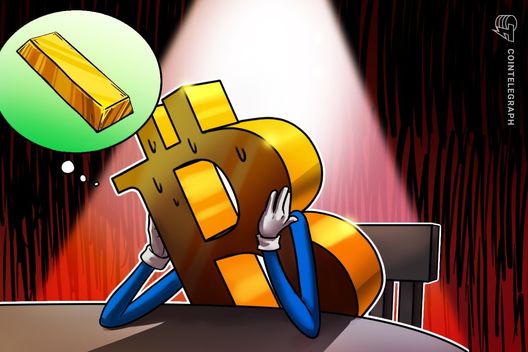
Global markets are once again gripped by a familiar specter: escalating geopolitical tensions threatening to trigger a full-blown trade war. This week, the European Union’s ominous warning of a ‘trade bazooka’ in retaliation against perceived American tariffs, specifically citing disputes related to Greenland, sent ripples across asset classes. While traditional safe-havens like gold soared to record highs, Bitcoin, often championed as ‘digital gold,’ experienced a notable dip of 3.6%. As a Senior Crypto Analyst, this divergent market reaction presents a crucial moment for re-evaluating Bitcoin’s role and resilience in a world increasingly defined by economic nationalism and political brinkmanship.
The immediate catalyst for this market churn is the resurfacing threat of punitive tariffs. The ‘trade bazooka’ metaphor, originating from EU officials, underscores a readiness for aggressive economic countermeasures, escalating from what might have seemed minor diplomatic frictions (like the controversial proposal for the US to buy Greenland) into substantial economic threats. Such rhetoric signals deep-seated geopolitical instability and a willingness of major economic blocs to weaponize trade. Historically, periods of intense trade friction lead to increased uncertainty, potential supply chain disruptions, inflationary pressures from import duties, and a general dampening of global economic growth prospects. Investors, faced with this murky outlook, instinctively seek refuge.
Gold’s performance in this environment is entirely predictable, yet no less significant. The precious metal, with its millennia-long history as a store of value, serves as the quintessential safe-haven asset. Its record-breaking futures prices are a clear testament to its enduring appeal during times of geopolitical unrest and economic ambiguity. When fiat currencies face potential devaluation due to trade-induced economic shocks, or central banks are forced into expansionary monetary policies to offset economic contraction, gold’s non-sovereign, finite supply characteristics shine. It’s a proven hedge against both inflation and systemic risk, a tangible asset in an increasingly intangible financial world. The current surge confirms its role as a bedrock of traditional portfolios in times of crisis.
Bitcoin’s 3.6% decline, however, challenges its burgeoning narrative as ‘digital gold.’ Why did the asset that proponents argue is a superior form of non-sovereign, censorship-resistant, and inflation-proof money fail to rally alongside its physical counterpart? Several factors likely contribute to this initial divergence. Firstly, Bitcoin, despite its growing market capitalization, remains a relatively nascent asset class compared to gold. Its liquidity profile and institutional adoption, while rapidly expanding, are not yet on par with the centuries-old gold market. In moments of acute market stress and risk-off sentiment, institutional and even retail investors often first shed their more volatile or perceived ‘risky’ assets to move into cash or established safe havens.
Secondly, Bitcoin still exhibits a complex correlation matrix. While it aspires to be an uncorrelated asset, its price movements can, at times, align with broader risk assets, particularly technology stocks. When a general market panic ensues, leading to a flight to liquidity and a selling of risk assets across the board, Bitcoin can get caught in the dragnet. This ‘risk-off’ dynamic sees investors prioritize capital preservation over speculative growth, at least in the short term. The immediate reaction isn’t to speculate on a new form of money, but to secure capital in proven safe havens or liquidate assets to cover other positions.
However, it’s crucial for the discerning crypto analyst to look beyond immediate price action and assess the long-term implications. While Bitcoin’s instantaneous reaction diverged from gold, its fundamental value proposition in an era of geopolitical fragmentation and fiat currency uncertainty remains compelling. The very attributes that define Bitcoin – its decentralized nature, programmatic scarcity, resistance to confiscation, and global accessibility – are precisely what make it a powerful alternative in a world where nation-states are increasingly using economic levers as political weapons. If trade wars lead to currency devaluations or capital controls, a globally transferable and permissionless asset like Bitcoin could eventually become an indispensable tool for individuals and institutions seeking financial autonomy.
This isn’t to say Bitcoin’s path to becoming a universally accepted safe haven will be linear or devoid of volatility. Its journey is complex, navigating both technological evolution and market psychology. Each geopolitical tremor, like the current trade bazooka threat, serves as a test case, revealing how Bitcoin performs under different types of stress. The immediate dip might be a short-term liquidity event, a reflection of its current position as a ‘risk-on’ asset for many, rather than a fundamental flaw in its ‘digital gold’ thesis. As the macro environment evolves, and if trade wars persist or deepen, the appeal of a truly non-sovereign, apolitical asset could strengthen considerably, eventually allowing Bitcoin to decouple more consistently from traditional risk assets and potentially even correlate more strongly with gold.
For crypto investors, this period demands a nuanced perspective. While short-term volatility is inevitable, especially when macro-shocks hit, understanding the underlying drivers of Bitcoin’s value proposition is paramount. The current market reaction highlights the ongoing maturation process of Bitcoin as it seeks its definitive place in the global financial architecture. It underscores that while the narrative of ‘digital gold’ is powerful, its real-world manifestation will be shaped by how global financial players, regulators, and the geopolitical landscape continue to evolve. Ultimately, whether Bitcoin truly acts as a safe haven in a ‘trade bazooka’ world may depend less on immediate reactions and more on the sustained geopolitical climate and Bitcoin’s continued institutional adoption as a legitimate store of value, independent of traditional financial systems.