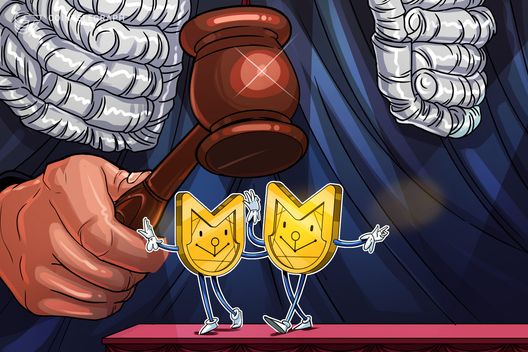
As a Senior Crypto Analyst, the recent dismissal of a class-action lawsuit concerning Caitlyn Jenner’s eponymous memecoin, JENNER, marks a pivotal moment in the ongoing saga of cryptocurrency regulation. A federal judge concluded that the plaintiffs did not “plausibly allege” that the token constituted an unregistered security, effectively tossing a case that had drawn significant attention to the murky intersection of celebrity endorsements, speculative digital assets, and federal securities law. While seemingly a victory for the memecoin ecosystem and its proponents, this ruling introduces layers of complexity that demand a nuanced interpretation, potentially emboldening some while deepening regulatory uncertainty for others.
The lawsuit, initiated by investors who purchased the JENNER token shortly after its launch, alleged that Jenner and other promoters engaged in a “pump-and-dump” scheme, promoting the token without adequate disclosure and effectively selling an unregistered security. The market for JENNER, like many memecoins, experienced extreme volatility, with a rapid ascent followed by an equally swift crash, leaving many investors with significant losses. The core of the legal challenge rested on whether the JENNER token met the criteria of an “investment contract” as defined by the venerable Howey Test, a standard established by the U.S. Supreme Court in 1946 to determine what constitutes a security.
The Howey Test requires four conditions to be met: an investment of money, in a common enterprise, with an expectation of profits, derived solely from the efforts of others. In the context of the JENNER token, the judge’s dismissal hinged primarily on the plaintiffs’ failure to plausibly establish the latter two prongs – specifically, that profits were expected “solely from the efforts of others” in a way that would classify the token as an investment contract. The ruling suggests that the plaintiffs could not sufficiently demonstrate a common enterprise where investors pooled their funds with a reasonable expectation of profit to be derived from the managerial or entrepreneurial efforts of Jenner or specific promoters.
This distinction is crucial. Unlike a traditional security, where an identifiable issuer or management team promises future returns based on their operational efforts or development roadmap, many memecoins, including JENNER, operate under a facade (or reality) of community-driven speculation. Their value is often perceived to be derived from viral marketing, social media hype, and collective retail trading sentiment, rather than from a centralized entity’s efforts to build a product, service, or underlying utility. The judge’s perspective appears to differentiate between generalized market speculation, influenced by celebrity endorsement, and a legally binding investment contract where the success is tied to the efforts of a specific promoter or group managing the enterprise. The court found that the plaintiffs’ allegations amounted to little more than “generalized market forces” rather than a reliance on a specific enterprise managed by the defendants.
For the memecoin market, this ruling could be interpreted in various ways. On one hand, it might provide a temporary shield for certain types of highly speculative, community-driven tokens, suggesting that mere celebrity promotion, without a clear demonstration of an underlying common enterprise and reliance on specific managerial efforts for profit, may not automatically trigger federal securities laws. This could potentially embolden new memecoin launches and celebrity endorsements, albeit with significant caveats. On the other hand, it does not offer a blanket immunity. The specifics of each token, its marketing, and the nature of the “efforts of others” will remain paramount. Memecoins that promise future development, utility, or financial returns based on the actions of a development team or specific individuals could still very much be deemed securities.
This case also brings renewed focus to the thorny issue of celebrity endorsements in crypto. Previous instances, such as Kim Kardashian’s promotion of EthereumMax (EMAX), resulted in an SEC settlement for promoting an unregistered security without disclosure of payment. The key difference might lie in how EMAX was marketed as an “investment opportunity” with specific utility and a roadmap, contrasting with the more overtly speculative and “fun” nature often associated with memecoins like JENNER, where the “investment thesis” is often just “number go up.” However, celebrities and promoters should not view this as a ‘get out of jail free’ card. While federal securities law might not apply in *this specific context*, other legal avenues, such as fraud claims, consumer protection laws, or state securities laws, remain potent tools for regulators and aggrieved investors. The Federal Trade Commission (FTC) also has jurisdiction over deceptive endorsements and unfair trade practices, regardless of whether a token is a security.
From a broader regulatory perspective, the Jenner ruling further complicates the SEC’s “regulation by enforcement” strategy. The agency has aggressively pursued crypto projects, arguing that most digital assets are unregistered securities. This dismissal, however, demonstrates the difficulties in applying a decades-old legal framework like the Howey Test to rapidly evolving, often decentralized, and highly speculative digital assets. It highlights the urgent need for clearer legislative guidance from Congress to define the boundaries of digital assets under existing laws or to create a new framework altogether. Without such clarity, the industry will continue to navigate a patchwork of court rulings and enforcement actions, fostering an environment of uncertainty that can stifle innovation while failing to adequately protect consumers.
As a Senior Crypto Analyst, my read of this situation is one of cautious optimism tempered with significant reservations. This ruling does not declare that all memecoins are *not* securities. Rather, it indicates that the plaintiffs in *this specific case* failed to *plausibly allege* that the JENNER token met the Howey Test’s criteria based on the information presented. The distinction between a token *being* a security and a plaintiff successfully *proving* it’s a security in court is paramount. The specifics of each token’s design, its promotional materials, and the extent to which investors are genuinely relying on the efforts of a central party for profit will always be subject to scrutiny. Investors should remain highly skeptical of celebrity-backed projects and understand that regulatory “wins” like this are often narrow and context-specific. The fundamental risks of volatility, illiquidity, and potential for manipulation in the memecoin space remain unchanged.
In conclusion, the dismissal of the Caitlyn Jenner memecoin lawsuit offers a fascinating glimpse into the evolving judicial interpretation of crypto assets. While it may provide some solace to developers and promoters of certain speculative tokens, it is far from a definitive pronouncement on the legal status of memecoins as a class. Instead, it underscores the persistent challenges in applying traditional securities laws to a novel asset class and reinforces the critical need for a tailored regulatory framework that balances innovation with robust investor protection. The crypto legal landscape continues its turbulent journey, and this ruling, while significant, is but one chapter in a much larger, unfolding story.