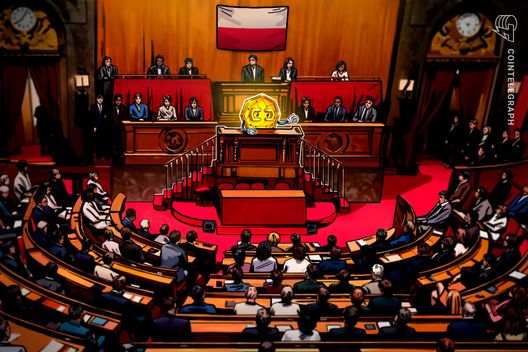
The digital asset landscape in Poland has once again been thrown into a state of flux following the recent announcement that the Polish parliament has failed, for a second time, to override President Karol Nawrocki’s veto of a crucial crypto regulation bill. As a Senior Crypto Analyst, this development signals more than just a legislative hurdle; it represents a significant delay in regulatory clarity, with potential ripple effects for both the domestic Polish market and its positioning within the broader European Union crypto ecosystem.
This legislative stalemate underscores a persistent tension often observed in emerging regulatory frameworks: the delicate balance between fostering innovation and ensuring robust consumer protection and market stability. While the specifics of the vetoed bill have not been fully disclosed in the public domain, it is widely understood that its primary objectives likely revolved around aligning Polish law with the European Union’s landmark Markets in Crypto-Assets (MiCA) regulation, alongside establishing clear guidelines for digital asset service providers, anti-money laundering (AML) compliance, and investor safeguards.
President Nawrocki’s consistent use of the veto power suggests deep-seated concerns regarding the proposed legislation. While the precise reasons remain speculative, common presidential objections to such bills often include fears of stifling innovation through over-regulation, questions about the economic impact on nascent industries, concerns regarding the scope of state oversight, or even specific disagreements with particular clauses deemed either too lenient or excessively restrictive. In some instances, a veto can also be a political maneuver, signaling a desire for a different approach or greater executive input in shaping critical sectors.
For Poland’s burgeoning crypto sector, the implications of this protracted regulatory uncertainty are profound. Businesses operating in the digital asset space, from exchanges to blockchain developers, are left without a clear legal framework. This absence of definable rules can deter both domestic and international investment, as firms are hesitant to commit capital and resources to an environment where regulatory goalposts are unclear or subject to sudden shifts. Such uncertainty can stifle innovation, encourage capital flight to more regulated or crypto-friendly jurisdictions, and potentially lead to a ‘brain drain’ of talent seeking clearer operational guidelines elsewhere.
Moreover, the delay creates a significant void in consumer protection. Without dedicated legislation, Polish investors engaging with cryptocurrencies operate in a less secure environment, potentially exposed to higher risks of fraud, market manipulation, or operational failures from unregulated entities. This situation contravenes the very spirit of modern financial regulation, which seeks to shield retail investors from undue harm in complex markets.
Perhaps the most pressing concern, however, lies in Poland’s relationship with the European Union’s forthcoming MiCA framework. MiCA is set to become fully applicable across all EU member states by the end of 2024, creating a harmonized regulatory environment for crypto-assets. Poland, as an EU member, is obligated to align its national laws with this comprehensive regulation. The repeated failure to pass a domestic crypto bill puts Poland increasingly behind schedule in its MiCA implementation efforts. This delay could lead to a reactive rather than proactive adoption of EU rules, potentially missing opportunities to tailor certain aspects within MiCA’s permissible national flexibilities. It also risks creating a temporary, incongruent regulatory patchwork within the EU, at least until MiCA’s direct applicability fully takes hold.
Looking beyond Poland, this incident serves as a stark reminder of the complexities inherent in global crypto regulation. Even within a seemingly cohesive bloc like the EU, national political dynamics and differing philosophical approaches to digital assets can create significant friction and delays. This contributes to the global regulatory fragmentation that crypto businesses and investors continually navigate, where rules can vary dramatically from one jurisdiction to the next.
The path forward for Poland remains uncertain. The parliament could attempt to draft an entirely new bill, addressing the President’s concerns, or President Nawrocki himself might propose alternative legislation. However, with the clock ticking towards MiCA’s full implementation, waiting for an internal consensus risks ceding regulatory initiative to Brussels. Ultimately, a constructive dialogue between the executive and legislative branches, perhaps involving industry experts and consumer advocates, will be crucial to forge a regulatory path that safeguards the interests of all stakeholders while positioning Poland competitively in the rapidly evolving digital economy.
In conclusion, President Nawrocki’s persistent veto on crypto legislation has stalled Poland’s regulatory progress at a critical juncture. The immediate fallout includes heightened uncertainty for businesses and investors, a gap in consumer protection, and a potential misalignment with upcoming EU mandates. The challenge now for Poland is to bridge this legislative divide swiftly and effectively, ensuring that its regulatory framework can support innovation, protect its citizens, and integrate seamlessly with the future of European digital finance.