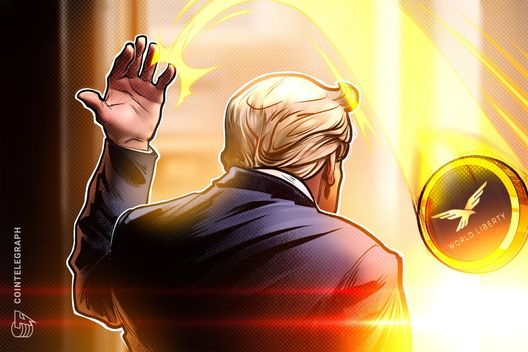
The crypto market, renowned for its innovation and explosive growth, also carries the indelible scars of past collapses. Few events encapsulate this inherent volatility and susceptibility to systemic risk as starkly as the implosion of the Terra-Luna ecosystem. Now, a chilling echo of that catastrophic episode reverberates through the digital asset landscape as World Liberty Financial (WLFI) faces grave allegations, with some traders ominously dubbing it ‘LUNA 2.0.’ Reports suggest WLFI may see its token value plummet by as much as 20% amidst fears stemming from the alleged use of illiquid tokens to secure a substantial $75 million in loans, fueling concerns of a burgeoning bad debt crisis and severely rattling investor confidence. As senior crypto analysts, it is imperative to dissect these allegations, understand their potential ramifications, and assess the broader implications for the decentralized finance (DeFi) space.
At the heart of the controversy lies World Liberty Financial, an entity reportedly operating within the crypto financial sector, specializing in lending or asset management. The core accusation is that WLFI utilized deeply illiquid digital tokens as collateral to borrow a staggering $75 million. For the uninitiated, ‘illiquid tokens’ refer to digital assets that cannot be easily or quickly converted into cash without significantly impacting their price. Unlike highly liquid assets like Bitcoin or Ethereum, which boast vast trading volumes and multiple markets, illiquid tokens often suffer from thin order books, concentrated ownership, and limited trading pairs. Pledging such assets as collateral for substantial loans presents a multifaceted problem: their true market value is difficult to ascertain, they are prone to significant price slippage during liquidation attempts, and their perceived value can be artificially inflated due to lack of market depth. This practice, if confirmed, fundamentally undermines the integrity of the lending process, creating a house of cards where the underlying collateral is far from robust.
The immediate comparison to ‘LUNA 2.0’ by concerned traders is not merely hyperbole; it reflects a deep-seated fear of history repeating itself. While WLFI’s alleged predicament doesn’t involve an algorithmic stablecoin death spiral, the parallel is drawn from the fundamental mechanism of risk: the reliance on an asset that, under stress, proves insufficient or worthless as backing for a financial obligation. Terra-Luna’s collapse was predicated on a fragile collateral mechanism for its UST stablecoin, which failed catastrophically when market conditions turned, leading to a liquidity crunch and a complete loss of confidence. In WLFI’s case, the alleged use of illiquid tokens points to a similar vulnerability: if the value of these tokens cannot be maintained or, crucially, if they cannot be liquidated effectively to cover the $75 million debt, the lending platform could face insolvency. The very specter of LUNA serves as a potent psychological trigger, reminding the market of how quickly perceived stability can dissolve into chaos when underlying collateral fails.
The implications of illiquid collateral extend far beyond WLFI itself. Should the value of these pledged tokens decline, or prove impossible to liquidate at a fair price, the $75 million loan effectively transforms into bad debt. This directly impacts the lenders who provided the capital to WLFI. If these lenders are other DeFi protocols, centralized exchanges, or even individual users, the potential for contagion is immense. A failure to repay could trigger a cascade of defaults across interconnected platforms, leading to a broader credit crunch within the crypto ecosystem. We’ve seen this play out with the collapses of Three Arrows Capital and Celsius, both of which had tangled webs of inter-company lending and leveraged positions that amplified systemic risk. Furthermore, the concern isn’t just about direct lending; if WLFI is a significant participant in other DeFi pools or protocols, its potential insolvency could lead to widespread withdrawals, further exacerbating liquidity issues across the entire market segment.
The immediate market reaction to these allegations has been swift and severe, with WLFI tokens reportedly facing a potential 20% decline. This sharp downturn is indicative of rapidly deteriorating investor confidence. Traders, having witnessed numerous market capitulations driven by similar concerns, are quick to de-risk. Beyond WLFI’s native token, such incidents cast a long shadow over the entire decentralized finance (DeFi) sector. They rekindle questions about the transparency, true decentralization, and robust risk management practices of many projects. Each ‘black swan’ event, whether it’s an exploit, a rug pull, or a systemic failure due to questionable collateral, chips away at the burgeoning trust that is critical for mainstream adoption. The perception of a recurring pattern of ‘bad actors’ or poorly designed systems leveraging obscure, illiquid assets erodes the narrative of crypto as a safer, more transparent alternative to traditional finance.
Such high-profile allegations are a siren call for regulators worldwide, who are already grappling with how to oversee the nascent and often opaque digital asset space. Incidents like the alleged WLFI scenario provide further impetus for stringent oversight, particularly concerning collateral standards, lending practices, and transparency requirements within DeFi. The question of who is responsible when illiquid assets fail as collateral, and how to protect retail investors, becomes paramount. For WLFI, the path forward, if these allegations are to be mitigated, would necessitate immediate, transparent communication regarding its asset holdings, collateralization ratios, and risk management framework. Proving solvency and the legitimate backing of its loans will be crucial. For investors, this serves as another stark reminder of the non-negotiable importance of rigorous due diligence, understanding the true nature and liquidity of collateral in lending protocols, and diversifying portfolios to mitigate single-point-of-failure risks.
The ‘LUNA 2.0’ allegations facing World Liberty Financial represent a critical juncture, not just for WLFI itself, but for the broader crypto ecosystem. The alleged use of illiquid tokens to secure significant loans resurrects deep-seated fears about bad debt, contagion, and the systemic risks that can undermine even seemingly robust financial structures in the digital realm. While investigations are undoubtedly underway, the market has already delivered its verdict through price action and diminished confidence. This incident underscores the urgent need for greater transparency, robust risk assessment frameworks, and a collective commitment to sound financial practices within the crypto industry. As the dust settles, the WLFI saga will serve as another potent case study, reinforcing the crucial lesson that in the volatile world of decentralized finance, the quality and liquidity of collateral are not just technical details, but the very bedrock of stability and trust. Investors and participants alike must remain vigilant, demanding clarity and accountability to prevent the ghosts of past collapses from haunting the future of crypto.