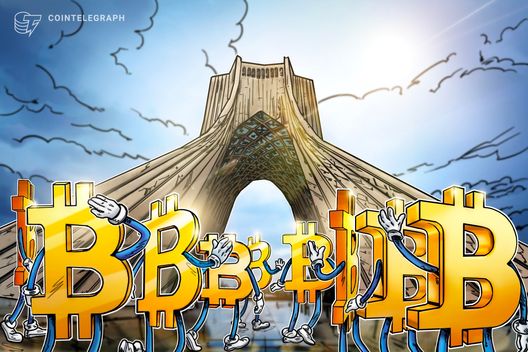
The intersection of geopolitics and decentralized finance has once again ignited a fierce debate, following reports that Iran may be demanding payment in Bitcoin (BTC) for oil tankers seeking safe passage through its waters. This development has not only captured the attention of the global crypto community but has also spurred serious investigation from institutional players like Galaxy Digital, whose executive Alex Thorn has confirmed they are actively monitoring on-chain activity for any corroborating evidence. This potential strategic pivot by Iran marks a critical juncture, testing the boundaries of Bitcoin’s utility as a censorship-resistant asset against the formidable apparatus of international sanctions.
At its core, the allure of Bitcoin for a nation like Iran is strikingly clear. Plagued by stringent international sanctions, particularly from the United States and the European Union, Iran’s access to conventional financial systems—SWIFT, USD-denominated transactions, and global banking networks—is severely restricted. This isolation necessitates alternative avenues for trade and revenue generation. Bitcoin, with its decentralized architecture, pseudonymity, borderless transferability, and resistance to traditional financial oversight, presents a seemingly potent tool for circumventing these economic blockades. The reports suggest that instead of traditional hard currencies or barter, Iran might be leveraging BTC to facilitate the flow of its most vital commodity, crude oil, or to charge a ‘toll’ for ships navigating through strategic maritime choke points under its influence. This move, if confirmed, would not be entirely unprecedented, as Iran has previously explored cryptocurrencies for import payments, albeit on a smaller, state-sponsored scale.
The Bitcoin community, ever vigilant and vocal, has responded with a mixture of skepticism, serious analysis, and ethical introspection. On one hand, some dismiss these reports as mere FUD (fear, uncertainty, and doubt), cautioning against linking Bitcoin solely to illicit activities. On the other, a significant portion of the community, comprising on-chain analysts and crypto sleuths, recognizes the genuine possibility and has begun their own scrutiny. The decentralized and transparent nature of Bitcoin’s public ledger means that while transactions are pseudonymous, they are not anonymous. Large, unusual transactions, particularly those involving addresses with potential links to sanctioned entities or regions, can be flagged and investigated. These digital detectives would be meticulously searching for atypical transaction patterns, significant BTC movements, and any indirect associations that might validate the claims, demonstrating the community’s self-regulatory, watchdog role.
Beyond technical analysis, the reports have reignited the perennial debate surrounding Bitcoin’s ‘dual-use’ nature. For many maximalists and techno-libertarians, Bitcoin is a neutral, open-source protocol—a tool that can be used for good (financial freedom, remittances) or ill (sanctions evasion, illicit trade). The argument posits that the technology itself is agnostic, and its use reflects the intentions of its users, not an inherent flaw. However, for regulators and critics, such an application would further entrench Bitcoin’s association with illicit finance, potentially leading to increased regulatory scrutiny and pressure on exchanges and service providers to enhance Know Your Customer (KYC) and Anti-Money Laundering (AML) protocols. The ethical dilemma pits the ideal of censorship-resistance against the global imperative to enforce sanctions and prevent the funding of potentially hostile state actors.
The involvement of institutional players like Galaxy Digital, a prominent crypto investment firm, underscores the gravity of these allegations. Their public acknowledgment of monitoring on-chain activity elevates the discourse beyond internet speculation. Galaxy, possessing sophisticated analytical tools and expertise, would be examining large-scale transactions, clustering techniques to identify related addresses, and timing correlations that could link BTC movements to oil tanker transits or known Iranian entities. Their findings, or lack thereof, would carry substantial weight, potentially either validating the reports or debunking them with authoritative analysis. This institutional scrutiny serves as a vital check, highlighting that even in the pseudonymous world of Bitcoin, sophisticated eyes are always watching, making complete evasion increasingly challenging.
The broader implications of confirmed Bitcoin usage for sanctions evasion are far-reaching. For international sanctions regimes, it would represent a significant crack in their enforcement capabilities, compelling governments to develop more robust strategies for monitoring and potentially blacklisting crypto addresses. For the cryptocurrency industry, it could accelerate the pace of regulation, potentially leading to greater demands for transparency and compliance from all market participants. Geopolitically, it would introduce a new dimension to economic warfare, where financial innovation becomes a battleground for state power. While plausible in theory, the practical challenges for Iran would remain: managing the liquidity of large BTC sums, converting them back to usable fiat currency, and ensuring secure, anonymous exchange access without creating new vulnerabilities. These logistical hurdles highlight that while Bitcoin offers a bypass, it’s not without its complexities.
As the Bitcoin community, institutional analysts, and global policymakers continue to monitor this unfolding situation, the narrative surrounding Bitcoin’s role in international relations grows increasingly complex. Whether these reports materialize into confirmed on-chain evidence or remain speculative, the mere discussion underscores Bitcoin’s transformative potential—both as a tool for financial freedom and as a formidable challenge to established global financial order. The coming months will likely reveal whether the digital seaways truly become a new frontier for sanctions evasion, permanently altering Bitcoin’s public perception and regulatory landscape.