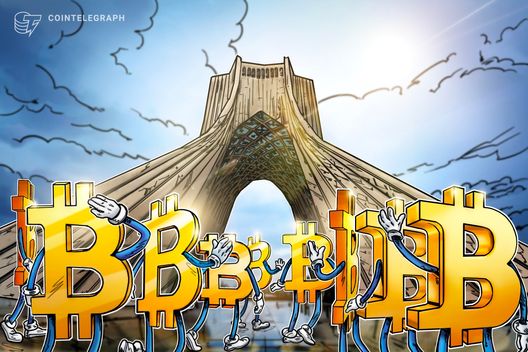
Recent reports suggesting Iran may be demanding crypto tolls for oil ships navigating its waters have sent ripples through geopolitical and financial circles, placing Bitcoin at the epicenter of a complex international issue. While official confirmations remain elusive, the mere credible rumor has prompted senior figures like Alex Thorn, an executive at crypto investment firm Galaxy, to openly state that his team is actively monitoring on-chain activity for any corroborating evidence of such BTC transactions. This development, if proven true, signifies a pivotal moment for digital assets, illustrating their growing entanglement with state-level finance and international sanction regimes.
To understand Iran’s potential pivot to cryptocurrency, one must first grasp the depth of the economic pressure it faces. Decades of stringent international sanctions, particularly those re-imposed by the U.S. after its withdrawal from the Joint Comprehensive Plan of Action (JCPOA), have severely curtailed Iran’s access to the traditional global financial system. SWIFT, the backbone of international banking, has largely become inaccessible, making it exceedingly difficult for Iran to conduct legitimate trade, receive payments for its oil, or even manage its foreign reserves. In this environment, a decentralized, censorship-resistant, and globally accessible financial rail like Bitcoin presents an attractive, albeit risky, alternative. It offers a pathway to bypass the centralized choke points controlled by sanctioning powers, potentially enabling transactions for goods, services, or, in this case, navigational fees, outside the traditional banking purview.
For a nation-state like Iran, Bitcoin offers compelling advantages. Its decentralized nature means no single entity can block transactions or seize funds in the same way traditional banks can be pressured. It operates 24/7, globally, and its pseudo-anonymity—where identities are not directly linked to addresses, but transactions are transparently recorded—provides a layer of operational obfuscation, albeit not true anonymity. Furthermore, the increasing liquidity of BTC, even for large sums, makes it a viable medium for significant cross-border payments. However, this sword cuts both ways. Bitcoin’s open ledger, while seemingly anonymous, is also its greatest vulnerability for illicit activities. Every transaction is permanently recorded and visible to anyone. Advanced blockchain analytics firms, like those employed by intelligence agencies and financial institutions, have become remarkably adept at tracing funds, identifying clusters of addresses, and linking them to real-world entities through various forensic techniques. Moreover, Bitcoin’s notorious price volatility introduces significant risk for state treasuries dealing in large sums, and converting substantial crypto holdings into usable fiat currency without raising red flags remains a formidable challenge.
Alex Thorn’s statement highlights a critical aspect of this story: the verifiability (or lack thereof) through on-chain data. Crypto analysts would be looking for specific patterns. Firstly, unusually large BTC transactions, potentially in the millions of dollars, originating from or directed towards wallets with no clear public affiliation, but showing suspicious interaction patterns. Secondly, they would seek clusters of transactions from various, possibly disparate, sources culminating in a single address or a set of related addresses, mimicking a collective payment scheme. Analysts would also monitor for transactions moving through mixers or privacy-enhancing protocols, which often signal an intent to obscure the origin or destination of funds. However, definitive attribution is exceedingly difficult. Wallets can be created in minutes, obfuscation techniques are constantly evolving, and without external intelligence, linking a specific BTC payment to an “oil ship toll” remains largely speculative. The sheer volume of daily Bitcoin transactions makes finding a needle in a haystack a monumental task, even for sophisticated tools.
The confirmation of Iran utilizing Bitcoin for state-level financial operations would have profound, multifaceted implications for the broader crypto ecosystem. On one hand, it could be framed as a powerful validation of Bitcoin’s foundational promise: a truly sovereign, permissionless, and global monetary network capable of operating outside traditional governmental control. This narrative would resonate strongly with maximalists and those who envision Bitcoin as an alternative to the existing fiat system. It underscores Bitcoin’s utility in situations where trust in traditional institutions or access to them is denied.
On the other hand, such a development would almost certainly trigger a severe regulatory backlash from Western governments. Bitcoin’s association with sanction evasion could intensify calls for stricter AML/CTF regulations, tighter controls on crypto exchanges, and potentially even moves towards more restrictive policies or outright bans in certain jurisdictions. The perception of Bitcoin as a tool for “rogue states” could significantly complicate its path towards mainstream institutional adoption and integration into regulated financial markets. The industry would face immense pressure to demonstrate its commitment to combating illicit finance, potentially leading to more centralized control points within the crypto-fiat on-ramps and off-ramps.
Beyond the crypto sphere, the geopolitical ramifications are equally significant. If Iran successfully leverages Bitcoin to circumvent sanctions, it could set a dangerous precedent, encouraging other sanctioned nations or entities to explore similar avenues. This would pose a substantial challenge to the efficacy of international sanctions as a foreign policy tool, potentially altering the dynamics of global power and diplomacy. It might also accelerate the development of state-backed digital currencies (CBDCs) as a countermeasure, or, conversely, underscore the need for international cooperation on blockchain regulation. The move highlights a nascent financial arms race, where decentralized technologies offer new battlegrounds for economic warfare.
The reports of Iran charging crypto tolls for oil ships represent more than just another news cycle; they symbolize a critical juncture in the maturation of digital assets. While the evidence remains anecdotal and under active investigation by firms like Galaxy, the prospect alone forces a re-evaluation of Bitcoin’s role in international relations. It serves as a potent reminder of Bitcoin’s dual nature: a revolutionary technology offering financial freedom and inclusion, yet also a tool that can be co-opted for purposes that challenge global stability and regulatory frameworks. As analysts continue their on-chain vigil, the world watches to see if this marks a new chapter in economic statecraft, where satoshis indeed become a currency of geopolitical defiance.