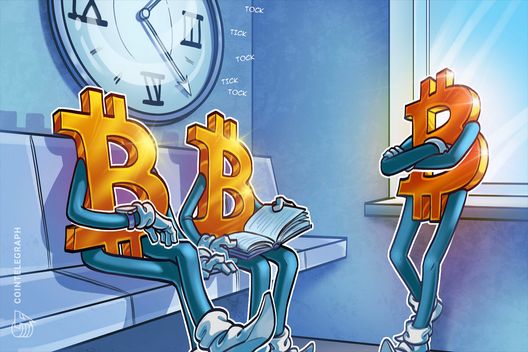
The crypto market, often touted for its independence from traditional financial systems, frequently finds itself in a delicate dance with global geopolitical developments. As the clock wound down on a critical US-Iran deadline, threatening to escalate already fraught tensions, Bitcoin found itself precariously perched around the $68,000 mark. The prevailing sentiment in immediate risk-asset price action appeared to be one of cautious dismissal, an attempt to ‘brush off’ the gravitas of potential conflict. However, for a Senior Crypto Analyst, this calm is less reassuring and more indicative of a complex interplay of fundamental market strength, speculative positioning, and the ever-present specter of systemic risk. This analysis delves into Bitcoin’s current stance, dissecting the forces at play and projecting potential trajectories as the geopolitical landscape continues to shift.
The backdrop to Bitcoin’s current consolidation is a familiar one in modern international relations: renewed rhetoric between the United States and Iran, culminating in an unspecified ‘deadline’ for a potential deal or, conversely, a breakdown in negotiations. While details remain deliberately vague, the implications of heightened US-Iran tensions are anything but. Historically, such escalations have triggered significant market volatility. Traditional risk assets, from equities to commodities (especially oil), react sharply to the prospect of instability in a strategically vital region. Oil prices often surge on supply disruption fears, driving inflation and dampening consumer spending. Investor confidence typically eroding, leading to a ‘flight to safety’ – often into assets like the US Dollar, US Treasuries, or physical gold. The initial market reaction, which saw risk assets attempt to ‘brush off’ these concerns, could be interpreted in several ways: either a belief that a resolution is imminent, a discounting of the severity of the rhetoric, or a market that is fundamentally strong enough to absorb external shocks… for now.
Bitcoin’s ability to maintain its footing around $68,000 in the face of this geopolitical pressure is particularly noteworthy. For years, proponents have championed Bitcoin as ‘digital gold’ – a decentralized, censorship-resistant store of value that should theoretically thrive during periods of fiat currency instability and geopolitical turmoil. Yet, its performance during past crises has been mixed. Sometimes it acts as a safe haven, other times it behaves like a high-beta tech stock, correcting sharply with broader equity markets. This current moment provides another crucial test.
Several factors could explain its current resilience:
1. **Maturing Market Structure:** The influx of institutional capital, particularly through spot Bitcoin ETFs, has provided a more robust floor for Bitcoin’s price. These institutions often have longer-term investment horizons and may view short-term geopolitical shocks as buying opportunities rather than reasons to panic sell.
2. **Halving Hype Cycle:** The recent halving event has historically been a strong bullish catalyst, embedding an expectation of future price appreciation that might outweigh short-term external fears.
3. **Inherent Decentralization Narrative:** For some investors, the very nature of Bitcoin as an asset beyond the control of any single government makes it an attractive hedge precisely when state-level conflicts intensify. They might see fiat currencies and traditional assets as more vulnerable to the ripple effects of international conflict.
4. **Discounting the Threat:** The market might be collectively underestimating the potential for escalation, believing that the rhetoric is largely political posturing rather than a prelude to actual conflict.
However, Bitcoin’s position is also inherently vulnerable. Despite institutional adoption, it remains a relatively young and volatile asset class. A significant geopolitical shock could trigger a broader risk-off cascade that even Bitcoin might not withstand, at least in the short term. Its correlation with tech stocks, particularly during periods of macroeconomic uncertainty, suggests it could easily be pulled down by a wider market correction. The $68,000 level is not just a number; it represents a psychological battleground between bulls keen to push towards new all-time highs and bears looking for an excuse to trigger profit-taking and liquidate leveraged positions.
From a technical perspective, Bitcoin’s hold at $68K is critical. This level has acted as both strong support and resistance in recent cycles. A sustained break above $70K would signal renewed bullish momentum, potentially targeting the previous all-time high and beyond. Conversely, a decisive drop below $67K could quickly unravel into a test of $65K, or even lower supports around $62K, particularly if a geopolitical event turns sour.
Market sentiment indicators offer a mixed bag. Funding rates across perpetual futures contracts remain positive but have cooled somewhat, suggesting some leverage has been unwound. Open interest, while healthy, hasn’t surged dramatically in one direction, indicating a degree of indecision. Options markets show a slight skew towards calls at higher strikes, but put options at lower strikes are also being accumulated, signaling hedging against downside risk. This cautious positioning underscores the uncertainty. Altcoins, true to form, have shown greater sensitivity. While Bitcoin attempts to consolidate, many smaller cap tokens have experienced more pronounced swings, highlighting their higher beta and greater susceptibility to market-wide fear. Should geopolitical tensions genuinely escalate, we would expect a rapid deleveraging across the entire crypto ecosystem, with altcoins leading the downside.
This geopolitical tension doesn’t occur in a vacuum. It intertwines with an already complex macroeconomic environment characterized by persistent inflation, varying central bank interest rate policies globally, and upcoming crucial economic data releases (e.g., CPI, jobs reports). An escalation in the Middle East could significantly impact global energy prices, exacerbating inflationary pressures and potentially forcing central banks to maintain higher interest rates for longer, a scenario typically bearish for risk assets.
Looking ahead, there are several potential scenarios:
1. **De-escalation:** If the US-Iran deadline passes without significant incident or even with a positive resolution, the market could breathe a sigh of relief. Bitcoin would likely resume its bullish trajectory, leveraging the underlying demand from ETFs and the post-halving narrative.
2. **Stalemate/Protracted Tensions:** A lack of clear resolution, coupled with continued rhetoric, could lead to prolonged market uncertainty. Bitcoin might oscillate within a range, unable to break out decisively as investors remain on edge.
3. **Escalation:** The worst-case scenario. A direct conflict or significant diplomatic breakdown would almost certainly trigger a sharp risk-off event across all markets. In the immediate aftermath, Bitcoin would likely experience a significant correction, driven by panic selling and broader market deleveraging. However, in the medium to long term, sustained geopolitical instability could paradoxically strengthen the ‘digital gold’ narrative, positioning Bitcoin as a viable alternative to fiat currencies subject to the whims of national politics and sanctions. This would depend on the *nature* of the conflict and its impact on traditional financial rails.
Bitcoin’s current vigil at $68,000 amidst the US-Iran deadline serves as a potent reminder of the interconnectedness of global finance, even for a supposedly decentralized asset. While the immediate reaction has been one of tempered resilience, the underlying geopolitical currents are strong enough to shift market dynamics rapidly. As Senior Crypto Analysts, our role is to not just observe but to understand the multi-layered implications. Investors must remain exceptionally vigilant, monitoring both the evolving geopolitical narrative and Bitcoin’s technical posture. The next few hours and days could define not just Bitcoin’s short-term price action, but also its broader narrative as a true hedge against systemic risk in an increasingly uncertain world.