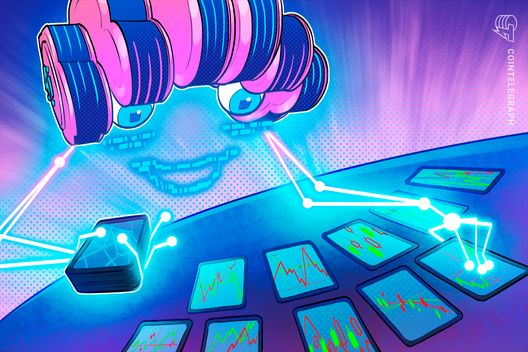
The nascent world of prediction markets, a fascinating intersection of finance, data, and collective intelligence, is on the cusp of a profound transformation. Long heralded as a potential oracle for future events, these markets allow participants to trade shares in the outcome of specific events, from election results to crypto prices. While the allure of uncovering mispricings and profiting from market inefficiencies has always drawn sharp-witted traders, a new, formidable player is emerging: AI agents. These sophisticated algorithms are not merely assisting human traders; they are poised to fundamentally reshape the very fabric of arbitrage, capitalizing on opportunities that often exist for mere seconds – a timeframe where human reaction is rendered utterly obsolete.
Arbitrage, in its purest form, is the simultaneous purchase and sale of an asset to profit from a difference in its price across different markets or forms. In prediction markets, this often manifests when identical or highly correlated outcomes are priced differently across various platforms, or when the sum of probabilities for all outcomes in a single market doesn’t quite add up to 100% (after accounting for fees). Historically, keen human analysts and institutional traders with fast connections could spot these discrepancies and execute trades to capture risk-free profits. However, the rapidly evolving landscape of decentralized finance (DeFi) and the inherent efficiency pressures of digital markets have compressed these windows of opportunity to an astonishing degree.
This is where AI agents gain a structural, almost insurmountable advantage. Unlike humans, who are limited by cognitive processing speed, manual input, and emotional biases, AI agents operate at machine speed. They can continuously monitor hundreds, even thousands, of markets across various platforms simultaneously, processing vast quantities of real-time data with unparalleled precision. The moment a mispricing occurs—perhaps due to a sudden influx of orders on one side of a market, a temporary lag in price propagation, or a new market opening with misaligned odds—an AI agent can identify it, calculate the optimal trade size, and initiate an execution order programmatically within milliseconds.
Consider the typical lifecycle of an arbitrage opportunity in a dynamic market. A human trader might take several seconds just to *perceive* the opportunity, cross-reference prices, and then manually input trade details. By then, the opportunity has often vanished, either exploited by another human with an even faster setup or, increasingly, by an AI. AI agents, conversely, are designed for low-latency execution. They can interact directly with smart contracts on blockchain-based prediction markets, submitting transactions with carefully calibrated gas fees to ensure timely inclusion in blocks, thereby capturing the fleeting profit margin before it evaporates. This speed isn’t just an incremental improvement; it’s a paradigm shift, effectively closing the door on most human-driven arbitrage in these high-frequency environments.
The implications for prediction markets are multi-faceted and profound. Firstly, the increased presence of AI arbitrage will lead to dramatically more efficient markets. Mispricings, once a source of profit for diligent traders, will be smoothed out almost instantly. This means prices will converge rapidly to their ‘true’ underlying probabilities, making prediction markets more accurate reflections of collective belief and, arguably, more valuable as forecasting tools. Secondly, this heightened efficiency could paradoxically attract more liquidity. As the risk of significant mispricings diminishes, sophisticated participants might see prediction markets as more reliable and less prone to volatility driven by inefficiencies, encouraging greater capital allocation.
However, the rise of AI agents also presents significant challenges and raises critical questions about market structure and accessibility. The “race to the bottom” for latency and computational power means that only those with access to superior AI development, robust infrastructure, and significant capital will be able to compete. This could lead to a concentration of profits among a few dominant AI operators, effectively centralizing a decentralized ideal. Smaller, independent human traders, once capable of carving out a niche through keen observation, may find themselves entirely priced out of the arbitrage game.
Furthermore, the autonomous nature of AI agents introduces new risks. Malfunctioning algorithms, unforeseen interactions between multiple competing AIs, or even coordinated AI strategies (whether intentional or emergent) could potentially lead to unexpected market volatility or flash crashes, although the bounded nature of prediction market payouts might mitigate the most extreme scenarios seen in traditional finance. Regulatory bodies, often slow to adapt, will eventually need to grapple with the implications of purely algorithmic market participation, particularly concerning market manipulation and systemic risk.
Looking ahead, the trajectory is clear: AI agents will become the dominant force in identifying and executing high-frequency arbitrage in prediction markets. Human traders will increasingly need to pivot. Their role may shift from direct arbitrage to developing, overseeing, and refining these AI systems, or focusing on longer-term, more strategic trading opportunities that require qualitative judgment beyond current AI capabilities. Prediction markets themselves will evolve, becoming ultra-efficient pricing mechanisms, less about exploiting fleeting opportunities and more about the aggregated intelligence they provide.
In conclusion, the advent of AI agents marks a critical inflection point for prediction markets. Their unmatched speed, precision, and ability to operate continuously provide a structural advantage over human traders, effectively monopolizing arbitrage opportunities that last for mere seconds. While this will usher in an era of unprecedented market efficiency and potentially increased liquidity, it also necessitates a re-evaluation of market accessibility, regulatory oversight, and the very nature of human participation in these fascinating, forward-looking financial instruments. The future of prediction markets will undoubtedly be an algorithmic one.