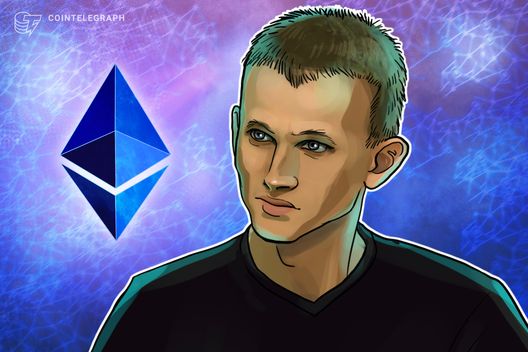
In the evolving blockchain landscape, true decentralization remains paramount. Ethereum co-founder Vitalik Buterin has again underscored this, advocating for significant updates aimed at simplifying the process of running an Ethereum node. His stated goal: to transform the “self-sovereign” method of user-operated nodes into a genuinely user-friendly experience. This seemingly technical aspiration holds profound implications, striking at the very heart of Ethereum’s ethos and its long-term vision for a robust, censorship-resistant, and globally accessible network. As a Senior Crypto Analyst, I view this as more than a software upgrade; it’s a strategic move to democratize network participation and fortify Ethereum’s foundational principles.
Currently, running a full Ethereum node is complex, often limited to technically proficient users or dedicated service providers. It demands significant computational resources, storage capacity (currently hundreds of gigabytes and growing rapidly), and a decent understanding of command-line interfaces and networking configurations. This high barrier to entry inadvertently fosters a reliance on centralized infrastructure providers like Infura or Alchemy. While these services offer convenience and accessibility, they introduce single points of failure and potential vectors for censorship or control. Should a substantial portion of the network’s dApps and wallets route their requests through a handful of entities, the very decentralization Ethereum strives for is compromised. This creates a subtle yet critical vulnerability, where the network’s theoretical resilience is undermined by practical dependencies.
Buterin’s emphasis on “self-sovereign” node operation is not merely a technical preference; it’s a philosophical cornerstone of blockchain technology. A self-sovereign user is one who can independently verify the state of the blockchain, validate transactions, and participate in network consensus without trusting any third party. This capability is the ultimate guarantor of censorship resistance and immutability. When every participant, or at least a highly distributed set of participants, can independently verify the chain’s history and current state, the network becomes incredibly difficult to attack or manipulate. It removes the need for faith in centralized intermediaries, embodying the core promise of “don’t trust, verify.” Simplified node software would empower a wider demographic to exercise this right, drastically increasing the number and geographic distribution of full nodes. This proliferation of independent verifiers directly translates into a more resilient, secure, and ultimately, more decentralized Ethereum, moving it closer to its ideal as a world computer truly owned and operated by its users.
Achieving this user-friendly node experience is a multi-faceted challenge, requiring innovation on several fronts. One key area of focus is the development of “stateless clients” and “Verkle trees.” Currently, full nodes must store the entire historical state of the blockchain, which is computationally and storage-intensive. Stateless clients, leveraging technologies like Verkle trees, would allow nodes to verify new blocks using cryptographic proofs provided within the blocks themselves, rather than needing to maintain the full historical state locally. This would dramatically reduce the storage and processing requirements for running a node, making it feasible on less powerful hardware, perhaps even consumer-grade devices. Furthermore, improvements in client software design and user interfaces are crucial. Imagine a simple plug-and-play solution, or a graphical user interface (GUI) that streamlines setup, synchronization, and maintenance, abstracting away the underlying technical complexities. Efforts around “pruning” older, less frequently accessed data and optimizing data structures also contribute to reducing node footprint. Additionally, advancements in proof systems and lightweight client protocols could enable secure verification with minimal resource demands, extending the reach of self-sovereignty to even mobile devices. The combined effect of these technical advancements would be to lower the barrier to entry from a demanding technical endeavor to a manageable, perhaps even appealing, personal project.
The ramifications of widespread, user-friendly node operation extend far beyond individual empowerment. A network teeming with easily verifiable, independent nodes is inherently more robust against attacks. It enhances network resilience, making it harder for any single entity or coordinated group to exert undue influence. For developers, a more decentralized node landscape fosters innovation by reducing reliance on specific RPC providers, enabling more distributed application architectures. It also strengthens the narrative of Ethereum as a public good, democratizing access and control over a critical global infrastructure. Moreover, a more accessible node ecosystem can serve as an educational tool, demystifying blockchain technology for a broader audience and encouraging deeper engagement with the underlying mechanics of decentralized systems. This democratization fosters a healthier, more engaged community, which is vital for the long-term sustainability and evolution of any decentralized project.
While the vision is clear, the path to achieving it is fraught with challenges. Developing and integrating these complex technical solutions, such as stateless clients and Verkle trees, requires significant research, engineering effort, and careful coordination across various client teams. Ensuring that simplification doesn’t inadvertently introduce new security vulnerabilities or compromise network integrity is paramount. There’s also the challenge of backward compatibility and a smooth transition for existing node operators. Moreover, even with simplified software, user adoption will require effective communication, educational resources, and potentially even incentives. The crypto space, while passionate, can be intimidating, and bridging the gap between sophisticated technology and everyday usability is a continuous endeavor, demanding persistent innovation and a community-wide commitment to Ethereum’s decentralized values.
Vitalik Buterin’s renewed focus on simplifying Ethereum node software is a powerful reaffirmation of the network’s foundational commitment to decentralization and user self-sovereignty. It’s an acknowledgment that true decentralization hinges on accessibility, empowering every user to be a verified participant, not just a consumer. This initiative represents a critical next step in Ethereum’s evolution, promising to fortify its resilience, enhance its censorship resistance, and democratize participation on an unprecedented scale. As Ethereum continues to mature and scale, making the “self-sovereign” path truly user-friendly will be instrumental in realizing its full potential as a decentralized world computer, ensuring it remains robust, accessible, and impervious to centralized control for generations to come.