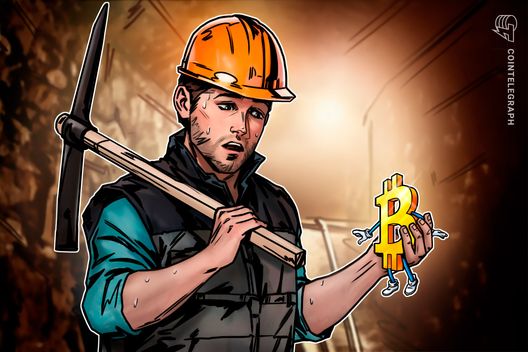
The landscape of Bitcoin mining, once characterized by a relatively straightforward accumulation strategy, is undergoing a profound transformation. As block rewards diminish and operational costs escalate, mere HODLing of mined Bitcoin is no longer a viable long-term strategy. This stark reality underpins a recent assertion from prominent crypto market maker, Wintermute, which posits that miners who treat their Bitcoin holdings as a working asset rather than a passive reserve “will carry a structural edge into the next halving.” This isn’t just a recommendation; it’s a blueprint for survival and prosperity in an increasingly competitive and capital-intensive industry.
Historically, the typical miner’s strategy revolved around acquiring mining hardware, expending energy to secure the network, and accumulating newly minted Bitcoin. The monetization of these holdings often involved selling BTC to cover operational expenses or holding it speculatively, hoping for future price appreciation. While effective during periods of rapid Bitcoin price growth and less competitive mining environments, this passive approach is increasingly vulnerable to market volatility, rising energy costs, and the relentless march of mining difficulty adjustments.
The impending Bitcoin halving, expected in early 2024, looms large over the industry. This event will slash the block reward from 6.25 BTC to 3.125 BTC, effectively cutting miners’ primary revenue stream in half overnight. Miners unprepared for this reduction in earnings will face immense pressure, potentially leading to widespread insolvencies and consolidation. This is precisely where Wintermute’s counsel becomes critical: to survive and thrive, miners must evolve their financial strategies beyond simple extraction and accumulation.
What does it mean to treat Bitcoin as a ‘working asset’? It signifies a shift from a purely HODL mentality to one of active capital management, where BTC holdings are leveraged to generate additional revenue, optimize liquidity, and mitigate risk. This involves employing sophisticated financial instruments and strategies, much like any traditional enterprise would manage its cash and assets.
One of the most accessible and impactful strategies is **DeFi Lending and Borrowing**. Miners can deposit their Bitcoin into decentralized finance protocols or centralized lending platforms to earn yield. This interest income provides a supplementary revenue stream, independent of the block reward, directly contributing to operational costs or funding expansion. Furthermore, miners can use their BTC as collateral to secure stablecoin or fiat loans. This allows them to access working capital for electricity bills, hardware upgrades, or new facility development *without selling their precious Bitcoin*. This is a critical distinction: instead of being forced to sell BTC at potentially unfavorable market prices, they can retain their exposure to Bitcoin’s long-term appreciation while addressing immediate liquidity needs.
Another crucial aspect is **Hedging Strategies**. The price of Bitcoin is inherently volatile, impacting the real-world value of a miner’s future revenue. Through options or futures contracts, miners can effectively lock in a future selling price for a portion of their mined Bitcoin, protecting themselves from downside price movements. This foresight allows for better financial planning and cushions the impact of market downturns. Conversely, sophisticated strategies involving structured products could potentially be used to enhance yield or protect capital while retaining upside exposure.
Furthermore, miners could explore **Liquidity Provision** in regulated or secure DeFi environments, where they contribute their Bitcoin and other assets to liquidity pools, earning fees from trading activity. This, however, introduces additional complexities and risks, such as impermanent loss, which require a deeper understanding of DeFi mechanics.
By adopting these strategies, miners gain a ‘structural edge’ for several reasons. Firstly, they diversify their revenue streams. Relying solely on block rewards and transaction fees, which are inherently volatile and subject to halvings, is a precarious position. Earning yield on existing BTC holdings provides a buffer. Secondly, it optimizes capital efficiency. Instead of idle capital sitting in cold storage, the Bitcoin is actively working, generating returns. This improved capital allocation can directly translate into better operational resilience and the ability to fund growth without diluting their BTC holdings or seeking costly external equity.
Crucially, this active management makes miners more resilient to the post-halving environment. Those with diversified income and optimized liquidity will be better equipped to absorb the reduction in block rewards, fund necessary hardware upgrades to maintain competitiveness, and even seize opportunities to acquire distressed assets from less prepared competitors. This sophisticated approach will also likely attract more institutional capital, as investors prefer businesses with robust financial management and diversified risk profiles.
However, implementing these strategies is not without its challenges. Miners must develop robust risk management frameworks to navigate the complexities of DeFi, potential smart contract vulnerabilities, and the inherent volatility of crypto assets. Collateralized loans, for instance, come with liquidation risks if Bitcoin’s price drops significantly. Furthermore, a deeper level of financial sophistication and expertise will be required within mining operations, moving beyond just engineering and power management to include treasury and risk management specialists.
In conclusion, Wintermute’s analysis offers a timely and critical directive: the era of passive Bitcoin mining is drawing to a close. For miners to not only survive but thrive in the face of increasing competition and diminishing block rewards, particularly with the next halving on the horizon, they must transform their Bitcoin holdings from mere reserves into dynamic, revenue-generating working assets. This evolution marks a significant maturation of the Bitcoin mining industry, redefining what it means to be a successful miner – not just an operator of hardware, but a sophisticated financial entity adept at leveraging every aspect of its balance sheet.