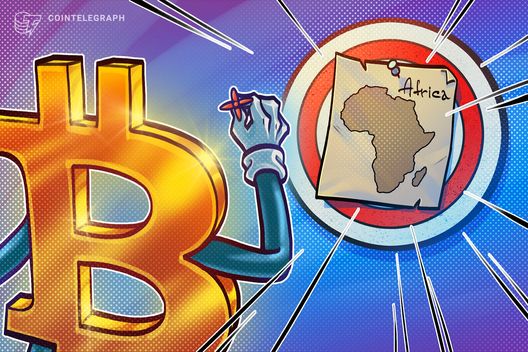
Stafford Masie, the esteemed Chair of Africa Bitcoin, recently shared a profound insight with Natalie Brunell on Coin Stories: in parts of Africa, locals are actively choosing satoshis over the U.S. dollar. This isn’t merely a speculative preference; it’s a critical, on-the-ground reality driven by severe macroeconomic pressures. Masie’s observation underscores a burgeoning monetary paradigm shift, where Bitcoin, in its most granular unit, is emerging as a functional and preferred medium of exchange and store of value amidst relentless inflation and currency debasement across the continent. As senior crypto analysts, we must dissect the multi-faceted implications of this statement, which speaks volumes about Bitcoin’s core utility and its potential to reshape financial landscapes in developing economies.
To grasp the significance of Masie’s statement, one must first understand the prevailing economic headwinds buffeting many African nations. For millions, traditional fiat currencies are not reliable stores of value. Countries like Nigeria, Ghana, Egypt, and South Africa have wrestled with persistent double-digit inflation, with some experiencing hyperinflationary spirals that rapidly erode savings and purchasing power. This asset debasement, coupled with stringent capital controls, limited access to international banking services, and high remittance fees, creates an environment ripe for disruption. In such a volatile economic climate, the very concept of a “stable” currency becomes a luxury, and people are compelled to seek alternatives that can genuinely preserve their wealth and facilitate commerce. The U.S. dollar often serves as a temporary refuge, but even it comes with its own set of challenges regarding accessibility, transaction costs, and susceptibility to local government interventions or black market premiums.
Enter Bitcoin. Masie’s report highlights that for many Africans, Bitcoin is no longer a fringe asset but a lifeline. Its inherent properties — decentralization, finite supply, censorship resistance, and borderless nature — directly address the systemic failures of traditional financial systems.
* **Store of Value:** In regions where local currencies can lose significant value overnight, Bitcoin offers a hard money alternative whose supply is mathematically capped at 21 million. While volatile in the short term, its long-term appreciation against debasing fiat currencies makes it an increasingly attractive hedge.
* **Medium of Exchange:** Beyond its role as a store of value, Masie emphasizes its functionality as a currency. This is where the concept of “satoshis” becomes pivotal. One Bitcoin is currently worth tens of thousands of dollars, making it seem unwieldy for everyday transactions. However, Bitcoin is divisible into 100 million satoshis (sats). This granularity makes microtransactions practical and accessible. Instead of thinking of buying coffee with “0.00005 BTC,” one can simply use “5,000 sats.” This shift in perspective makes Bitcoin tangible and usable for daily purchases, from groceries to transportation, circumventing cumbersome traditional payment rails and exorbitant fees.
* **Financial Inclusion and Remittances:** For the vast unbanked and underbanked populations, a smartphone with internet access can provide full financial sovereignty through Bitcoin, bypassing the need for traditional bank accounts or credit cards. Furthermore, remittances – a critical source of income for many African families – are notoriously expensive via traditional channels. Bitcoin, particularly leveraging the Lightning Network, offers near-instant, low-cost international transfers, putting more money directly into the hands of recipients.
The preference for “satoshis to dollars” is a nuanced yet powerful indicator. It signifies a move beyond mere speculation. It suggests that individuals are actively valuing the intrinsic qualities of Bitcoin – its decentralization, its resistance to manipulation, and its predictable supply – over the perceived stability of a foreign fiat currency, which despite its global standing, remains subject to local market dynamics and accessibility issues. The dollar, while generally more stable than many African fiat currencies, is still a centralized asset managed by the U.S. Federal Reserve and its value is influenced by geopolitical factors. Bitcoin, by contrast, offers a truly permissionless and borderless alternative, empowering individuals with a level of monetary sovereignty previously unimaginable. This ground-up adoption, driven by acute economic necessity, is proving far more resilient and persuasive than any top-down government mandate.
While the narrative of Bitcoin’s utility in Africa is compelling, it is not without its challenges. Volatility remains a concern, though as Masie implies, for those living under constant hyperinflation, Bitcoin’s swings might be a preferred alternative to guaranteed fiat depreciation. Infrastructure gaps, particularly internet penetration and reliable electricity, still exist but are steadily improving. Regulatory uncertainty also poses risks, with governments grappling with how to classify and govern digital assets. However, the organic, grassroots adoption observed by Masie suggests that the demand for a more robust monetary system will continue to drive innovation and overcome these hurdles. The burgeoning developer community and the increasing availability of user-friendly Bitcoin wallets and services are further accelerating this trend.
Africa is emerging as a critical proving ground for Bitcoin’s real-world utility. Its experiences offer invaluable lessons for other developing nations facing similar macroeconomic predicaments. The continent’s rapid leapfrogging of traditional landline infrastructure directly to mobile technology provides a historical precedent for its potential to leapfrog traditional banking systems directly to decentralized digital currencies. Masie’s insights are not just an anecdote; they represent a fundamental shift in how people perceive and utilize money. It signals that Bitcoin is not just an investment for the wealthy but a tool for economic survival and empowerment for the financially marginalized.
Stafford Masie’s statement that “locals prefer satoshis to dollars” in parts of Africa is a powerful testament to Bitcoin’s transformative potential. It paints a vivid picture of a continent where economic necessity is fostering genuine, bottom-up adoption of a decentralized monetary system. As the world grapples with escalating sovereign debt, inflationary pressures, and geopolitical instabilities, Africa’s embrace of Bitcoin, specifically its smallest divisible unit, serves as a poignant reminder of what true sound money can offer: a path to financial freedom, economic resilience, and individual empowerment. The African Bitcoin frontier is not just a geographical location; it’s a testament to the future of global finance, where digital sovereignty becomes an undeniable force.