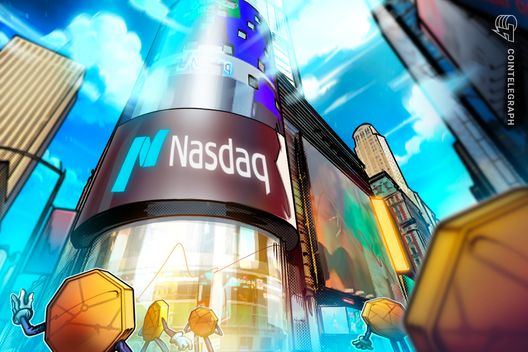
The financial world is abuzz with news that Nasdaq has filed for ‘prediction market-style options’ on its flagship Nasdaq-100 index. While seemingly a straightforward product innovation for traditional finance (TradFi), this move represents a profound convergence point, blurring the lines between regulated markets and the often-unregulated, innovative realm of decentralized prediction markets (DPMs) that crypto enthusiasts have championed for years. As a Senior Crypto Analyst, I see this not just as Nasdaq modernizing its offerings, but as a significant validation of a financial concept that crypto has been stress-testing and refining.
At its core, a prediction market allows participants to bet on the outcome of future events. Unlike traditional options, which are primarily tools for hedging and complex price discovery with intricate Greeks, these ‘prediction market-style options’ are designed for simplicity. The source context indicates that this offering could enable traders to place bets on specific performance metrics for Nasdaq-100 giants like Nvidia, Apple, Google, and Tesla. Imagine a scenario where a trader can simply bet ‘yes’ or ‘no’ on whether Nvidia’s stock will close above a certain threshold by a specific date, or if Apple’s quarterly earnings will beat analyst estimates by X percentage. This binary or narrowly defined outcome structure is the hallmark of prediction markets, making them highly accessible and intuitive.
From Nasdaq’s perspective, this is a shrewd strategic move. In an increasingly competitive financial landscape, innovation is key. This new product could attract a younger, more digitally native demographic drawn to simplified, event-driven trading. It taps into the growing ‘gamification’ of finance, making participation more engaging and less daunting than navigating complex derivatives. Furthermore, it opens up new revenue streams through transaction fees and reinforces Nasdaq’s position as a forward-thinking exchange. By bringing this product within a regulated framework, Nasdaq aims to offer a secure, compliant environment for a type of speculation that has, until now, largely existed in less regulated or entirely decentralized spaces.
Now, let’s turn to the crypto connection – where the real analysis lies. Decentralized prediction markets like Polymarket, Gnosis, and Augur have been operating on blockchain networks for years. These platforms allow anyone, anywhere, to create or participate in markets predicting everything from election outcomes and sports results to crypto price movements and major world events. They boast characteristics such as censorship resistance, global accessibility, transparent settlement via smart contracts, and often, lower fees.
Nasdaq’s foray into ‘prediction market-style options’ is, in essence, an institutionalized, centralized, and regulated version of what DPMs have been doing. The similarities are striking: both offer ways to speculate on future events with simplified outcomes. Both aggregate collective wisdom to form probabilities (implied probabilities from pricing). And both cater to a human desire to predict and profit from future occurrences.
However, the differences are equally critical. Nasdaq’s offering will be highly centralized, operating within stringent regulatory frameworks and using fiat currencies for settlement. This brings advantages like investor protection, robust dispute resolution, and established clearing mechanisms. DPMs, on the other hand, prioritize decentralization, offering permissionless access and censorship resistance, often settling in cryptocurrencies. This autonomy comes with its own trade-offs, including regulatory ambiguity, potential smart contract risks, and the absence of traditional recourse mechanisms.
For the crypto prediction market ecosystem, Nasdaq’s move is a double-edged sword. On one hand, it’s a massive validation. When a major TradFi institution like Nasdaq embraces a concept pioneered and refined in the decentralized space, it lends legitimacy to the entire prediction market paradigm. It signals to a broader audience that this isn’t just a niche crypto activity but a serious financial innovation. This could potentially increase overall awareness and interest in prediction markets, perhaps even leading some mainstream participants to explore decentralized alternatives once they grasp the core concept.
On the other hand, it introduces a formidable competitor. Nasdaq’s deep pockets, brand recognition, and regulatory standing could potentially draw liquidity and users away from DPMs, especially for markets centered around major financial assets. Why use a decentralized platform with perceived regulatory risks when a regulated giant offers a similar product? This question forces DPMs to double down on their unique value propositions: true decentralization, global access, censorship resistance, niche market creation (e.g., predicting specific crypto project milestones), and often more innovative market structures that go beyond what regulators currently permit in TradFi.
Furthermore, this move could inadvertently increase regulatory scrutiny on DPMs. As prediction markets gain mainstream traction in TradFi, regulators might feel compelled to apply similar oversight or outright bans on their decentralized counterparts, perceiving them as potential sources of market manipulation or unregulated gambling. However, the inherently decentralized and global nature of DPMs makes direct regulation a significantly more complex, if not impossible, challenge.
The ‘gamification’ of finance is an irreversible trend, accelerated by fintech and crypto innovations. Nasdaq’s filing is a clear acknowledgment of this. It reflects a broader financial evolution where traditional institutions are increasingly borrowing concepts from the agile, experimental world of crypto and blockchain. While Nasdaq offers a ‘walled garden’ approach, DPMs continue to push the boundaries of open, permissionless financial systems.
In conclusion, Nasdaq’s pursuit of prediction market-style options on the Nasdaq-100 is far more than a new product offering; it’s a profound handshake between traditional finance and the decentralized frontier. It validates the core utility of prediction markets while simultaneously setting up a fascinating dynamic of competition and potential coexistence. For crypto analysts, it underscores the persistent innovation cycle where decentralized ideas often inspire centralized adaptations, forcing both worlds to continually evolve and define their unique value propositions in the ever-expanding landscape of financial speculation and forecasting.