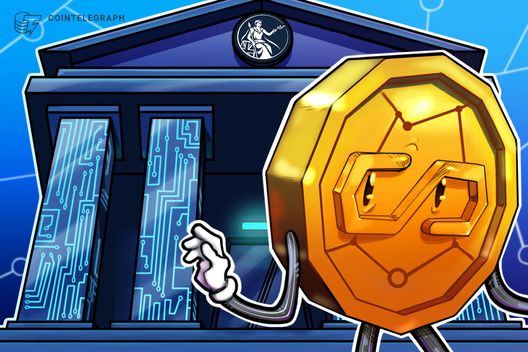
The financial world is abuzz, and the latest pronouncement from TD Securities, particularly from Reid Noch, serves as a potent signal: the New York Stock Exchange’s (NYSE) foray into tokenized equities is far more than a pilot program; it is a ‘market structure’ moment, an unmistakable sign that Wall Street’s once cautious gaze upon blockchain technology has transformed into a serious, strategic embrace. For seasoned crypto analysts, this validation from a heavyweight like TD Securities, concerning the world’s largest stock exchange, is akin to a tectonic shift, marking an irreversible inflection point in the convergence of traditional finance (TradFi) and the nascent digital asset economy.
At its core, NYSE’s initiative aims to tokenize traditional equity assets, leveraging blockchain technology to represent shares on a distributed ledger. While details on specific implementation and the underlying blockchain protocol are still emerging, the conceptual framework promises a radical overhaul of existing capital market infrastructure. This isn’t just about offering a new ‘digital product’; it’s about reimagining the very plumbing of financial markets. The significance of the NYSE, a bastion of conventional finance, venturing into this domain cannot be overstated. It lends unparalleled legitimacy to tokenization, moving it from the fringes of crypto speculation into the realm of mainstream institutional strategy. When institutions of this magnitude move, they send a ripple effect across the entire financial ecosystem, signaling a future where digital assets are integrated, not merely tolerated.
Reid Noch’s characterization of this as a ‘market structure’ moment is particularly insightful, touching upon the profound implications extending beyond mere technological adoption. Traditional financial markets operate on a complex, multi-layered structure involving exchanges, clearinghouses, custodians, and registrars, leading to settlement cycles often taking T+2 days or longer. Tokenization, by its very nature, challenges and potentially streamlines these layers. Imagine a world where equities are represented as programmable tokens, enabling instant, atomic settlement – where the transfer of ownership and funds occurs simultaneously, eradicating counterparty risk and reducing capital lock-up. This efficiency gain alone promises billions in cost savings for financial institutions. Furthermore, tokenization can enable fractional ownership of high-value assets, democratizing access for smaller investors and potentially unlocking new pools of liquidity. It can also embed compliance and governance rules directly into the asset itself via smart contracts, leading to more transparent and auditable transactions. This isn’t merely an incremental improvement; it’s a fundamental re-architecture, akin to the shift from floor-based trading to electronic exchanges, or the advent of derivatives markets. The NYSE, by exploring this, acknowledges that the existing market structure, while robust, is ripe for a digital transformation that blockchain is uniquely positioned to deliver.
Despite the undeniable promise, the path to a fully tokenized financial system is fraught with significant challenges. Regulatory clarity remains paramount. Jurisdictions globally are grappling with how to classify and regulate tokenized securities, ensuring investor protection, market integrity, and systemic stability without stifling innovation. The SEC, for example, will need to provide clear guidelines on registration, trading, and custody for these new digital instruments. Technological hurdles also persist. Interoperability between disparate blockchain networks and legacy systems is crucial. The scalability and security of underlying blockchain infrastructure must meet the rigorous demands of global capital markets, handling massive transaction volumes with zero downtime. Cybersecurity risks, inherent in any digital system, are amplified when dealing with high-value financial assets on distributed ledgers, requiring robust cryptographic solutions and stringent protocols. Furthermore, the sheer cost and complexity of integrating new tokenization platforms with existing, deeply entrenched back-office systems within financial institutions should not be underestimated. This will require significant investment in infrastructure, talent, and retraining.
For the broader crypto ecosystem, the NYSE’s move is a powerful legitimizer. It underscores that blockchain is not merely the engine for speculative cryptocurrencies but a foundational technology capable of revolutionizing global financial infrastructure. This institutional embrace helps bridge the chasm between traditional finance and decentralized finance (DeFi). While institutional tokenization initially might occur on permissioned blockchains to meet regulatory and privacy demands, it lays the groundwork for eventual interoperability with public, permissionless chains. We could see hybrid models emerge, combining the trust and regulatory oversight of TradFi with the efficiency and transparency of DeFi principles. This shift also creates immense opportunities for existing blockchain infrastructure providers, custody solutions, and protocol developers who can offer enterprise-grade solutions tailored for institutional needs. The market for security token offerings (STOs) is poised for substantial growth, extending beyond equities to real estate, private equity, art, and even intellectual property.
TD Securities’ perspective on NYSE tokenization is not just an observation; it’s a declaration of intent for the future of finance. It signals an irreversible trend where the benefits of blockchain – enhanced efficiency, reduced costs, increased liquidity, and greater transparency – are becoming too compelling for traditional financial powerhouses to ignore. While the journey will be iterative, characterized by pilot programs, regulatory evolution, and technological maturation, the direction is clear. We are witnessing the very early stages of a fundamental transformation of capital markets, where tokenized assets will form the bedrock of a more efficient, interconnected, and globally accessible financial system. As Senior Crypto Analysts, our role is to not only observe but to help navigate this evolving landscape, identifying both the immense opportunities and the significant challenges that lie ahead in this new, tokenized frontier. The future of finance is digital, and Wall Street is finally ready to build it.