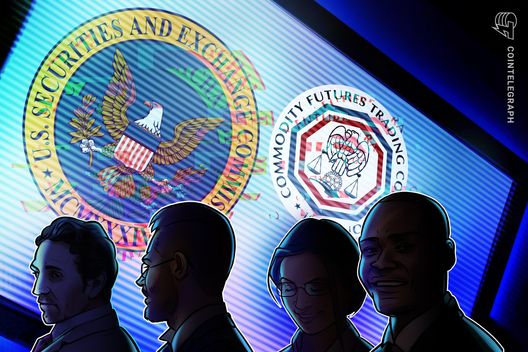
The notoriously fractured landscape of U.S. cryptocurrency regulation may be on the cusp of a significant transformation. In a move that has sent ripples of cautious optimism through the digital asset industry, SEC Chair Paul Atkins and CFTC Chair Mike Selig recently articulated a cooperative tone on CNBC, just days before a critical White House meeting on crypto policy. This unexpected display of inter-agency alignment, particularly amidst ongoing debates like the treatment of stablecoin yield under the proposed CLARITY Act, could herald a new era of regulatory coherence – or simply mask deeper, unresolved jurisdictional complexities.
For years, the crypto industry has been caught in a regulatory ‘no-man’s land,’ navigating a patchwork of state laws and federal agencies often perceived to be at odds. The Securities and Exchange Commission (SEC), with its mandate over investment contracts and securities, and the Commodity Futures Trading Commission (CFTC), overseeing commodity markets and derivatives, have frequently appeared to engage in a ‘turf war’ over digital assets. This jurisdictional ambiguity has been a primary driver of uncertainty, stifling innovation for some and enabling regulatory arbitrage for others. Thus, the very notion of ‘cooperation’ between these two titans is, in itself, a headline.
Atkins and Selig’s synchronized message, delivered from the influential platform of CNBC, underscores a palpable shift in Washington’s approach to digital assets. While the specifics of their collaboration remain largely behind closed doors, the public signaling suggests a recognition by both agencies of the urgent need for a more unified front. This pivot is likely driven by several factors: the escalating mainstream adoption of crypto, the increasing interconnectedness of digital assets with traditional finance, and the painful lessons learned from high-profile collapses like FTX, which exposed severe gaps in oversight and consumer protection.
The White House meeting, where senior administration officials will undoubtedly press for a more coordinated and robust regulatory framework, acts as a powerful catalyst. No administration wants to be seen as behind the curve on a rapidly evolving financial technology, especially one with national security and economic stability implications. A pre-meeting display of inter-agency solidarity strengthens the administration’s hand in pushing for legislative solutions, as it suggests the agencies are prepared to work within a defined framework rather than continuing individual enforcement actions that can appear scattershot.
Central to the current regulatory debate, and explicitly mentioned in the context of the agencies’ cooperative discussions, is the CLARITY Act and the contentious issue of stablecoin yield. Stablecoins, designed to maintain a stable value relative to a fiat currency like the U.S. dollar, have become the backbone of the decentralized finance (DeFi) ecosystem. Products that offer ‘yield’ on stablecoin holdings – essentially interest payments often derived from lending out those stablecoins – blur the lines between traditional banking, investment, and commodity markets. The SEC typically views products offering an expectation of profit derived from the efforts of others as securities, falling under the purview of the Howey Test. Conversely, the CFTC might see stablecoins themselves as commodities, and perhaps certain lending arrangements as derivatives on those commodities, if not outright securities.
The CLARITY Act aims to provide a legislative solution, but its provisions regarding stablecoin yield are a sticking point. If stablecoin yield products are definitively classified as securities, it would subject issuers and platforms to stringent registration, disclosure, and investor protection requirements under federal securities laws. This would fundamentally alter the DeFi landscape, potentially driving out smaller players or forcing significant structural changes to existing protocols. If they are deemed commodities, or fall under a bespoke hybrid classification, the regulatory burden might be different, but still significant.
Here, the ‘cooperative tone’ becomes critical. Instead of each agency unilaterally asserting jurisdiction, a collaborative approach could lead to a more nuanced and practical definition within the CLARITY Act, or at least a clear delineation of which agency takes the lead for specific types of stablecoin-related products. For instance, the SEC might regulate the issuance and initial offering of yield-bearing stablecoin products, while the CFTC oversees secondary market trading or derivatives based on them. Such an agreement could prevent regulatory arbitrage and provide much-needed certainty for innovators and investors alike.
However, skepticism remains prudent. The long-standing philosophical differences between the SEC’s investor protection-focused mandate and the CFTC’s market integrity and systemic risk-focused approach are deeply ingrained. While a cooperative tone is welcome, genuine legislative and operational harmonization requires more than just shared talking points. It demands a willingness to compromise on fundamental principles, streamline enforcement, and potentially even share budgetary resources and expertise – a tall order for any two powerful federal agencies.
Ultimately, the cooperative overtures from Chair Atkins and Chair Selig represent a promising, if nascent, step towards a more mature regulatory environment for digital assets. For the crypto industry, this could mean an end to the frustrating jurisdictional dance, paving the way for clearer rules of engagement, enhanced institutional participation, and potentially greater consumer confidence. Yet, the true test will not be found in public statements, but in the legislative outcomes of the White House meeting and the subsequent regulatory actions that define the future of stablecoins and the broader digital asset ecosystem. The industry watches with bated breath, hoping that this spirit of cooperation translates into genuine clarity and fosters innovation responsibly.