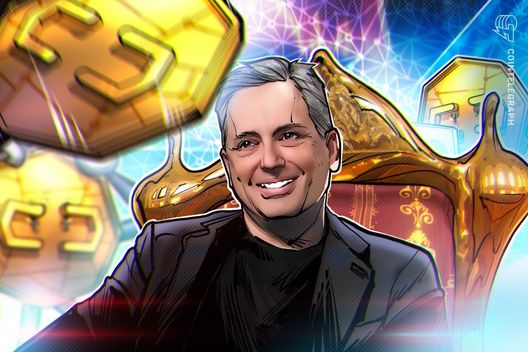
The annual World Economic Forum in Davos often serves as a crucible for global thought leaders to prognosticate on the future of industries. This year, David Sacks, a prominent venture capitalist and influential voice in the US tech and crypto spheres – often dubbed a ‘crypto czar’ for his outspoken advocacy – offered a particularly potent vision: the eventual merger of traditional banking and the nascent crypto sector into ‘one digital asset industry.’ Sacks’ assertion, made amidst discussions on contentious stablecoin yield practices and the stalled US crypto market structure legislation, isn’t merely speculative; it represents a growing recognition of the inherent synergies and the profound, transformative potential that lies in bridging these two worlds.
Sacks’ outlook stems from a pragmatic understanding of both traditional finance’s enduring infrastructure and crypto’s innovative capabilities. The ‘one digital asset industry’ he envisions isn’t about one subsuming the other, but rather a symbiotic evolution. On one hand, traditional banks, with their vast capital, regulatory compliance frameworks, and established customer bases, are increasingly exploring blockchain technology for efficiency gains, enhanced security, and new product offerings. On the other, the crypto industry, characterized by its dynamism, programmability, and global reach, desperately seeks regulatory clarity, institutional adoption, and robust scaling solutions to achieve mainstream acceptance.
This convergence finds its most compelling drivers in the concept of tokenization. Imagine a future where virtually any asset – real estate, commodities, intellectual property, or even traditional securities like stocks and bonds – can be represented as a digital token on a blockchain. This drastically reduces settlement times, lowers transaction costs, increases liquidity, and opens up fractional ownership to a wider array of investors. Banks, with their core competency in asset management and custody, are ideally positioned to facilitate the issuance, trading, and safeguarding of these tokenized assets within a regulated framework. For crypto, it means unlocking trillions of dollars in real-world value, moving beyond speculative digital currencies to becoming the foundational rails for a new global economy.
Sacks’ comments at Davos also implicitly address two critical pain points currently plaguing the US crypto landscape: disputes over stablecoin yield and the legislative quagmire. The controversy surrounding stablecoin yield products, particularly those offered by unregulated entities, highlighted the regulatory arbitrage between DeFi’s innovative but often risky offerings and TradFi’s consumer protections. In a merged industry, the expectation is that stablecoins, particularly those intended for widespread use, would operate under a clear regulatory umbrella, likely involving bank-issued or regulated entity-issued stablecoins that adhere to stringent reserve requirements and transparency standards. This would lend legitimacy and stability to the entire ecosystem, while still potentially allowing for yield generation in a compliant and transparent manner, perhaps through tokenized money market funds or regulated lending protocols.
Furthermore, the long-stalled US crypto market structure legislation is a significant impediment to this convergence. Sacks’ vision underscores the urgent need for a comprehensive regulatory framework that doesn’t merely try to fit square pegs into round holes but innovatively addresses the unique characteristics of digital assets. A unified industry would necessitate legislation that provides clear definitions, delineates agency responsibilities (e.g., SEC vs. CFTC), establishes robust consumer protections, and fosters innovation without stifling it. The lack of such clarity creates an uneven playing field, pushes innovation offshore, and deters traditional institutions from fully committing to the digital asset space. The ‘one digital asset industry’ cannot fully flourish without a supportive and predictable regulatory environment that harmonizes traditional financial oversight with blockchain’s novel attributes.
For traditional banks, this merger presents both an existential threat and an unprecedented opportunity. Those that embrace digital asset innovation, invest in blockchain infrastructure, and adapt their business models stand to gain significant market share and unlock new revenue streams. Those that resist risk becoming obsolete as financial activity migrates to more efficient, digital-native platforms. For the crypto world, it promises widespread adoption, increased liquidity, and institutional validation, but also the potential for increased centralization and regulatory oversight that might challenge some of its core decentralized ethos.
Ultimately, Sacks’ prognosis is less a prediction of a distant future and more an observation of an ongoing, accelerating trend. The technological building blocks are largely in place, and the market demand for more efficient, transparent, and globally accessible financial services is undeniable. While significant challenges remain – from overcoming entrenched regulatory inertia and technological integration complexities to bridging cultural divides between TradFi and crypto – the trajectory towards a unified digital asset industry seems increasingly inevitable. The task ahead for policymakers, industry leaders, and innovators alike is to ensure this convergence is managed responsibly, fostering innovation while safeguarding stability and consumer trust, thereby unlocking the full potential of a truly digital financial future.