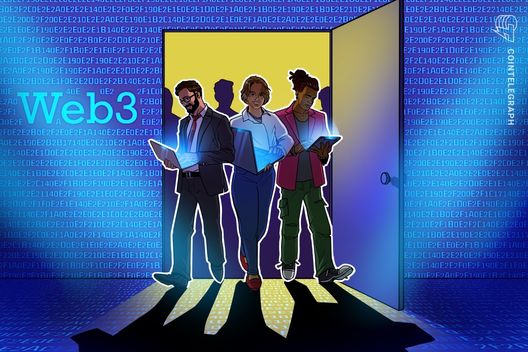
The trajectory of Web3, often characterized by its volatile booms and busts, the meteoric rise of speculative assets, and an occasional dose of digital anomie, appears to be undergoing a profound transformation. As we look towards 2026, a compelling new narrative is emerging: the shift from a speculative playground to a ‘real economy’ driven by tangible value creation. This pivot, underpinned by the maturation of Decentralized Physical Infrastructure Networks (DePIN) and the burgeoning integration of AI agents on-chain, signifies a critical evolution for the blockchain space, albeit one that brings its own set of challenges, particularly concerning Web3’s foundational decentralization ethos.
For years, the mainstream perception of Web3 has been largely dominated by the spectacle of memecoins – digital assets whose value is often derived from internet culture and community sentiment rather than inherent utility or robust fundamentals. While these tokens have played a role in onboarding new users and demonstrating the power of decentralized communities, they have simultaneously clouded the industry’s potential for substantive impact. The ‘real economy’ narrative posits a future where Web3’s value is generated not through a zero-sum game of speculation, but through the provision of essential services and infrastructure.
At the forefront of this shift are DePIN projects. These networks leverage blockchain technology to coordinate and incentivize the deployment and maintenance of physical infrastructure, from decentralized storage and computing power to energy grids and wireless networks. Imagine a global network of individuals contributing their unused hard drive space or processing power, rewarded with tokens for their contributions, collectively creating a robust, resilient, and permissionless alternative to centralized providers. Companies like Filecoin, Render Network, and Helium have laid the groundwork, demonstrating how tokenomics can align incentives to build and operate real-world infrastructure at scale. By generating actual revenue from the utility they provide – whether it’s data storage fees, rendering services, or bandwidth subscriptions – DePIN projects are inherently tied to fundamentals rather than speculative fervor. Their success hinges on delivering reliable, cost-effective services, making their economic models far more sustainable and appealing to a broader array of investors and users.
Adding another potent layer to this ‘real economy’ vision is the convergence of Artificial Intelligence with on-chain operations. The advent of AI agents capable of performing complex tasks, making decisions, and interacting with smart contracts ushers in a new era of automated, intelligent value creation within Web3. These agents can utilize DePIN resources, contributing to and benefiting from the decentralized infrastructure. For instance, an AI agent could autonomously manage decentralized cloud resources for a business, optimize energy usage within a DePIN-powered grid, or even trade digital assets based on market fundamentals, all while operating transparently and immutably on a blockchain. This integration moves beyond simply tokenizing existing assets; it enables the creation of entirely new economic primitives and services, where intelligent software can become productive capital within a decentralized framework. The implications for automation, efficiency, and novel business models are vast, potentially unlocking unprecedented levels of productivity.
This deliberate shift from speculation to fundamentals reflects a growing maturity within the Web3 builder community. Having weathered multiple market cycles and observed the limitations of purely financially engineered projects, developers are increasingly focused on problem-solving and delivering tangible utility. The promise of Web3 has always been about disrupting existing power structures and creating a more equitable internet; building a ‘real economy’ is the most direct path to realizing that vision. This transition means a greater emphasis on user experience, enterprise adoption, regulatory compliance, and robust economic models that can withstand market fluctuations.
However, this powerful narrative is not without its intricate challenges, most notably concerning Web3’s cherished decentralization ethos. As DePIN projects scale and AI agents become more sophisticated, questions arise: Will the pursuit of efficiency and revenue generation inevitably lead to a re-centralization of power? Large DePIN operators, for instance, might aggregate significant token holdings, potentially influencing governance decisions. The reliance on off-chain physical infrastructure, even if coordinated by decentralized protocols, still introduces points of centralization. Furthermore, the development and deployment of advanced AI models often require significant resources, which could concentrate power in the hands of a few well-funded entities. The very act of building a ‘real economy’ often necessitates engagement with traditional finance, legal frameworks, and physical logistics, potentially blurring the lines between the decentralized ideal and the pragmatic realities of the centralized world.
By 2026, the success of this ‘real economy’ narrative will hinge on Web3’s ability to navigate this delicate balance. The industry must demonstrate that it can generate substantial, real-world value and revenue without compromising its core principles of censorship resistance, permissionlessness, and open governance. If achieved, Web3 could transcend its niche appeal and solidify its position as a fundamental layer of the global digital economy, attracting unprecedented institutional investment, fostering innovation across diverse sectors, and ultimately delivering on its promise of a more open, equitable, and efficient future. The journey from memecoins to machines is not just a technological upgrade; it’s a paradigm shift in how we conceive and construct value in the digital age, demanding careful consideration of its profound implications for decentralization.