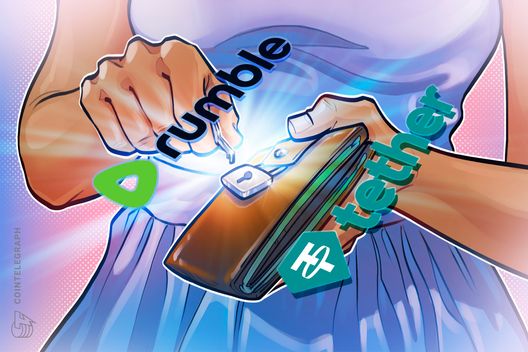
The recent announcement of a partnership between Tether, the world’s largest stablecoin issuer, and Rumble, the rapidly growing ‘free speech’ video platform, to launch a non-custodial crypto wallet marks a significant development in the convergence of Web3 technology and the creator economy. From a senior crypto analyst’s perspective, this initiative is far more than a simple product launch; it represents a strategic maneuver with profound implications for digital sovereignty, creator monetization, and the broader adoption of cryptocurrency.
At its core, the wallet is designed to facilitate crypto payments from Rumble users directly to its content creators. This targeted functionality is key. It’s not just another generic crypto wallet, but a bespoke solution aimed at addressing specific pain points within the creator ecosystem, particularly those aligned with Rumble’s ethos.
**The Strategic Alignment: Tether’s Infrastructure Meets Rumble’s Vision**
Tether’s involvement is immediately noteworthy. As the issuer of USDT, the dominant stablecoin by market capitalization, Tether possesses unparalleled expertise in managing digital dollar liquidity and widespread network integration. Their foray into developing a non-custodial wallet infrastructure signals a strategic expansion beyond merely issuing stablecoins. It demonstrates an ambition to embed Tether’s ecosystem deeper into practical, everyday use cases, leveraging its stablecoin for real-world transactions rather than just trading or DeFi.
Rumble, on the other hand, has carved out a niche as an alternative to mainstream platforms like YouTube, attracting creators and audiences seeking greater freedom of expression and a perceived resistance to censorship. Its growth has been substantial, fueled by a demographic often skeptical of centralized control. Integrating a non-custodial crypto wallet aligns perfectly with Rumble’s core value proposition of digital sovereignty. By enabling direct, permissionless payments that bypass traditional financial intermediaries, Rumble offers creators a path to monetization less susceptible to centralized platform policies, payment processor restrictions, or even potential de-platforming. This move directly reinforces its ‘free speech’ narrative by providing an alternative financial rail.
**Non-Custodial by Design: Empowering the User and Creator**
The choice of a non-custodial architecture is critical. In a non-custodial wallet, users retain full control over their private keys and, consequently, their funds. This stands in stark contrast to custodial solutions, where a third party (like an exchange) holds the keys and effectively controls the assets. For Rumble’s user base, often attuned to principles of self-ownership and resistance to centralized authority, a non-custodial wallet resonates deeply. It minimizes counterparty risk and enhances financial autonomy for both the payer and the payee.
For content creators, this translates into unprecedented control over their earnings. They can receive payments directly, often faster and with potentially lower fees than traditional fiat payment rails, and without concerns about funds being frozen or delayed by intermediaries. This decentralization of payment flows introduces a new paradigm for the creator economy, shifting power from platforms and payment processors back to the individuals generating value.
**Market Implications and Web3 Adoption**
This partnership holds significant implications for the broader Web3 landscape and mainstream crypto adoption:
1. **Real-World Use Case for Stablecoins**: The wallet directly promotes the utility of stablecoins (presumably USDT, though potentially others) as a medium of exchange for goods and services – in this case, content. This moves stablecoins beyond their primary use in trading and DeFi into a practical, everyday transaction layer, which is crucial for wider adoption.
2. **On-Ramping New Users**: Rumble boasts a substantial user base, many of whom may not be crypto-native. By integrating crypto payments seamlessly into the platform, Tether and Rumble are effectively creating an accessible on-ramp for millions to experience cryptocurrency directly, demystifying the technology and demonstrating its tangible benefits.
3. **Disrupting the Creator Economy**: Traditional platforms levy significant fees and exert considerable control over creator monetization. A crypto-based direct payment system can offer creators better terms, faster access to funds, and global reach without being constrained by legacy banking systems. This could force traditional platforms to innovate their payment solutions or risk losing creators.
4. **Decentralized Media and Finance**: The initiative strengthens the narrative around decentralized media platforms and decentralized finance (DeFi). It illustrates how Web3 principles can be applied to foster greater economic freedom and resilience within online communities.
5. **Tether’s Ecosystem Expansion**: This project positions Tether not just as a stablecoin issuer, but as a builder of essential Web3 infrastructure. It diversifies Tether’s influence and strengthens its role as a foundational layer in the digital economy.
**Challenges and Considerations**
While promising, the initiative will face challenges. User experience remains paramount; the wallet must be intuitive and straightforward for non-crypto users. Educating users on the responsibilities of managing private keys in a non-custodial environment will also be crucial. Furthermore, navigating the evolving regulatory landscape for crypto payments and ensuring compliance (e.g., KYC/AML for creators receiving funds) will be an ongoing task, even with a non-custodial setup, as fiat off-ramps will likely still be needed.
**Conclusion**
The Tether-Rumble non-custodial wallet is more than a technological collaboration; it’s a strategic move that could redefine how content creators are compensated and how users interact with digital platforms. It’s a bold step towards solidifying Web3’s role in the creator economy, championing digital sovereignty, and pushing stablecoins into the mainstream of everyday commerce. As a senior crypto analyst, I view this as a significant indicator of the ongoing shift towards more decentralized, user-centric models across the digital landscape, potentially inspiring similar integrations across other platforms and industries.