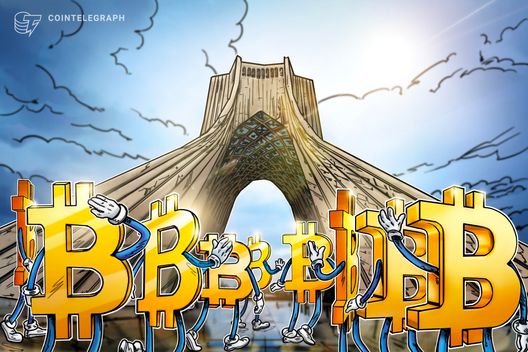
The economic landscape in Iran is once again grappling with severe turbulence, as the national currency, the rial, plunges to unprecedented lows against major global currencies. This precipitous collapse is not merely an abstract financial statistic; it represents a profound erosion of purchasing power, a destruction of savings, and a daily struggle for millions of ordinary Iranians. Amidst this backdrop of economic despair, a familiar refrain is resurfacing in public discourse: Bitcoin is being touted, once again, as a viable, perhaps even necessary, exit option.
As Senior Crypto Analysts, we observe these developments with a keen eye, for they underscore the fundamental value proposition that catalyzed Bitcoin’s creation. The Iranian rial’s depreciation is a multifaceted crisis, fueled by years of crippling international sanctions, domestic economic mismanagement, spiraling inflation, and geopolitical tensions. These factors converge to create a hyperinflationary environment where trust in state-managed financial institutions and the national currency evaporates. Citizens witness their lifelong savings dwindle in value, their ability to afford essential goods diminishes daily, and the prospect of capital flight becomes an increasingly attractive, albeit risky, endeavor.
In such an environment, the contrast between the rial and Bitcoin could not be starker. State-managed fiat currencies derive their value from government decree and the economic stability of the issuing nation. When that stability is compromised, the currency’s integrity collapses. Bitcoin, on the other hand, embodies a decentralized design, operating independently of any central authority, government, or financial institution. This architectural difference is not merely technical; it’s philosophical and practical, especially for those caught in economic crosshairs.
Bitcoin’s appeal as an ‘exit option’ for Iranians stems from several core characteristics:
1. **Censorship Resistance:** Unlike traditional banking channels, which can be easily frozen, monitored, or restricted by governments, Bitcoin transactions are processed on a public, immutable ledger. This inherent censorship resistance means that individuals can move their wealth without needing permission from a central authority, a crucial factor in regimes with strict capital controls.
2. **Global Portability and Accessibility:** For those seeking to preserve wealth or even migrate, Bitcoin offers an unparalleled level of portability. A substantial sum can be memorized (via a seed phrase) and carried across borders with nothing but one’s mind, bypassing physical asset confiscation risks. Its global nature means it can be accessed and transacted anywhere with an internet connection, transcending national financial barriers.
3. **Hedge Against Inflation:** While Bitcoin is famously volatile, its finite supply (capped at 21 million units) and predictable issuance schedule offer a stark contrast to fiat currencies that can be printed into oblivion by desperate governments. In hyperinflationary economies, where the purchasing power of local currency vanishes daily, even Bitcoin’s short-term volatility can be preferable to the guaranteed long-term decline of fiat.
4. **Empowerment of the Individual:** At its heart, Bitcoin represents a radical shift in economic power dynamics. It gives individuals control over their own money, removing intermediaries and the associated risks of third-party custody. For Iranians losing faith in their state’s ability to manage its currency, this self-sovereignty is profoundly attractive.
However, it’s crucial to acknowledge the practical challenges and risks. Acquiring Bitcoin in Iran often involves navigating a complex landscape of peer-to-peer (P2P) exchanges, local brokers, and potentially informal networks, which carry risks of fraud and price gouging. On-ramps (converting rial to BTC) and off-ramps (converting BTC back to usable currency) are often fragmented and fraught with regulatory uncertainties. The Iranian government’s stance on cryptocurrencies has been multifaceted, with mining operations legalized but trading often restricted, creating a legal grey area that users must navigate carefully. Furthermore, sanctions enforcement agencies closely monitor crypto transactions originating from sanctioned nations, adding another layer of risk.
Despite these hurdles, the renewed discourse around Bitcoin in Iran is a powerful testament to its foundational utility. It highlights a recurring theme seen in other economically distressed nations like Venezuela, Lebanon, Turkey, and Argentina. In each case, when state-managed financial systems falter, and trust in traditional institutions erodes, decentralized alternatives like Bitcoin emerge as a last resort, a digital lifeline for citizens desperate to protect their economic future.
For crypto analysts, these crises serve as critical real-world case studies, illustrating Bitcoin’s original cypherpunk vision: to provide a form of money that is resistant to state control and manipulation. The situation in Iran is a stark, painful reminder that while Bitcoin is often discussed in speculative terms in developed economies, for millions worldwide, it represents fundamental economic freedom and a potential escape hatch from the systemic failures of traditional finance. As the rial continues its downward spiral, the debate shifts from ‘if’ Bitcoin will be adopted, to ‘how’ it can be accessed and utilized most effectively by those who need it most.