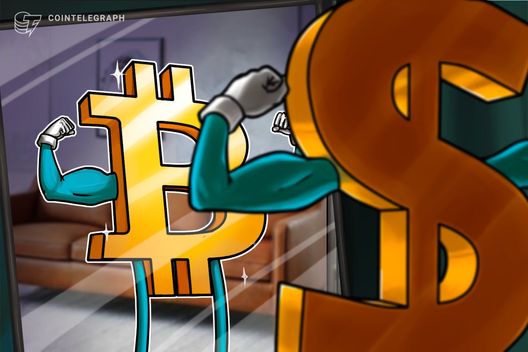
In a financial landscape often characterized by a perceived zero-sum struggle between traditional fiat currencies and decentralized digital assets, Coinbase CEO Brian Armstrong recently posited a remarkably nuanced and provocative perspective: Bitcoin, far from undermining the US dollar’s reserve status, may in fact be reinforcing it. Armstrong’s assertion, suggesting Bitcoin acts as a crucial market check on excessive inflation and deficit spending, challenges conventional wisdom and invites a deeper exploration into the evolving dynamics between the world’s premier reserve currency and its most prominent digital challenger.
At the heart of Armstrong’s argument lies the concept of Bitcoin as an economic disciplinarian. For decades, the US dollar has reigned supreme as the global reserve currency, underpinned by the size and stability of the US economy, its deep capital markets, and the perceived reliability of its institutions. However, this privileged position also affords the US government considerable latitude in fiscal and monetary policy, often leading to significant deficit spending and monetary expansion – policies that, if taken to extremes, risk devaluing the currency through inflation.
Bitcoin, with its fixed supply cap of 21 million coins and transparent, auditable monetary policy, presents itself as a stark contrast. It embodies principles of scarcity and programmatic issuance, often referred to as ‘digital gold.’ As governments increasingly resort to quantitative easing and expansive fiscal packages, particularly in response to global crises, the specter of inflation looms larger. In this environment, Bitcoin offers a readily accessible, censorship-resistant escape valve for capital seeking refuge from fiat debasement. Investors, whether institutional or retail, can opt to move wealth into a hard-capped asset, thereby signaling their distrust in the long-term purchasing power of the dollar if US fiscal and monetary policies are perceived as reckless.
The mechanism Armstrong describes echoes historical precedents where alternative assets have exerted pressure on sovereign currencies. During the era of the gold standard, governments were compelled to maintain fiscal prudence to ensure their currency’s convertibility into a physical commodity. Failure to do so would lead to runs on their gold reserves. While Bitcoin does not offer direct convertibility into the dollar, its existence as a global, permissionless, and inflation-resistant asset creates a similar, albeit digital, deterrent against unchecked monetary expansion.
For the US dollar to maintain its reserve status, it must uphold trust and stability. Trust is eroded by persistent inflation and unsustainable debt trajectories. Bitcoin’s unique position as a decentralized, non-sovereign asset means it operates outside the direct control of any single government or central bank. This fundamental difference makes it a potent force. It’s not merely another competing national currency, but a new class of asset that challenges the very foundation of sovereign monetary policy when that policy becomes overly expansionary or fiscally irresponsible. The ease with which capital can flow into Bitcoin globally means that governments cannot simply ignore this potential capital flight as they might have ignored domestic dissent in the past.
This is where the ‘strange way’ truly manifests. Bitcoin isn’t necessarily poised to *replace* the dollar as the global reserve currency in the short to medium term; its volatility, nascent regulatory frameworks, and market depth still present significant hurdles for that role. Instead, its strength lies in its ability to act as a *forcing function* for better behavior. The perceived threat of capital migration to Bitcoin effectively serves as a powerful market feedback loop. If the US government and the Federal Reserve are aware that their fiscal and monetary indiscretions could lead to widespread adoption of a monetary alternative, they are incentivized to pursue more responsible and sustainable policies.
In this scenario, Bitcoin becomes a self-correcting mechanism for the dollar’s health. By encouraging fiscal discipline and responsible monetary stewardship, Bitcoin inadvertently helps to preserve the very characteristics that make the dollar an attractive reserve asset: stability, predictability, and purchasing power. It transforms from a mere alternative asset into a systemic governor, pushing the US towards economic prudence. This dynamic suggests a non-zero-sum relationship, where the growth and stability of Bitcoin could paradoxically contribute to the long-term resilience of the dollar’s global standing.
While Armstrong’s thesis is compelling, it’s crucial to acknowledge the inherent complexities and nuances. Bitcoin’s volatility remains a significant hurdle for widespread adoption as a primary reserve asset for nation-states, which prioritize stability above all else. Furthermore, the regulatory landscape surrounding cryptocurrencies is still evolving, creating uncertainty for large-scale institutional integration. The sheer scale of the global economy and the existing inertia of the dollar system also mean that any disciplinary effect from Bitcoin would likely be gradual, subtle, and perhaps indirect, rather than an immediate, explicit policy driver.
Moreover, not all economists agree that Bitcoin inherently acts as an inflation hedge, pointing to its correlation with broader risk assets during certain market conditions. The argument hinges on the assumption that policymakers are sufficiently attentive and responsive to the signals emanating from the cryptocurrency market. However, as Bitcoin’s market capitalization grows, and as institutional adoption continues to deepen, its influence as an economic barometer and a potential destination for capital becomes increasingly difficult for policymakers to ignore.
Looking ahead, Armstrong’s perspective offers a fascinating glimpse into the potential long-term interplay between decentralized digital assets and traditional financial systems. If governments indeed internalize Bitcoin’s role as an economic check, we might see a more cautious approach to deficit spending and monetary expansion. Conversely, if policymakers choose to dismiss this signal, they risk accelerating capital flight and potentially weakening the dollar’s foundational strength, validating Bitcoin’s role as a direct alternative rather than an indirect disciplinarian.
The dialogue initiated by Armstrong forces a re-evaluation of Bitcoin’s place in the global financial order. It moves beyond the simplistic ‘Bitcoin vs. Fiat’ narrative to suggest a more intricate, dynamic relationship where emerging technologies can impose accountability on established powers. As the world grapples with unprecedented levels of national debt and inflationary pressures, the ‘strange way’ Bitcoin helps the dollar may just be the unforeseen market pressure needed to sustain its dominance.
Coinbase CEO Brian Armstrong’s assertion that Bitcoin reinforces the US dollar’s reserve status by curbing inflation and deficit spending is a testament to the crypto asset’s growing influence. It highlights a future where decentralized digital assets are not merely speculative instruments but active participants in shaping global economic policy. This evolving dynamic underscores Bitcoin’s transformative potential, not just as an alternative monetary system, but as a critical check and balance within the existing financial architecture, potentially safeguarding the very system it was once thought to challenge.