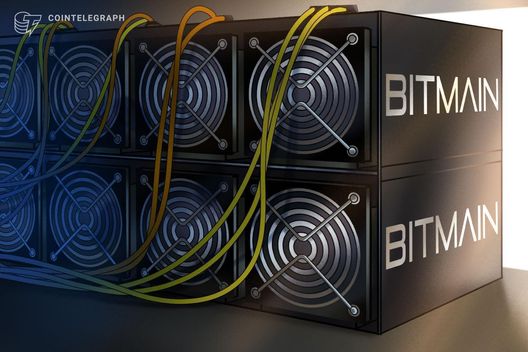
The crypto mining industry, the backbone of decentralized networks, finds itself navigating turbulent waters as 2025 draws to a close. A recent report highlighting Bitmain’s aggressive price cuts on its Application-Specific Integrated Circuit (ASIC) miners, with bundle deals, serves as a stark barometer of prevailing market sentiment and operational pressures. As the undisputed titan in ASIC manufacturing, Bitmain’s move is more than a sales tactic; it signals a critical inflection point, ushering in heightened competition, forced efficiency, and widespread consolidation across the global mining landscape. This development warrants a deep dive into its implications for miners, manufacturers, and the broader crypto ecosystem.
Bitmain’s price cuts directly respond to challenging market dynamics throughout 2025. The “bad note” refers to a prolonged cryptocurrency price slump, severely compressing mining revenue. Compounding this, the relentless increase in network difficulty – ensuring consistent block times – has further squeezed profit margins. Miners now spend more hash power for fewer, less valuable coins. Adding to this perfect storm are stubbornly high global energy prices, the largest operational expenditure for most miners. This trifecta of lower revenues, higher difficulty, and elevated costs has pushed many less-efficient or highly-leveraged mining farms to the brink of insolvency, creating an environment ripe for disruption.
As the market leader, Bitmain’s actions often indicate broader industry trends. The company’s discounts and bundle deals suggest a strategic imperative to clear inventory, stimulate demand, and maintain dominant market share in a sluggish market. This is shrewd business. By making high-performance ASICs more accessible, Bitmain supports its sales and applies immense pressure on competitors – both other manufacturers and existing mining operations. Newer, more efficient machines entering the market at lower prices immediately devalue older hardware, accelerating the obsolescence cycle. For Bitmain, this strategy, while potentially impacting short-term profit margins, ensures long-term market leadership and positions them to capitalize on future market upturns. It also acts as a significant barrier to entry for smaller ASIC manufacturers.
For the mining industry, Bitmain’s price reductions present a double-edged sword. For many existing operators, it’s a grim prognosis. Those with older, less efficient hardware and high energy contracts face an existential threat. Reduced ASIC costs mean their current assets are worth less, hindering sales or recapitalization. We anticipate increased distressed asset sales, mergers, and bankruptcies. Conversely, for well-capitalized and strategically agile mining firms, this turmoil offers an unprecedented opportunity. Lower ASIC prices translate into reduced Capital Expenditure (CAPEX) for expanding or upgrading fleets. Savvy operators with access to cheap, sustainable energy can acquire cutting-edge hardware at a discount, dramatically improving operational efficiency. This enables them to outcompete struggling peers, increase global hash rate share, and position strongly for the next bull cycle. The industry is rapidly bifurcating.
The ripple effects of Bitmain’s pricing strategy extend beyond individual mining companies, inevitably accelerating consolidation. Larger, publicly traded firms with access to capital markets are better equipped to leverage these discounts, acquiring hardware and potentially smaller, distressed mining farms. While this could professionalize the industry, it raises concerns about network decentralization if hash power concentrates in fewer hands, though Bitcoin’s protocol has proven resilient. This emphasis on efficiency also drives innovation. Manufacturers will be pushed harder to develop even more energy-efficient machines, benefiting network security and sustainability. For the broader crypto market, a more resilient and efficient mining sector provides a stronger foundation for network integrity and investor confidence, particularly as the industry addresses environmental concerns.
Looking towards 2026, the crypto mining industry is likely to emerge leaner, more efficient, and potentially more centralized. The “mining winter” of 2025, exacerbated by Bitmain’s move, will have culled the weak and strengthened the strong. Survival will hinge on several key factors: securing ultra-low-cost and ideally renewable energy sources, continuous hardware upgrades, and prudent financial management to navigate volatile crypto prices. Institutional involvement will likely increase, bringing sophisticated risk management and capital allocation. While the immediate outlook remains challenging, these strategic recalibrations are vital for long-term health. History suggests severe downturns are often followed by robust recovery, positioning efficient survivors for significant gains when the market rebounds.
Bitmain’s decision to slash ASIC prices is not merely a reaction but a powerful accelerator of ongoing industry transformation. It underscores the profound challenges faced by crypto miners as 2025 concludes, particularly from falling prices, rising difficulty, and elevated energy costs. While painful for many, this pivot towards aggressive pricing will inevitably drive consolidation, prioritize efficiency, and reshape the competitive landscape. This is a necessary, albeit brutal, step in the mining industry’s evolution, preparing it for a future where operational excellence and strategic foresight are paramount for securing Bitcoin’s network and capturing future value. The winter of 2025 might be harsh, but it’s forging a stronger, more resilient mining ecosystem.