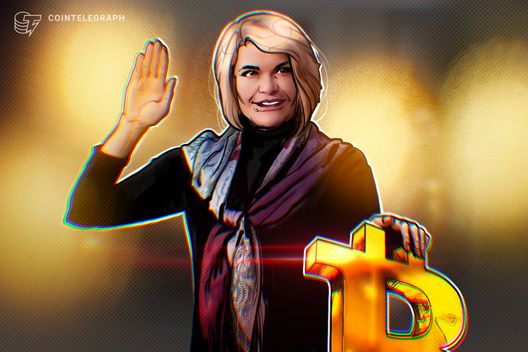
The crypto community is grappling with significant news from Washington D.C., as Senator Cynthia Lummis of Wyoming announced her decision not to seek re-election next year. The sentiment across the industry is palpable, best encapsulated by supporters who readily attest that crypto ‘would not be where it is today’ without her unwavering advocacy. For those invested in the growth and regulatory clarity of digital assets, Lummis’s impending departure marks not just the exit of a politician, but the loss of a genuine champion and a deeply knowledgeable voice in the highest echelons of U.S. governance.
Senator Lummis has been a singular figure in the U.S. Senate since her arrival, distinguishing herself through an early and profound understanding of Bitcoin and the broader blockchain ecosystem. Unlike many of her peers, whose engagement often stemmed from political expediency or constituents’ demands, Lummis was a self-professed ‘Bitcoin HODLer,’ approaching the technology from a place of personal conviction and informed belief. This authentic connection lent her an unparalleled credibility, transforming her into a crucial bridge between the often-misunderstood world of decentralized finance and the staid corridors of traditional legislative power.
Her most significant contribution to date, though not yet enacted, is undoubtedly her collaborative work with Senator Kirsten Gillibrand (D-NY) on the Responsible Financial Innovation Act (RFIA). This bipartisan bill, first introduced in 2022 and reintroduced with refinements, represents the most comprehensive attempt to date to establish a clear regulatory framework for digital assets in the United States. The RFIA sought to define various classes of digital assets, delineate jurisdictional oversight between the Commodity Futures Trading Commission (CFTC) and the Securities and Exchange Commission (SEC), and lay out a framework for stablecoins, among other critical provisions. Lummis’s leadership on this front was instrumental; she spearheaded the effort to move beyond piecemeal enforcement actions and hostile rhetoric, instead advocating for a principles-based approach that fostered innovation while safeguarding consumers and financial stability. She understood that clarity was not just beneficial but essential for the industry to mature and for the U.S. to retain its competitive edge in the global digital economy.
The vacuum left by her departure is profound and multi-faceted. It’s not simply the loss of a vote in favor of crypto-friendly legislation; it’s the absence of an influential voice willing and able to explain complex technological nuances to colleagues, to push back against anti-crypto narratives with well-reasoned arguments, and to build bipartisan consensus. Her deep understanding meant she could dissect nuanced issues like proof-of-work versus proof-of-stake, the implications of decentralized autonomous organizations (DAOs), or the economic importance of stablecoins, translating them into terms comprehensible to policymakers unfamiliar with Web3. This ability to educate and advocate from a position of informed authority will be exceedingly difficult to replace.
Her absence could lead to a slowdown in legislative progress on critical fronts. Stablecoin legislation, a priority for many and an area where Lummis provided crucial insights, might lose momentum. The broader push for comprehensive regulatory clarity across DeFi, NFTs, and other emerging sectors could face further delays, leaving the industry vulnerable to continued regulation by enforcement. Furthermore, Lummis often served as a critical counterweight against proponents of U.S. Central Bank Digital Currencies (CBDCs), advocating for privacy concerns and individual liberties. Without her, the debate on these sensitive issues might shift, potentially tilting toward frameworks that are less aligned with the decentralized ethos of the crypto community.
Looking ahead, the industry must recognize that while a champion like Senator Lummis is invaluable, over-reliance on a single figure can be perilous. Her retirement underscores the urgent need for a more diversified and robust advocacy strategy. The path forward demands a renewed commitment to several key areas:
Firstly, **intensified education and engagement** are paramount. The industry must proactively seek out and cultivate new champions across both sides of the aisle. This involves sustained efforts to inform lawmakers, their staff, and relevant committee members about the technology, its benefits, and its potential for economic growth and job creation in their districts.
Secondly, **strategic lobbying and grassroots advocacy** need to be amplified. Trade associations and individual companies must continue to engage with policymakers, presenting compelling cases for sensible regulation and demonstrating the real-world utility of blockchain technology beyond speculative trading. Grassroots efforts, mobilizing the crypto community to contact their representatives, can also be highly effective.
Thirdly, the industry must focus on **demonstrating tangible value and addressing legitimate concerns**. By showcasing use cases in remittances, supply chain management, identity, and other sectors, and by actively working to mitigate risks like illicit finance and consumer protection, the industry can build trust and earn credibility. Proactive self-regulation in certain areas could also help shape the narrative more favorably.
Finally, continuing to foster **bipartisan cooperation** is crucial. The success of the RFIA, even as a proposal, lay in its bipartisan sponsorship. Crypto cannot afford to become a partisan wedge issue. Finding common ground and demonstrating shared benefits across political divides will be vital for any meaningful legislative progress.
In conclusion, Senator Cynthia Lummis’s decision not to seek re-election is indeed a significant blow to the crypto industry’s aspirations for a clear and supportive regulatory environment in the U.S. Her legacy as an authentic, informed, and tireless advocate for digital assets is undeniable. While her departure leaves a substantial void, it also serves as a critical call to action. The foundations she helped lay, particularly through the RFIA, provide a blueprint. It is now incumbent upon the broader crypto community to step up, educate, advocate, and build upon that groundwork, ensuring that the vision for a robust, innovative, and responsibly regulated digital asset ecosystem in the United States continues to move forward. The fight for regulatory clarity has lost a powerful voice, but the mission remains.